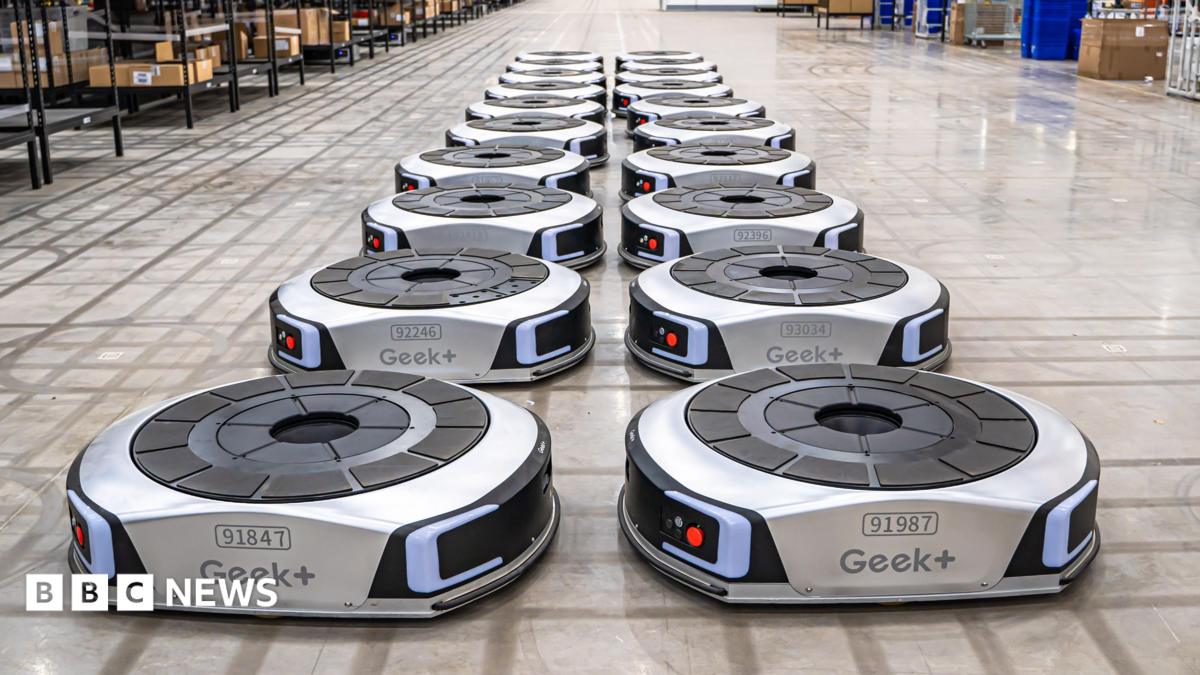
Every time you click 'buy' on an online order, the journey increasingly starts with a squat silver floor robot gliding beneath a storage rack, lifting a shelf and carrying it across a warehouse to a waiting worker. That robot is likely built by Geek+, a Chinese robotics company that has become the world's largest supplier of autonomous mobile robots (AMRs). With 2,000 robots already deployed across 10 sites in the UK via partner MotionTech, the company is transforming the way Britain's biggest retailers fulfil e-commerce orders.
The Technology Behind the Robots
At Geek+'s factory in Hefei, eastern China, fleets of robots are built and tested before shipping worldwide. Unlike traditional warehouse automation that relies on fixed conveyor systems and permanent infrastructure, these AMRs can be deployed simply using QR code floor markers and safety fencing. According to Geek+, retailers gain increased picking speeds, the ability to store more goods in spaces hard for humans to reach, and reduced error rates. The robots autonomously navigate underneath storage racks, lift them, and transport them to picking stations where human workers complete the order.
UK Retailers Adopt Geek+ Robots
Some of Britain's biggest retailers now use the company's technology: Tesco, Asda, and Next. The UK has become Geek+'s biggest European market, with MotionTech deploying the robots across 10 warehouses. Barry Pemberton, Account Director at MotionTech, said: "Customers want fast deployable solutions. They want high volume, high storage, fast picking... ultimately on a smaller footprint with a reduced headcount." He noted that the UK has a "very big shortage of labour" and that these technologies are "really important to keep businesses thriving and meet demand."
| Aspect | Traditional Automation | Geek+ AMRs |
|---|---|---|
| Infrastructure | Fixed conveyors, permanent build | QR code markers, safety fencing |
| Flexibility | Hard to reconfigure | Easily scalable and relocatable |
| Deployment speed | Months | Weeks |
| Impact on staff | Often displaces workers | Works alongside human pickers |
Impact on Productivity and Labour
The UK has struggled with weak productivity growth for over a decade. The Organisation for Economic Co-operation and Development (OECD) in its 2026 report SME Technology Adoption in the United Kingdom said technologies like robotics would be key to improving productivity. According to the OECD, Britain's low adoption of robotics is "surprising" given its manufacturing heritage, noting that while UK firms have embraced mature digital technologies, they lag behind in robotics and automation. This gap presents an opportunity for companies such as Geek+.
However, the Trades Union Congress (TUC), representing almost 6 million UK workers, urges caution. In its response to the government's consultation on a new AI and innovation strategy, the TUC said robotics should be used to raise productivity and improve jobs, rather than simply cut labour costs.
"Working with technologists, workers and unions can help steer the UK's research and innovation towards workers' priorities for automation... avoiding job-cutting, low-productivity automation."
China's Robotics Strategy and the UK Market
Robotics has become a strategic priority for Beijing under President Xi Jinping's drive to develop what he calls "new quality productive forces." With China's working-age population shrinking, policymakers increasingly see automation as essential. Geek+'s dominance in the AMR market—reinforced by its Hong Kong listing in 2025, one of the biggest robotics share sales that year—positions it well to supply a UK market hungry for fast, flexible automation solutions. The UK's e-commerce and logistics sector is among Europe's largest, but many warehouses remain in early stages of automation, offering significant room for growth.
Sources: