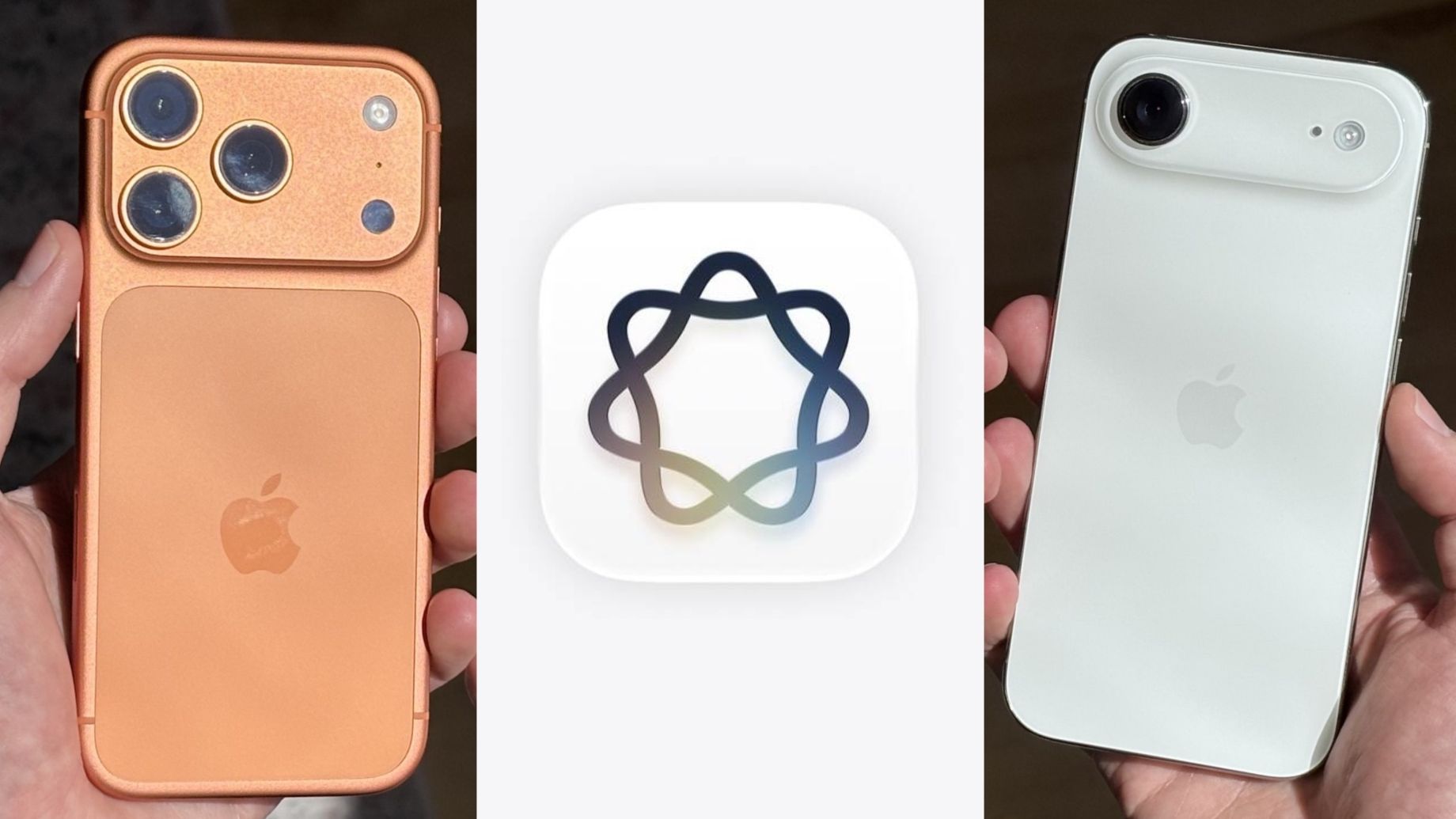
At Apple's Worldwide Developer Conference, the company unveiled a handful of AI-powered features for the Photos app in iOS 27, arriving later this year. According to WIRED's report, Apple's camera chief Jon McCormack stressed that the company is not "doing AI for the sake of AI" but rather solving specific compositional problems that users face. "You don't have to know all the details of how to do something in Photoshop or something else—it gives normal people these absolute superpowers," McCormack said.
.jpg)
AI Features in iOS 27
The new capabilities include Extend, Spatial Reframe, and an improved Clean Up tool. Extend lets users expand the space around a photo by 25 percent—but only once per image; you cannot save, edit, and infinitely extend it. Spatial Reframe changes the perspective of an image, while Clean Up now benefits from Apple's improved AI models for removing unwanted objects. However, Apple imposes strict limitations: the AI-generated pixels are confined to the background and cannot alter the main subject's face, and Clean Up cannot remove the primary subject.
Restrictions and Design Philosophy
Della Huff, product manager for Apple's Camera and Photos software, said the team trained the AI models to minimize hallucinations. "It's not going to create anything that shouldn't be there," Huff explained. For instance, when extending a street scene, the model will not assume a car exists beyond the frame if it's not needed. Yet, in practice, the feature can add background elements—such as tables and people—if doing so matches the existing aesthetic. "If we said the rule is we could never generate a background human ever, then the feature would become less useful," Huff noted.
McCormack emphasized that a photograph is "of something that actually happened" and that Apple wants to preserve "the sanctity of that moment." The company differentiates its approach from competitors like Google and Samsung, which allow more radical alterations.
Watermarking with SynthID
To ensure transparency, McCormack said Apple will integrate Google DeepMind's SynthID technology later this year to add an invisible watermark indicating AI alteration. Platforms sharing the photo may then flag it as AI-edited. However, WIRED noted that researchers have shown digital watermarks are not foolproof.
Siri Integration and Usage Limits
A major WWDC theme was natural language interaction, but Siri cannot currently execute the new AI photo edits—those remain human-controlled, partly because of the complexity. Siri does gain Visual Intelligence in the Camera app, akin to Google Lens, activated via the Camera Control button. McCormack described this as reducing friction, making the camera a "note-taking device" or a tool for curiosity.
Apple also introduced usage limits for the AI features, though it did not disclose exact daily caps. Users will need to subscribe to iCloud for multiple daily uses of Extend, Spatial Reframe, or Clean Up.
| Feature | Limitation |
|---|---|
| Extend | 25% expansion, one-time use per photo |
| Clean Up | Cannot remove primary subject |
| Spatial Reframe | Changes perspective; background only |
| Watermark | SynthID invisible watermark (later 2026) |
| Daily usage | Limits unstated; iCloud required for multiple uses |
Implications for Enterprises
For CTOs and digital leaders, Apple's approach offers a model for deploying AI while maintaining content authenticity. The integration of SynthID watermarking, though not foolproof, sets a precedent for provenance tracking that could extend to supply chain documentation and digital trade. The restrictive design philosophy—allowing AI only where it fixes composition without inventing facts—mirrors the need for reliable, auditable AI in enterprise workflows where image integrity is critical.