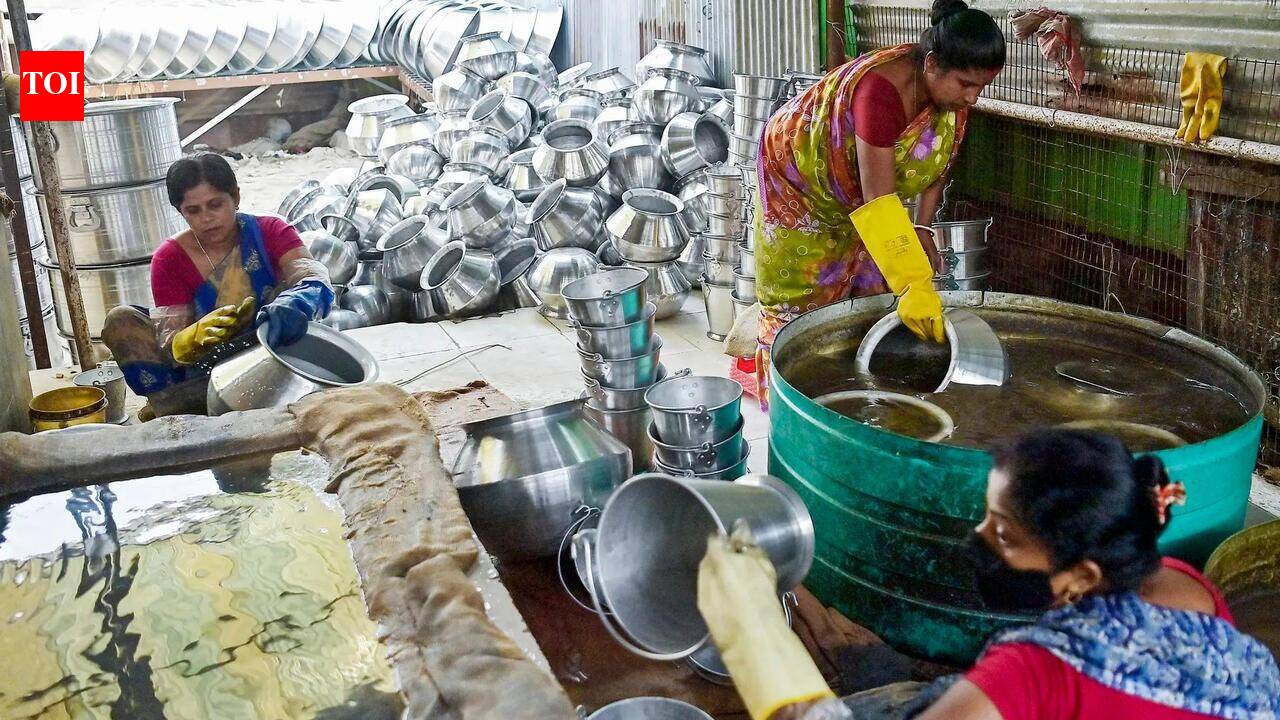
The geographic skew of women-owned businesses in India holds distinct implications for corporate strategy, market entry, and policy design, according to the latest city-level data from the National Statistics Office's Annual Survey of Unincorporated Sector Enterprises (ASUSE) 2025. The report, covering 46 million-plus cities, shows that female-owned proprietary establishments are heavily concentrated in western India, while northern cities occupy the bottom ranks.
ASUSE 2025: A rare city-level snapshot
ASUSE tracks India's unincorporated non-agricultural economy, excluding construction, across manufacturing, trade and other services. The 2025 city-level report studies this universe across 46 million-plus cities, which account for about 13% of establishments, 16% of workers, and 21% of GVA in the unincorporated non-agricultural sector, according to the report. The data includes indicators such as establishments, workers, female workers, and female-owned proprietary establishments.
Top-ranked cities: Western dominance
Among million-plus cities, Surat leads with 43.20% female-owned proprietary establishments. It is followed by:
| City | Female-owned proprietary establishments (%) |
|---|---|
| Surat | 43.20% |
| Vadodara | 40.72% |
| Pune | 40.65% |
| Ahmedabad | 40.00% |
| Pimpri Chinchwad | 38.49% |
The top 10 is dominated by Gujarat and Maharashtra cities, with Madurai the major exception, according to the report.
Bottom-ranked cities: Northern lag
At the bottom of the rankings are northern cities:
| City | Female-owned proprietary establishments (%) |
|---|---|
| Srinagar | 9.92% |
| Patna | 12.04% |
| Varanasi | 13.12% |
| Kanpur | 14.37% |
| Agra | 15.07% |
Other low-ranking cities include Faridabad (16.05%), Delhi (16.20%), Meerut (16.35%), Ludhiana (17.56%), and Lucknow (17.67%). The report notes that Delhi, Kanpur, Lucknow, Ludhiana, and Varanasi each have dense commercial lives, yet female-owned proprietary establishments form a much thinner slice of their small-business base.
Delhi's paradox
Delhi presents a notable paradox: it has one of the larger establishment bases in the ASUSE city set, but only 16.20% of proprietary establishments are female-owned. In contrast, Kolkata has the largest estimated base among the 46 cities, with about 8.84 lakh establishments, and female-owned proprietary establishments stand at 25.31%. Greater Hyderabad has about 6.08 lakh establishments, with female ownership at 24.53%.
What the data does and does not say
The pattern fits what is known intuitively about western India's business culture of family enterprise, deeply entrenched community networks, and a long tradition of small-scale risk-taking, according to the source. However, the data does not prove why this is happening — it only shows where women's ownership is more visible. Whether the disparities reflect household norms, access to credit, market structures, or other local factors is beyond what ASUSE can establish, but the pattern is worth noticing for corporate strategists and investors.
Implications for business and policy
For executives and investors, the geographic concentration of women-owned enterprises suggests that strategies targeting women entrepreneurs — as suppliers, customers, or partners — must account for regional variations. States with higher female ownership rates may offer a more resilient informal economy and a deeper pool of entrepreneurial talent. The data also provides a baseline for measuring the impact of policy interventions aimed at narrowing the gender gap in entrepreneurship.
Sources: