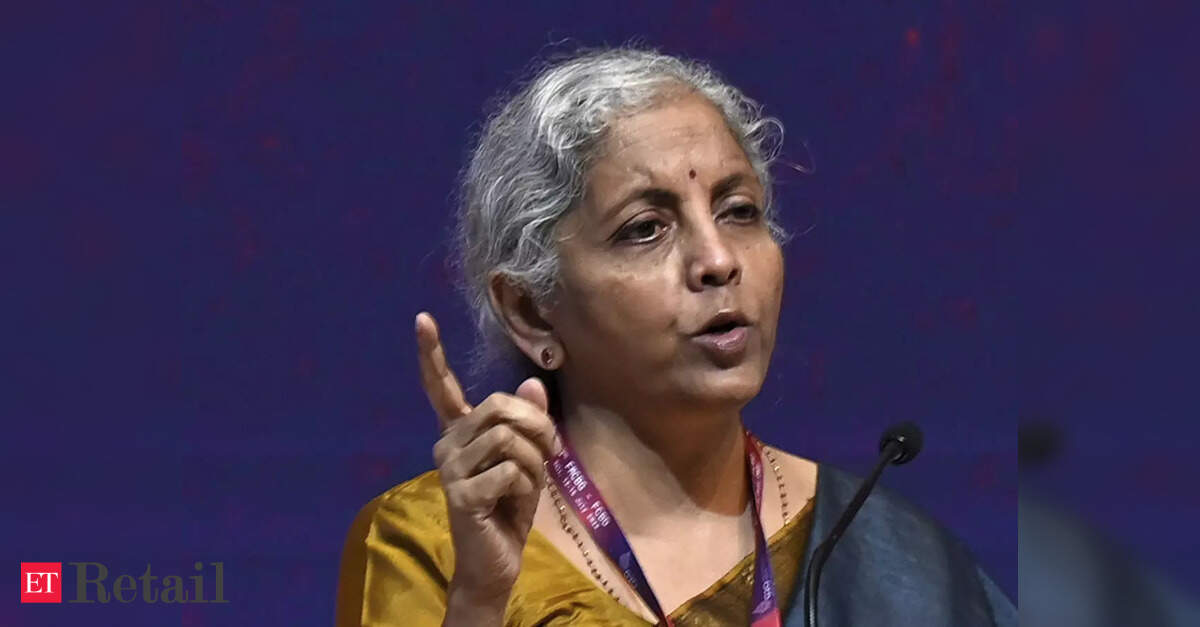
Finance Minister Nirmala Sitharaman reaffirmed that India's middle class remains the primary driver of the nation's economic expansion, forecasting that by 2036 this segment will account for nearly all spending in the country. Speaking at the Rencontres Économiques d'Aix-en-Provence at Aix-Marseille University in France, she said the middle class is not just a beneficiary of growth but "actually the engine of growth. It is their consumption which is making the economy grow."
Middle Class as Consumption Engine
According to Sitharaman, by 2036, about 93% of all spending in India will be driven by the middle class or slightly affluent consumers. The middle class currently accounts for close to a third of India's population and grew at an average rate of 6.3% between 1995 (a few years after India adopted globalisation) and 2021. She noted that the middle class is not concentrated in a few metropolitan cities, which improves wealth distribution and augurs well for the country's growth outlook.
The World Economic Forum has also pointed to a fundamental shift in India's middle class consumption patterns, with nearly 500 cities poised to emerge as new centres of economic activity, indicating the durability of India's growth prospects.
| Metric | Value |
|---|---|
| Middle class share of population | ~33% |
| Middle class growth rate (1995–2021) | 6.3% |
| Projected share of spending by 2036 | 93% |
| People moved out of multidimensional poverty (FY14–FY23) | 248 million |
| Cities emerging as economic centres | ~500 |
Government Initiatives Widening the Base
Sitharaman outlined several measures taken by the government under Prime Minister Narendra Modi to lift the poor into the middle class. Between FY14 and FY23, about 248 million people moved out of multidimensional poverty. The government has made formal access to the banking channel easier for hundreds of millions through Jan Dhan accounts and acted as a guarantor to loans extended to budding and small entrepreneurs, bolstering access to formal credit.
Recent tax relief, including income tax exemption up to ₹12 lakh per year, and cuts in goods and services tax (GST) rates across a large number of products are expected to further support consumption, she said.
India-France Economic Dialogue
Separately, Sitharaman co-chaired the India-France Economic & Financial Dialogue with Roland Lescure, France's minister of economy, finance, industrial, energy, and digital sovereignty, in Aix-en-Provence. According to a finance ministry statement, the two ministers deliberated on greater bilateral cooperation in critical minerals, investments, economic sovereignty, and security policies. They also discussed proposals to further connect the financial industries of the two nations, opportunities in the high-speed railway sector, and greater alignment of India-France positions within multilateral platforms such as the G20 and the Paris Club, in the context of India's association with the French G7 presidency. They exchanged views on the world economic outlook amid the West Asia crisis.
Both ministers agreed to explore the possibility of holding the next edition of the economic and financial dialogue in 2027.
Sources: