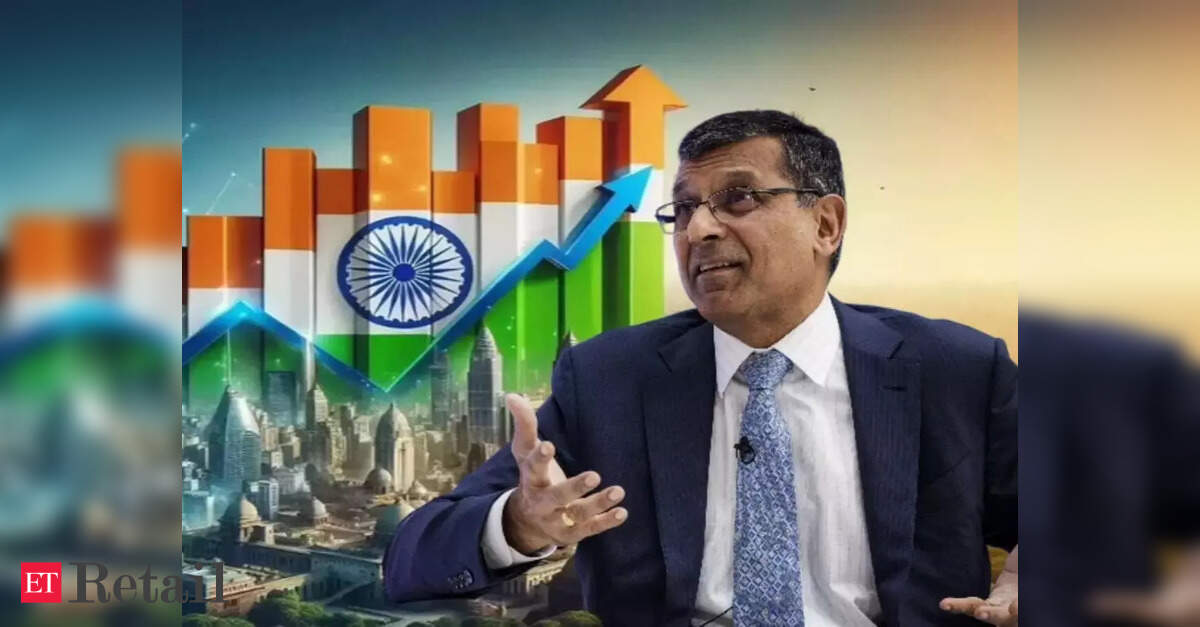
Former Reserve Bank of India Governor Raghuram Rajan has cast doubt on India's official economic growth figures, saying weak corporate investment and declining foreign capital inflows are difficult to reconcile with reported GDP expansion. In an interview with India Today TV, Rajan said, "I don't understand it. If the economy was growing at this rate, you would definitely expect investment to be higher. Something is off."
India's economy expanded 7.7% in fiscal year 2025-26, up from 7.1% a year earlier, according to official data. Growth in the January-March quarter stood at 7.8%, compared with 8% in the preceding quarter. The fourth-quarter figure exceeded the median estimate of 7.3% in a Bloomberg survey of economists. However, Rajan said the lack of corporate investment remains a puzzle.
Corporate investment remains the missing piece
Rajan highlighted that corporate investment has not picked up despite years of strong headline growth. "Why corporate investment hasn't taken off was a puzzle 10 years ago. It is still a puzzle today," he said. "The only answer to the kind of growth we've seen over the last 10 years in the official numbers is that perhaps we are growing less strongly than those numbers suggest."
When asked whether he trusted the official GDP data, Rajan pointed to business behavior: "The fact that they're not investing suggests that they're not seeing the kind of demand that would be consistent with these growth numbers."
Finance Minister Nirmala Sitharaman, speaking at the Economic Times Awards for Corporate Excellence in Mumbai in late April, urged industry leaders to identify obstacles to expansion. "Tell us what you (industry) need. Tell us what you want us to do, so that you feel incentivized to further invest and grow equally," she said, according to the source.
Foreign direct investment and capital flows
Rajan also pointed to weakening foreign direct investment (FDI) and softer capital inflows. "FDI is down significantly. They're not bringing in money to build factories in India. Portfolio investors have been selling and getting out. That's consistent with a lack of confidence in the Indian economy," he said.
He argued that India lacks a clearly defined economic roadmap beyond the aspiration of becoming a developed country by 2047. "Nobody knows what India's vision is, other than it wants to be a developed country by 2047. What are you going to emphasise? What is the growth strategy? How much are you going to invest in your people? None of this is particularly clear," he said.
Geopolitical risks and oil prices
Rajan warned that the ongoing Middle East conflict and rising oil prices could expose deeper vulnerabilities. "The lack of investment is a canary in the coal mine. It's telling us something is not quite right," he said.
Chief Economic Adviser V Anantha Nageswaran had earlier projected growth of between 7% and 7.4% in the current financial year, but that outlook has become less certain as the Iran conflict enters its fourth month. After the GDP data release, Nageswaran said India could return to growth above 7% by FY28 if macroeconomic stability is maintained. The Reserve Bank of India has lowered its FY27 growth forecast to 6.6% from 6.9% projected in April, citing higher energy and commodity prices.
Rajan urged a gradual pass-through of energy costs to consumers and businesses to avoid fiscal strain. "There is a limit to how much hit you can take on the fiscal," he said, warning that maintaining subsidies indefinitely could increase debt levels and divert resources from healthcare and education.
Key economic indicators at a glance
| Metric | Value | Source / Context |
|---|---|---|
| FY 2025-26 GDP growth | 7.7% | Official data, up from 7.1% |
| Q4 2025-26 GDP growth | 7.8% | vs 8% previous quarter |
| Bloomberg survey median for Q4 | 7.3% | Exceeded by actual |
| RBI FY27 growth forecast | 6.6% | Down from 6.9% in April |
| CEA FY27 growth projection | 7-7.4% | Pre-Middle East conflict |
Rajan's critique underscores a broader debate about the reliability of India's economic data amid signs of tepid private investment and cautious foreign capital. His call for a "rethink, forced by tighter circumstances" comes as policymakers balance growth aspirations with mounting external risks.
Sources: