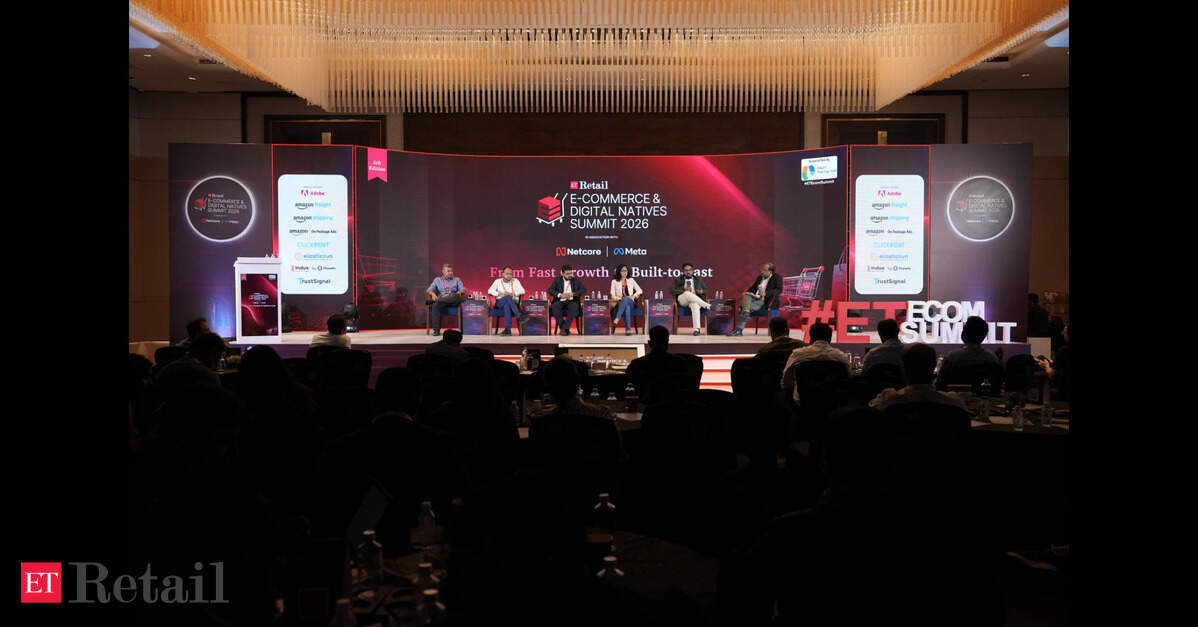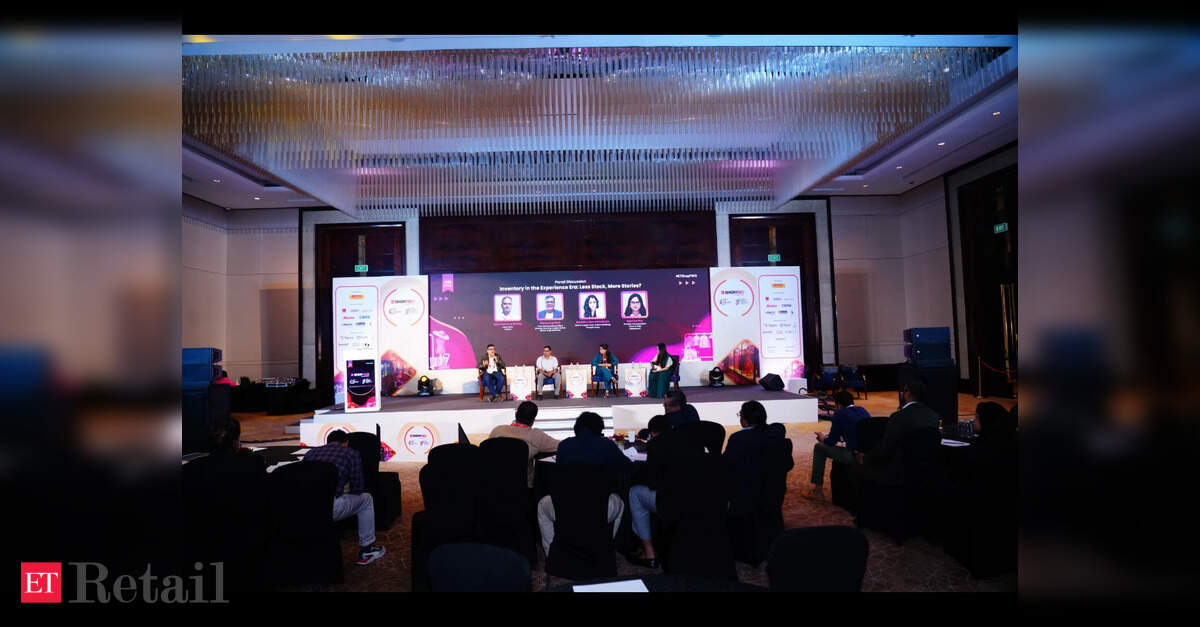
Founders from five Indian retail and consumer brands told the ETRetail Summit 2026 that once a company crosses roughly Rs 500 crore in revenue, the primary constraint shifts from market demand and product strategy to operational execution — specifically supply chain discipline, inventory control, people systems and operational consistency. The panel, convened at the summit, included Nikhil Doda of Lahori Zeera, Arvind Dadu of Anand Sweets, Subhash Chandra L of Sangeetha Mobiles, Sidhant Keshwani of Libas and Gurunathan of CaratLane, each bringing perspectives from food, beverages, electronics retail, fast fashion and jewellery.
Operational complexity emerges with geographic and industrial expansion
Nikhil Doda of Lahori Zeera pointed to the operational complexity that emerges when businesses expand geographically and across product lines. “The journey of zero to 100 is something else, and then the journey of scaling is different; it is more execution than strategy,” he said, according to the summit report. He highlighted that scaling manufacturing across locations and standardising standard operating procedures (SOPs) becomes a defining challenge once a brand moves beyond its core region. Doda noted that while distribution expansion has been key to growth, the category still has significant runway due to its low penetration and strong consumer pull. In the beverages segment, he added that differentiated product positioning and strong consumer recall have enabled organic distribution-led growth without heavy early marketing spends.
Arvind Dadu of Anand Sweets underscored the importance of consistency in customer experience as scale increases, according to the summit. He noted that in fresh food businesses, replication of quality across outlets is critical, adding that strong standard operating processes reduce dependence on individual talent and ensure uniformity across locations.
People systems and capital discipline underpin sustainable growth
Subhash Chandra L of Sangeetha Mobiles reflected on the evolution of retail over decades, noting that long-term survival has required continuous reinvention across technology cycles — from gramophones to smartphones, according to the event coverage. He stressed that scaling challenges are ultimately organisational, stating that “people scale and system scale are what determine whether growth sustains.” He added that inventory management, distribution expansion and financial structuring through EMI models have been central to sustaining growth in a highly competitive electronics retail market.
Subhash also highlighted the growing role of financing in driving adoption, noting that a significant share of smartphone purchases now happen through EMI and NBFC partnerships, which has expanded access while increasing operational complexity.
Gurunathan of CaratLane observed that once product-market fit is achieved, operational efficiency and inventory intelligence become significantly more critical. He said:
“The post-500 crore journey is about waking up to problems and solving them systematically.”
He added that consistent refinement of product, supply chain and marketing efficiency becomes the core driver of growth at scale. On jewellery, Gurunathan pointed to the resilience of the category despite macroeconomic pressures, citing innovations in affordable jewellery formats and digital gold offerings as key to maintaining demand momentum.
Technology as the backbone of inventory in fast fashion
Sidhant Keshwani, Founder and CEO of Libas, brought the perspective of fast fashion, noting that rapid product launches increase both opportunity and risk, according to the summit. He explained that with nearly 175 new designs launched weekly, technology becomes essential to manage inventory health and avoid stock obsolescence. “Doing this scale manually is impossible; tech has to be the backbone of inventory movement,” he said.
Keshwani concluded that speed is emerging as the defining competitive lever for the next phase of retail disruption, particularly as quick commerce reshapes consumer expectations in fashion retail.
Supply chain, people systems and capital form the foundation
Across categories, the panelists converged on the view that supply chain strength, people systems and capital discipline form the foundation of scalable businesses, according to the summit report. Nikhil Doda noted that distribution expansion has been key, while Subhash emphasised the shift from founder-led operations to institutionalised processes.
For investors and corporate strategy teams evaluating Indian retail companies, the panel’s consensus implies that due diligence on companies above the Rs 500 crore revenue threshold should focus less on market potential and more on operational maturity: the ability to standardise processes across locations, deploy technology for inventory and financial management, and build people systems that survive the founder’s personal involvement. The founders’ remarks suggest that the most common failure mode at this stage is not a flawed strategy but an inability to execute consistently at scale.