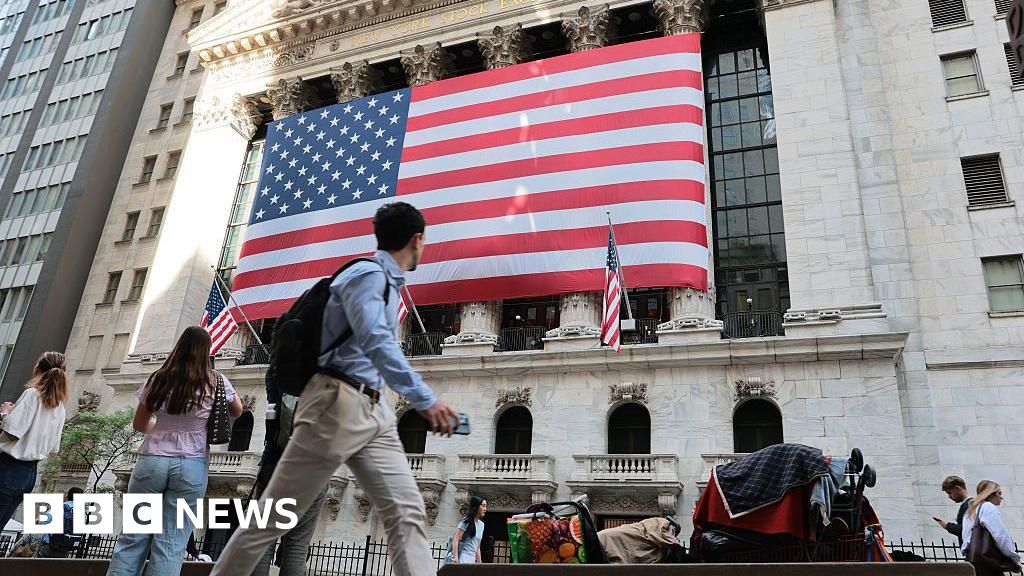
The US economy delivered a mixed report card this week, with stronger-than-expected GDP growth and a resilient labor market offset by persistent inflation and rising consumer costs. The Federal Reserve's preferred inflation gauge hit a three-year high, while businesses ramped up investment in artificial intelligence and Apple passed higher component costs to consumers.
Inflation Climbs to Three-Year High
According to the US Commerce Department, consumer prices rose 4.1% in May compared to a year earlier, marking the largest annual increase since April 2023. On a monthly basis, inflation increased 0.4% in May, matching April's pace and slowing from the 0.7% recorded in March. The rise was primarily driven by higher petrol prices, the Commerce Department said. Additionally, increasing costs of semiconductors and other computer equipment—bolstered by strong demand for artificial intelligence infrastructure—also contributed to the uptick.
AI Demand Drives Apple Price Increases
The growing demand for AI-related chips has started to affect retail prices in consumer electronics. Apple Inc. announced price increases across several Mac and iPad models, citing a shortage of memory chips caused by the AI boom. The company described the situation as an "unprecedented challenge" for the consumer electronics industry, stating, "We have never seen a component price increase this much, this quickly."
The new prices are as follows:
| Product | New Price | Previous Price | Increase |
|---|---|---|---|
| MacBook Neo (entry-level) | $699 | $599 | $100 |
| MacBook Air (512 GB) | $1,299 | $1,099 | $200 |
| MacBook Pro (1 TB) | $1,999 | $1,699 | $300 |
| iPad Air (128 GB) | $749 | $599 | $150 |
| iPad Pro Wifi (256 GB) | $1,199 | $999 | $200 |
Stronger GDP but Consumer Pullback
Despite higher inflation, the US economy expanded at an annual pace of 2.1% during the January–March quarter, according to the Commerce Department's final estimate released Thursday. That marks a recovery from the 0.5% growth recorded in the final three months of 2025, when a 43-day federal government shutdown weighed on activity. The latest figure was also higher than the department's earlier estimate of 1.6% for the quarter.
Business investment recorded a sharp increase, likely reflecting stronger investment linked to artificial intelligence, the Commerce Department noted. However, consumer spending—which accounts for roughly 70% of US economic activity—declined sharply from both the previous quarter and the department's earlier estimate. The report suggests households may be cutting back as higher petrol prices resulting from the war with Iran add to living costs.
Mortgage Rates Edge Higher
Borrowing costs for homebuyers increased slightly during the week. Freddie Mac reported that the average rate on a 30-year fixed mortgage rose to 6.49%, up from 6.47% a week earlier. The rate has remained close to 6.5% over the past six weeks. During the same period last year, the average stood at 6.77%. The average rate on a 15-year fixed mortgage, commonly used for refinancing, also increased to 5.84% from 5.81% a week earlier (year-ago rate: 5.89%).
Labor Market Resilient
The latest employment data pointed to continued strength in the labor market. Applications for unemployment benefits fell by 12,000 to 215,000 in the week ending June 20, according to the Labour Department. That figure came in below the 225,000 applications expected by analysts surveyed by FactSet. Weekly jobless claims are widely regarded as a near real-time measure of layoffs and the health of the US jobs market.
The week's data paints a picture of an economy navigating high inflation and geopolitical pressures while benefiting from AI-driven investment and a sturdy job market. For investors and executives, the divergence between business investment and consumer spending will be a key trend to monitor in coming months.
Sources: