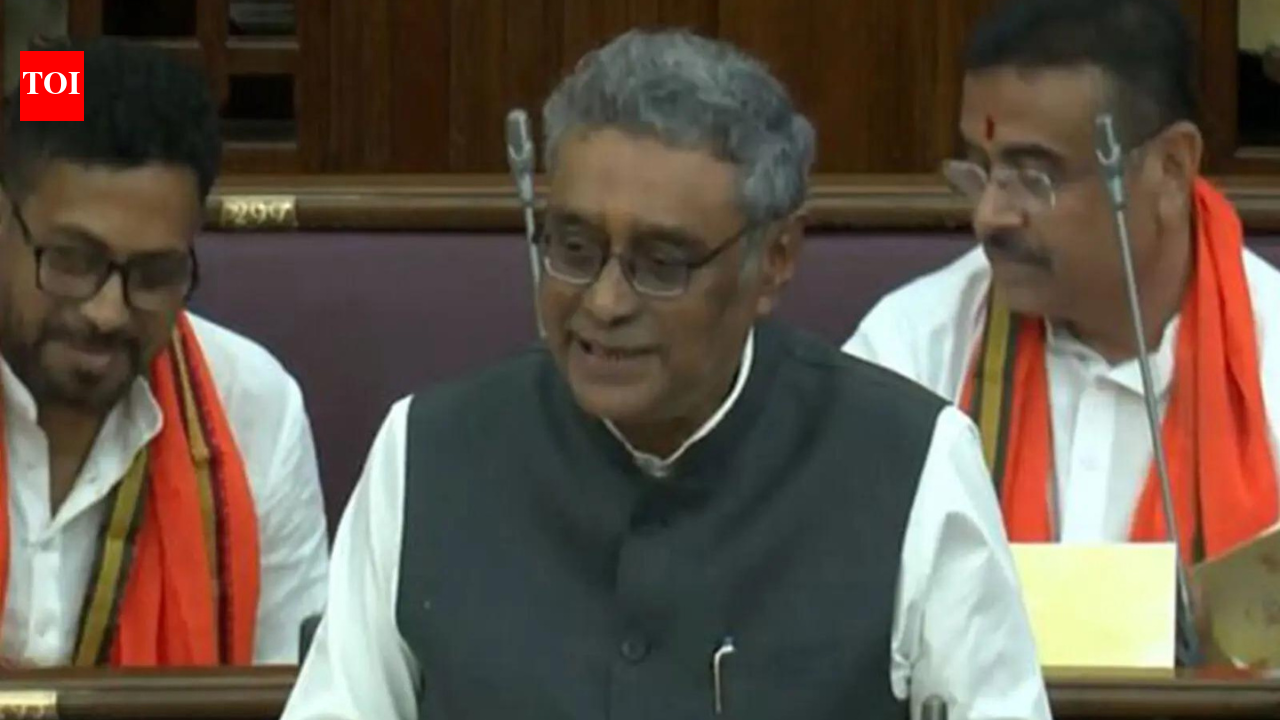
The BJP government in West Bengal presented its first state budget on Monday, combining welfare spending with employment promises that carry significant economic implications for the state's fiscal trajectory. Finance Minister Swapan Dasgupta announced a 20 percentage point hike in dearness allowance (DA) for state employees, recruitment to 1 lakh government posts, and a Rs 36,000 crore allocation for a direct cash transfer scheme for women, according to Business Today reporting PTI.
Fiscal Backdrop and Debt Burden
Dasgupta said the government had inherited a debt burden of Rs 8.15 lakh crore but would focus on restoring fiscal discipline while continuing welfare programmes, PTI reported. "Building a corruption-free administrative structure is a cornerstone of our vision. We have to restore people's trust in governance," Dasgupta said.
DA Hike and Government Job Creation
The government announced a 20 percentage point increase in DA for employees and dearness relief (DR) for pensioners from October 1, taking the rate to 38%. This narrows the DA gap between state and central government employees by 22 percentage points, an issue that had triggered prolonged protests under the previous regime. The budget also announced that 1 lakh vacancies would be filled in phases, including 20,000 positions in the police force and 50,000 teaching and non-teaching posts in schools. Dasgupta stated that 33% of the jobs would be reserved for women, while 10% reservation would be provided for Agniveers wherever applicable. "The upper age limit for government recruitment, already relaxed by five years, would continue for the next two years," he said, according to PTI.
Welfare Schemes: Annapurna Yojana and Pink Card
The largest welfare allocation is the Annapurna Yojana, with an outlay of Rs 36,000 crore. Under the scheme, women aged 25-60 will receive direct financial assistance in their bank accounts. The government also earmarked Rs 550 crore for free bus travel for women. A 'Pink Card' system will be introduced shortly for availing the benefit, the minister said. Dasgupta added that all existing social welfare schemes would continue, saying, "Our objective is to ensure that the benefits of government schemes reach the weakest sections of society. Necessary reforms will be undertaken wherever required."
Infrastructure Projects and AI Mission
The budget outlined several infrastructure projects: an elevated corridor connecting Chingrighata and New Town in Kolkata, a deep-sea port at Dadanpatrabar, and a four-lane bridge over the Mayurakshi river in Birbhum. Feasibility studies for metro rail projects in Durgapur, Asansol and Siliguri were also proposed. A Tribunal University will be set up in Jhargram, while an Artificial Intelligence Mission will be launched to promote emerging technologies. The government also announced special facilities for gig workers, including free charging points and drinking water arrangements.
Other Allocations and Support
| Beneficiary Category | Monthly Increase / Benefit |
|---|---|
| Retired journalists | Rs 5,000 pension |
| Individuals jailed in politically motivated cases | Rs 10,000 pension |
| Anganwadi and ASHA workers | Rs 5,000 increase |
| Civic volunteers, Green Police, NVF workers, Prani Bandhu, Prani Mitra | Rs 2,000 increase from August |
| MLA Local Area Development Fund | Increased from Rs 70 lakh to Rs 1 crore |
Growth and Business Implications
Dasgupta said the government's development vision was aligned with the national goal of Viksit Bharat. "People expect transparency about the state's finances. We have to maintain a balance while creating opportunities for employment, industrial growth and a modern, progressive Bengal," he said. For businesses, the infrastructure push — particularly the deep-sea port and elevated corridor — signals potential improvements in logistics and urban connectivity. The AI mission and gig-worker facilities may foster innovation and a better operating environment. However, the large welfare outlay (Rs 36,000 crore for Annapurna alone) against a debt of Rs 8.15 lakh crore will require sustained fiscal discipline to avoid crowding out private investment. The government's focus on corruption-free administration and job creation could improve the investment climate, but execution remains key.
Before presenting the budget, Dasgupta and chief minister Suvendu Adhikari participated in a brief prayer ceremony at the assembly premises.
Sources: