Foreign Portfolio Investors (FPIs) have withdrawn a significant Rs 32,963 crore from Indian equities in May 2026, marking a continuation of the capital outflow trend observed throughout the year. This withdrawal adds to the cumulative outflow of nearly Rs 2.3 lakh crore in 2026, surpassing the Rs 1.7 lakh crore withdrawn in 2025, according to NSDL data.
Market Context and Implications
The persistent outflows are attributed to a combination of factors, including subdued earnings growth in India and a depreciating rupee, which have made Indian equities less attractive compared to other markets such as the US, Japan, South Korea, and Taiwan. V K Vijayakumar, Chief Investment Strategist at Geojit Investments, noted that stronger corporate performance in these regions has prompted FPIs to reallocate their capital.
Expert Insights
"Participants will closely monitor global developments surrounding the US-Iran situation and movement in crude oil prices, which continue to remain critical for inflation expectations, currency stability, and foreign flows," said Ajit Mishra, SVP, Research, Religare Broking.
The Reserve Bank of India's (RBI) interest rate decisions and macroeconomic data announcements are also expected to influence future FPI activity. The BSE Sensex and NSE Nifty indices have already felt the impact, with declines of 640 points (0.8%) and 172 points (0.7%) respectively last week.
Trade and Business Implications
For businesses, the continued FPI outflows could lead to increased volatility in the equity markets, affecting investor sentiment and potentially raising the cost of capital. Companies reliant on foreign investment may face challenges in securing funding, while the depreciating rupee could impact import costs and trade balances.
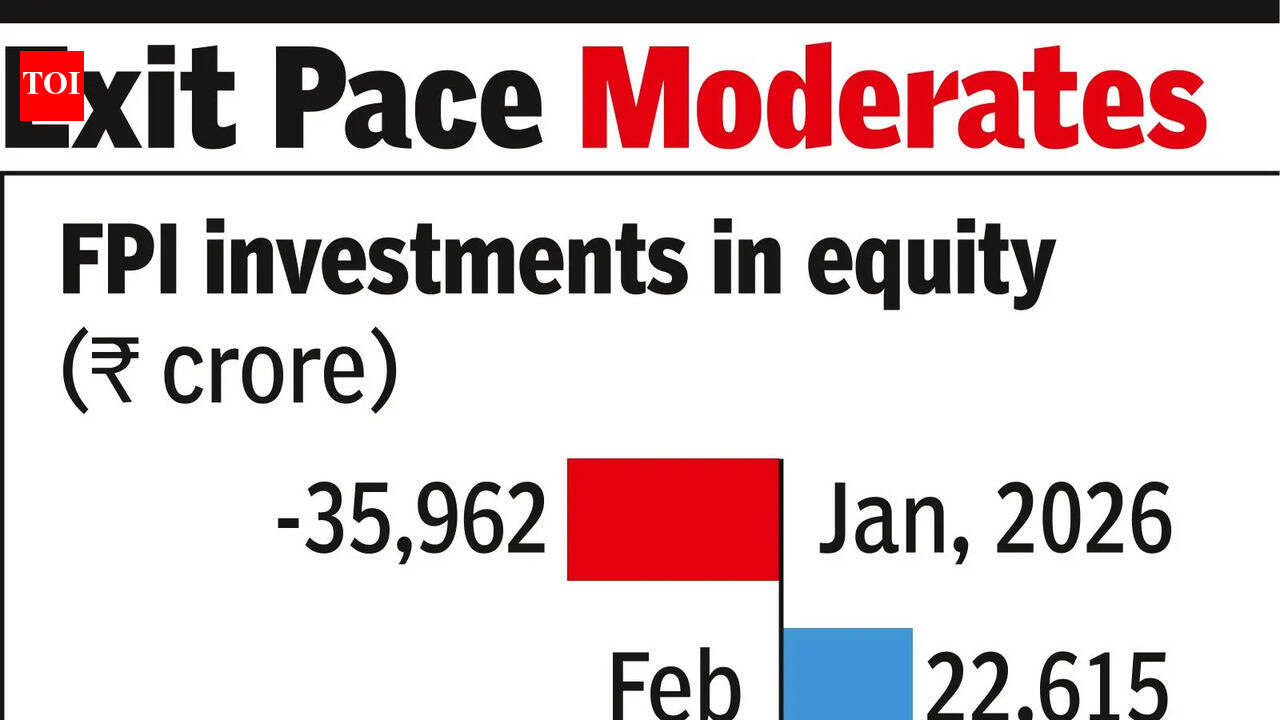
| Month | FPI Net Flow (Rs crore) |
|---|---|
| January 2026 | -35,962 |
| February 2026 | +22,615 |
| March 2026 | -1,20,000 |
| April 2026 | -60,847 |
| May 2026 | -32,963 |
The outlook for Indian equities remains uncertain, with global geopolitical tensions and domestic economic policies playing pivotal roles in shaping future FPI behavior.