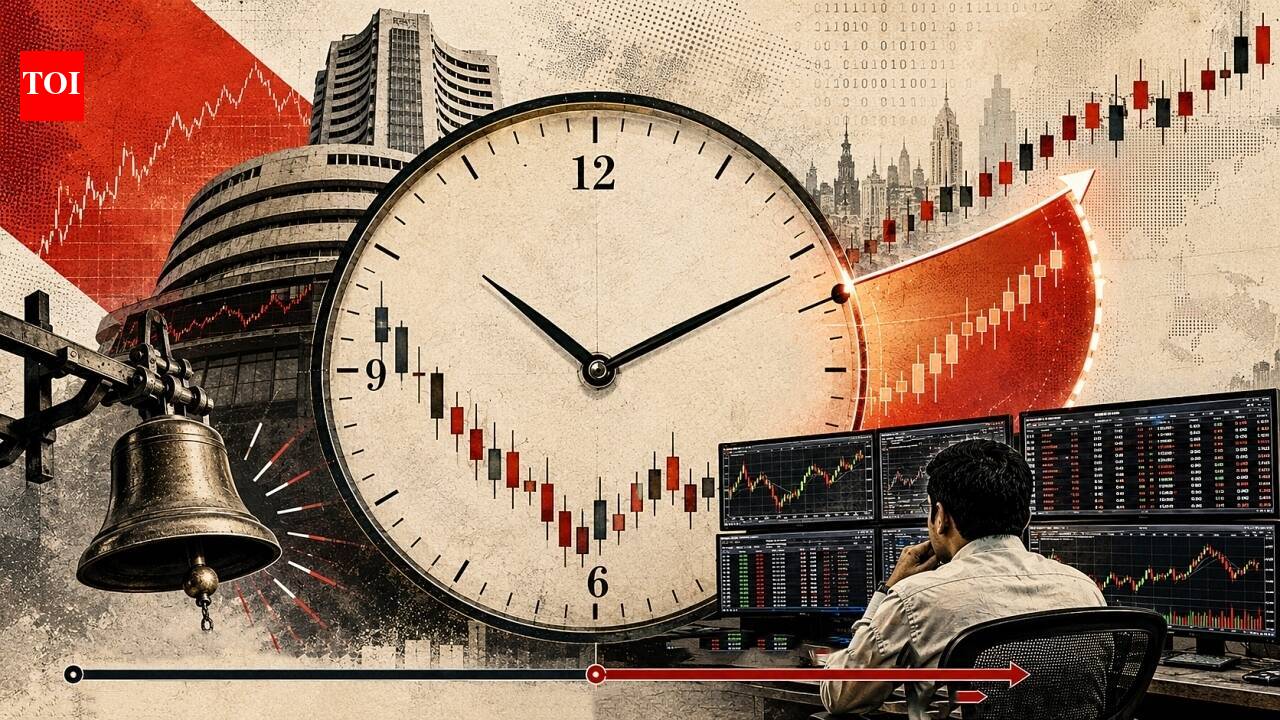
India's key stock benchmarks moved in unusual opposite directions on Monday, August 3, 2026, as a new closing-price mechanism mandated by the Securities and Exchange Board of India (SEBI) split the final phase of the trading session. According to Business Today, Nifty50 jumped 1.60% at the close, with 0.8% of the gain delivered in the last few minutes, while BSE Sensex ended just 0.70% up. The two benchmarks normally move within a 5–10 basis point range of each other, the report said.
What is the Closing Auction Session (CAS)?
Under SEBI guidelines effective August 3, 2026, a Closing Auction Session (CAS) has been introduced for eligible stocks, Business Today reported. The mechanism splits the market-closing pricing process depending on whether a stock belongs to the cash market with derivative contracts segment — the futures and options (F&O) category — or not. For F&O-list stocks, continuous trading now halts at 3:15 PM instead of 3:30 PM.
During the 20-minute auction window, the reference price is based on the volume-weighted average price (VWAP) of the stock between 3:00 PM and 3:15 PM, with a 3% price band on either side. The final closing price is set at the equilibrium price where maximum executable volume is achieved, Business Today reported. The earlier system, which used the VWAP of the last 30 minutes, has been done away with for F&O stocks.
How the auction timeline works
According to the National Stock Exchange, as reported by Business Today, the 20-minute auction from 3:15 PM to 3:35 PM is broken down as follows:
- First 5 minutes (3:15–3:20 PM): reference price calculation / transition from CTS to CAS.
- Next 5 minutes (3:20–3:25 PM): order entry period for both limit and market orders.
- Next 5 minutes (3:25–3:30 PM): order entry period for limit orders only; no modification or cancellation of market orders, with a random close in the last 2 minutes (3:28–3:30 PM).
- Once the system randomly closes order entry, order matching takes place.
The auction effectively pools the buy and sell interest in a stock into a single pool of liquidity.
Who keeps the old closing price method
Stocks not eligible for CAS continue trading until 3:30 PM under the existing volume-weighted average price-based methodology, Business Today reported.
| Feature | F&O-list stocks (CAS) | Non-F&O stocks |
|---|---|---|
| Continuous trading halt | 3:15 PM | 3:30 PM |
| Closing price mechanism | Auction equilibrium price | Volume-weighted average price (existing method) |
| Auction window | 3:15–3:35 PM (20 minutes) | None |
| Price band | Reference price ±3% | Not applicable |
| Reference price computation | VWAP between 3:00 PM and 3:15 PM | Not applicable |
What SEBI says the change achieves
According to Business Today, SEBI said the framework will allow and support a fair settlement of derivatives and indices and will help passive funds transact at closing prices with a lower tracking error. The move is intended to improve transparency, price discovery and execution efficiency and brings Indian stock markets closer to global practices; large exchanges such as the New York Stock Exchange (NYSE) and London Stock Exchange (LSE) already use the CAS mechanism.
Monday's divergence
Monday's rare divergence was driven by the altered final closing price calculation methodology for several stocks, according to Business Today. At the start of the new month, the new mechanism and revised timings left traders scrambling to adapt, the report said. With the split closing times now in effect from August 3, 2026, market participants are adjusting to a process in which F&O stocks finalise prices in the 20-minute auction while other stocks continue trading until 3:30 PM.
Sources: