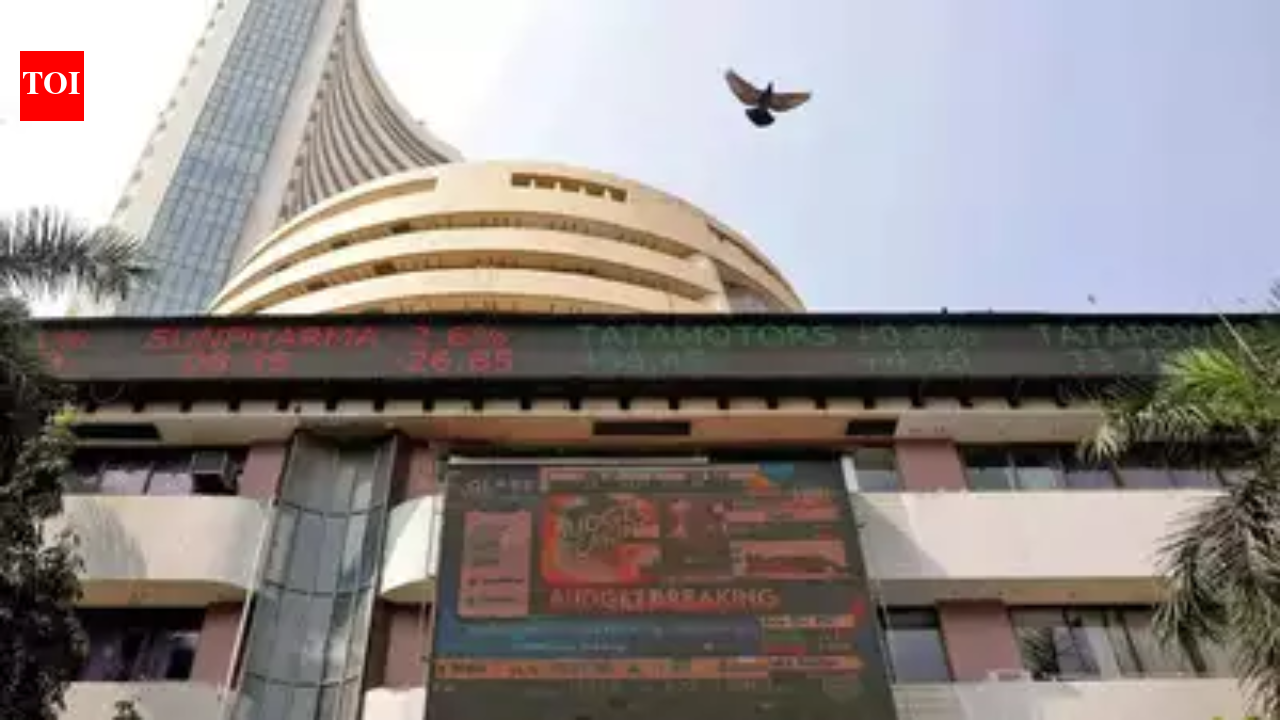
Indian equity benchmarks opened sharply higher in early trade on Wednesday, with the BSE Sensex jumping over 430 points and the NSE Nifty climbing above 24,645, according to The Times of India. The advance came as the rupee strengthened against the US dollar and oil prices recovered, with investors positioning ahead of the Reserve Bank of India's (RBI) monetary policy decision.
Early Gains Fade; Benchmarks End Lower
Despite the strong opening, Indian benchmark indices ended lower, snapping a four-session winning streak. The BSE Sensex fell 210.08 points to settle at 78,428.95, while the NSE Nifty declined 159.40 points to close at 24,614.90, The Times of India reported. Markets had started the session on a mixed note but gradually lost momentum as investors booked profits in several large-cap stocks.
| Index | Change (points) | Closing Level |
|---|---|---|
| BSE Sensex | -210.08 | 78,428.95 |
| NSE Nifty | -159.40 | 24,614.90 |
Closing Auction Session Drives Volatility
Market experts attributed the recent volatility primarily to the introduction of the Closing Auction Session (CAS) rather than any deterioration in the broader economic outlook, the report said. The new mechanism, introduced to improve transparency and robustness in determining closing prices, led to significant shifts in benchmark-heavy stocks.
- Hariselvan Radhakrishnan, Founder and CEO of HST Wealth, said benchmark indices experienced a phase of recalibration after Monday's auction lifted the closing prices of several heavyweight stocks.
- Vinod Nair of Geojit Investments said the combination of weekly expiry and the revised F&O closing price mechanism temporarily distorted market trends.
- Vikram Kasat of PL Capital noted that investors also used the session to book profits in large-cap financial and IT stocks after the previous day's rally.
Analysts broadly agreed that the fluctuations reflected evolving market mechanics and investor positioning rather than structural weaknesses, with healthy auction volumes indicating continued institutional participation.
Despite the decline in headline indices, broader market performance remained mixed, reflecting selective buying in pockets of the market.
Oil Prices Recover on West Asia Watch
Oil prices recovered modestly in early trade after suffering steep losses in the previous session, as investors continued to assess developments in West Asia and their potential impact on global crude supplies. Brent crude futures rose 31 cents, or 0.39%, to $79.67 a barrel, while US West Texas Intermediate (WTI) crude gained 11 cents, or 0.15%, to $75.88 a barrel, The Times of India reported.
| Benchmark | Change | Price |
|---|---|---|
| Brent crude futures | +31 cents (+0.39%) | $79.67/barrel |
| US WTI crude | +11 cents (+0.15%) | $75.88/barrel |
The rebound came after oil prices fell on Tuesday following comments from Qatar that mediators were making progress in efforts to end the conflict in the region. The prospect of easing geopolitical tensions reduced concerns over possible supply disruptions, dragging crude prices lower. However, uncertainty remained after Tehran rejected US President Donald Trump's claim that talks were already underway. Market participants continue to monitor diplomatic developments closely, with any breakthrough or escalation likely to influence crude prices and, in turn, investor sentiment across global financial markets.
Rupee Strengthens Ahead of RBI Decision
The rupee jumped 39 paise to 94.89 against the US dollar ahead of the RBI monetary policy decision, The Times of India reported. The currency's gain added to the positive risk sentiment in early trade, even as the volatility in equities remained elevated.
While the early trade rally faded, the analyst commentary in the report suggests the market is still adapting to the new mechanism rather than reacting to a change in economic fundamentals. The mix of profit-taking in financial and IT stocks, combined with continued institutional participation, points to an ongoing recalibration phase for benchmark indices.
Sources: