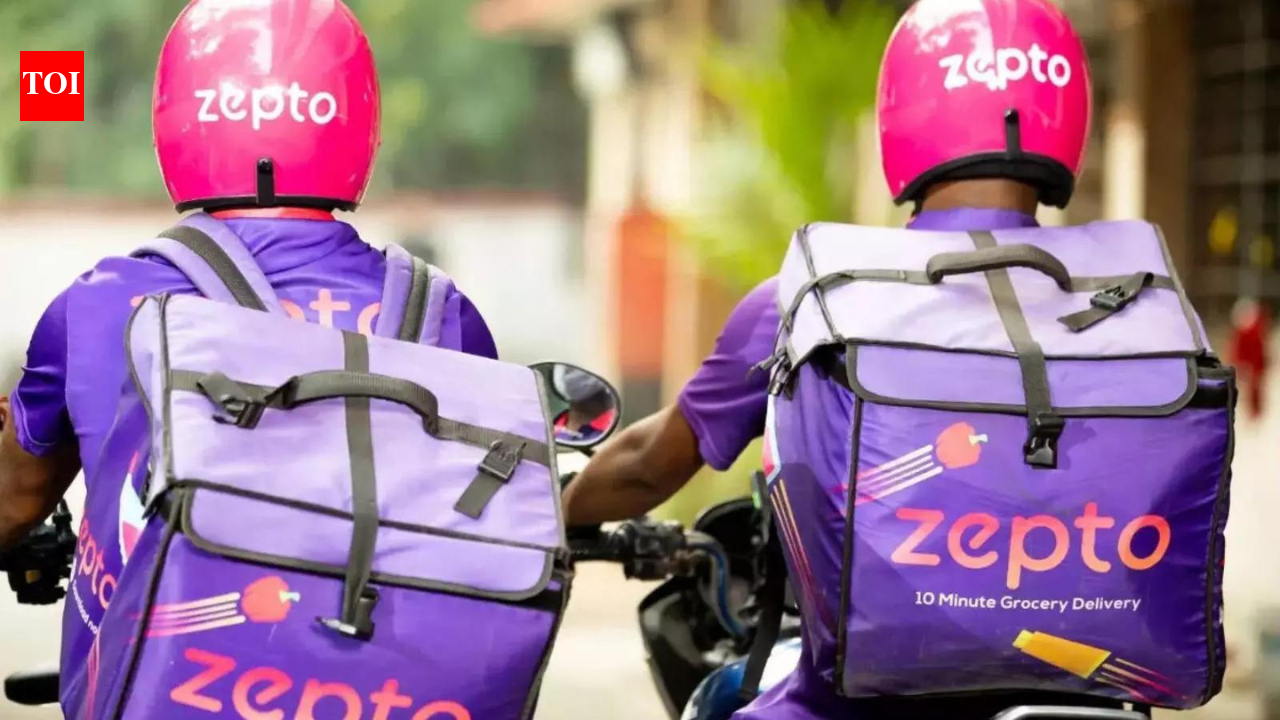
Zepto, the Indian quick-commerce startup that popularised 10-minute grocery delivery, has filed its draft red herring prospectus (DRHP) with SEBI, setting the stage for one of India’s most closely watched startup listings. The IPO comprises a fresh issue of shares worth up to Rs 80,100 million and an offer for sale by existing investors, giving public investors their first detailed look at the economics of a company processing over 640 million orders a year.
IPO Details and Use of Proceeds
The issue is being managed by Axis Capital, Morgan Stanley India, Goldman Sachs India Securities, Motilal Oswal Investment Advisors, HSBC Securities and Capital Markets India, JM Financial, and IIFL Capital Services. According to the DRHP, proceeds from the fresh issue will be deployed as follows:
| Purpose | Amount (Rs million) |
|---|---|
| Setting up new dark stores | 31,700 |
| Capital expenditure | 37,500 |
| Inorganic growth / general corporate purposes | 53,800 |
| General corporate purposes | Remaining |
Growth Story
Zepto’s revenue from operations more than doubled to Rs 22,623 crore in FY26 from Rs 11,109 crore in FY25, as reported by Business Today. Annual transacting users grew to 47.97 million from 38.38 million, while total orders crossed 640 million during the year. The company now operates 1,139 dark stores and 75 warehouses across urban India.
Operating Metrics That Stand Out
According to a Nomura analysis based on Zepto’s DRHP disclosures, Zepto leads peers on order density. Zepto’s orders per day per dark store (OPD/store) was ~2,140 in 4QFY26, which is ~60% higher than Blinkit and ~100% higher than Instamart. Notably, Blinkit operates 2,243 stores, roughly double Zepto’s network, while Instamart has a similar number of stores. The brokerage noted that higher density allows fixed costs (rent, manpower, utilities) to be spread across more transactions, supporting profitability.
However, Zepto’s average order value (AOV) declined to Rs 345 in FY26 from Rs 415 in FY24, attributed to a shift in category mix toward lower-value items.
Financial Performance
Zepto reported a contribution margin of 2.2% in FY26, up from negative levels in FY24, indicating improving unit economics. Yet pre-tax losses stood at Rs 6,468 crore on revenue of Rs 25,681 crore (including other income of Rs 3,058 crore from gains on mutual funds and fixed deposits). Operating cash flow remained negative at ~Rs 211 crore per month. Employee benefit expenses were Rs 1,314 crore, and delivery partner expenses totalled Rs 3,301 crore. The company holds Rs 4,255 crore in cash reserves.
Market Opportunity
Industry estimates cited in the DRHP project India’s quick-commerce market growing from ~$1.6 billion in 2022 to ~$11.3 billion in 2025, and reaching $60–83 billion by 2030. That potential explains why investors continue to back the sector despite heavy spending.
Founders and Backing
Zepto was incorporated in late 2020 by Aadit Palicha and Kaivalya Vohra as Kiranakart Technologies in Mumbai. After pivoting from a traditional grocery aggregator to a dark-store model in mid-2021, they dropped out of Stanford to scale the business. The company has drawn capital from Y Combinator, Nexus, Glade Brook, and the Kaiser healthcare group.
The next milestone will be SEBI’s approval and the subsequent price-band determination for the IPO, which will test whether India’s public-market investors share the same conviction as venture capitalists in the 10-minute delivery model.
Sources: