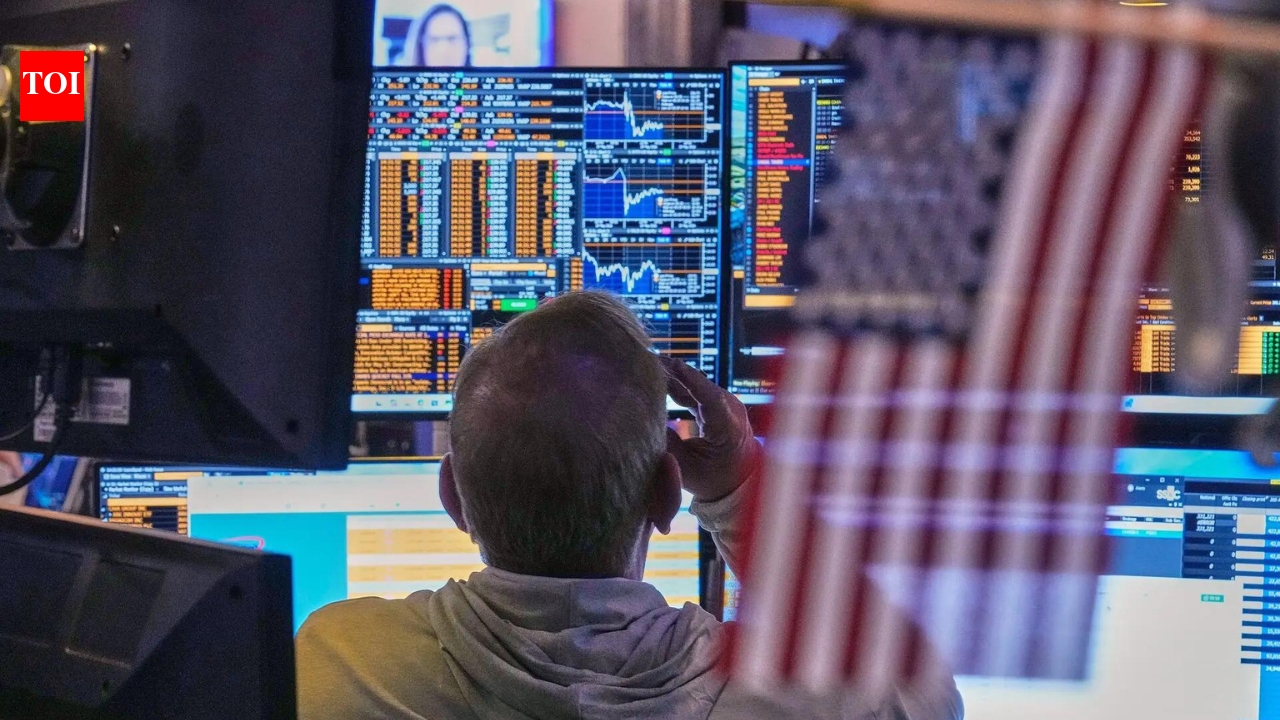
US stocks climbed more than 1% on Monday, extending a recovery from a volatile July, as falling oil prices and hopes of a US-Iran deal boosted market sentiment, according to Business Today. The S&P 500 gained 1%, the Dow Jones Industrial Average advanced 624 points, or 1.2%, and the Nasdaq Composite rose over 1%.
Oil Prices and the Iran Factor
Business Today reported that Brent crude fell 4.9% to $83.65 per barrel. Prices retreated after President Donald Trump said over the weekend that he had decided against authorising fresh US military strikes on Iran, following appeals from regional allies. Last month, Brent fluctuated sharply between $72 and $102 a barrel as sentiment shifted repeatedly over the prospects of oil tankers resuming unrestricted movement through the Persian Gulf following the Iran conflict.
The decline in crude prices eased concerns that inflationary pressures could intensify further, providing relief to Wall Street, although financial markets continued to witness significant volatility, according to an AP report cited by Business Today.
Treasury Yields and Inflation Expectations
Trump's latest decision on Iran helped ease fears of a renewed surge in inflation, and Treasury yields moved lower in response. The yield on the benchmark 10-year US Treasury note declined to 4.68% from 4.75% at Friday's close, Business Today reported. It remained well above the 3.97% level seen before the outbreak of the Iran conflict.
The sharp rise in bond yields since then has raised concerns for financial markets: higher borrowing costs can weigh on stock valuations and slow economic activity by making loans more expensive for households and businesses. The average long-term mortgage rate in the US has already climbed to its highest level in a year.
| Market Indicator | Move |
|---|---|
| S&P 500 | +1% |
| Dow Jones Industrial Average | +624 points (+1.2%) |
| Nasdaq Composite | +1% |
| Brent crude | −4.9% to $83.65/barrel |
| 10-year US Treasury yield | 4.68% (from 4.75%) |
Winners: Fuel-Sensitive Stocks Rally
The retreat in crude oil prices lifted shares of companies with significant fuel expenses. United Airlines gained 5.6%, American Airlines advanced 5.7%, and Norwegian Cruise Line Holdings rose 5.4%, according to Business Today. These gains came as lower energy costs reduce an input expense for airlines and cruise operators.
Losers: Semiconductor Stocks Under Pressure
Semiconductor stocks remained under pressure as investors continued to question whether the rapid revenue growth fuelled by the artificial intelligence boom can be sustained over the longer term. If AI fails to deliver the expected gains in profitability and productivity, major technology companies could scale back their heavy investments in data centres — a key driver behind the sharp rally in chip stocks.
Micron Technology fell 4.9%, making it one of the biggest drags on the S&P 500, although its shares were still up more than 170% for the year. Advanced Micro Devices (AMD) declined 2.7%, reducing its year-to-date gain to 116%.
| Company | Move | Year-to-Date |
|---|---|---|
| United Airlines | +5.6% | — |
| American Airlines | +5.7% | — |
| Norwegian Cruise Line Holdings | +5.4% | — |
| Micron Technology | −4.9% | +170% |
| AMD | −2.7% | +116% |
Asia: AI Swings and Yen Coordination
South Korea continued to witness some of the sharpest swings in AI-related stocks, largely because the Kospi index is heavily weighted towards Samsung Electronics and SK Hynix. Seoul's Kospi index dropped 5.1%, following Friday's record-breaking 17.9% rally — its strongest single-day gain ever.
Elsewhere in Asia, Japan's Nikkei 225 slipped 0.9% after the United States and Japan confirmed coordinated action to support the Japanese yen against the US dollar. While a stronger yen can help ease inflationary pressures in Japan, it may also reduce the competitiveness of the country's exporters, Business Today reported.
The market moves underscore how geopolitical developments and commodity price swings continue to drive investor sentiment across global equities, with fuel-sensitive sectors reaping benefits while AI-exposed chipmakers face renewed scrutiny over the durability of their growth.
Sources: