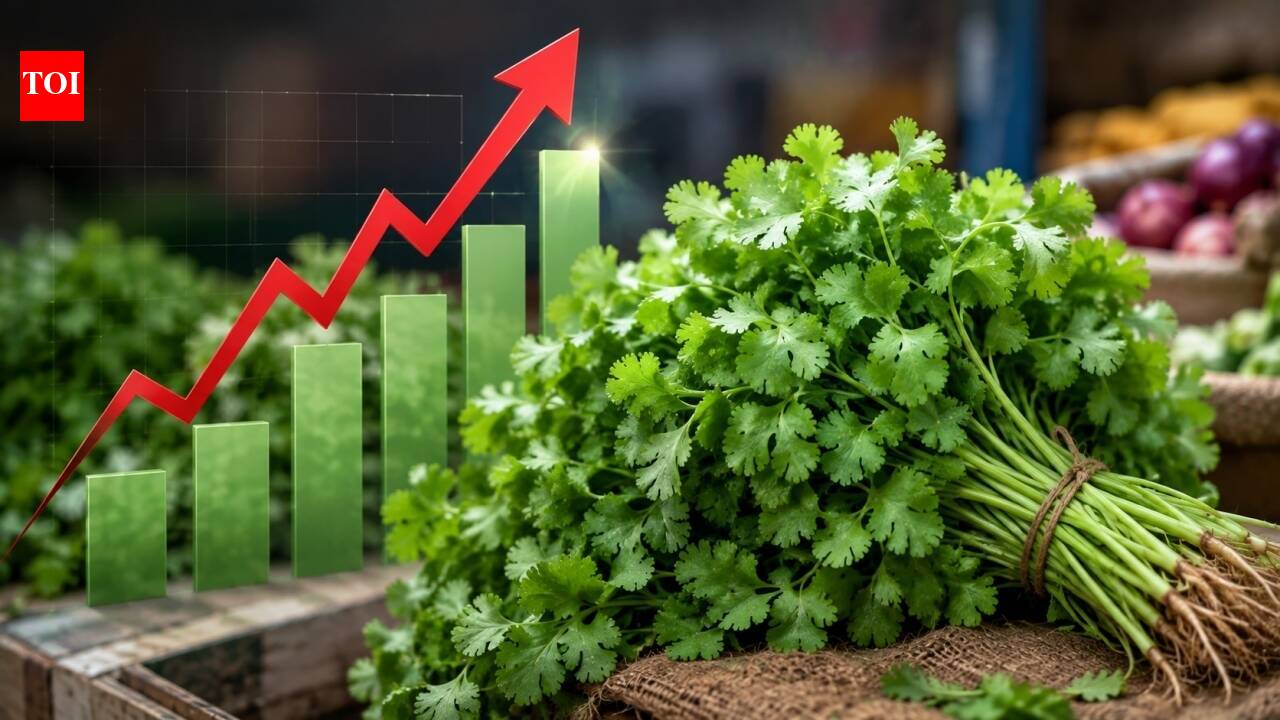
Fresh coriander (dhaniya), long treated as the freebie vegetable vendors toss into shopping bags, has become a costly kitchen essential, with prices rising above Rs 200 per kg after heavy rains disrupted supplies from India's major growing regions, according to a Times of India report. Green chilli (hari mirch) has historically played a similar freebie role, the report noted, but the current crisis centres on coriander, which is now commanding a premium price.
Delhi market rates spike
At Delhi's Azadpur mandi, fresh coriander prices climbed to Rs 175 per kg, while retail rates earlier this week reached Rs 220-230 per kg, according to traders quoted in an ET report cited by the Times of India. Mukesh Kumar, a vegetable trader at Azadpur mandi, said wholesale prices during this period of the year are typically around Rs 25 per kg. Traders added that wholesale rates briefly surged to Rs 200 per kg before easing to about Rs 110 per kg.
| Price benchmark | Rate (Rs per kg) | Timing |
|---|---|---|
| Azadpur mandi wholesale | 175 | Climbed this week |
| Retail rate | 220-230 | Earlier this week |
| Typical wholesale (seasonal norm) | ~25 | This time of year, per Mukesh Kumar |
| Wholesale brief peak | 200 | One-off surge |
| Wholesale after easing | ~110 | After peak, per traders |
| Nashik local price | ~130 | About a month ago, per Krushna Borade |
Heavy rains in Nashik hit standing crops
The sharp increase followed intense rainfall in and around Nashik in Maharashtra, a key source of green coriander for markets across northern India. Flooding toward the end of July damaged standing crops and disrupted transportation, reducing the supply of coriander that could withstand the long-distance journey to Delhi, the report said.
Krushna Borade, a vegetable trader and exporter based in Nashik, said about a month ago the availability of good-quality green coriander had already tightened, pushing local prices in Nashik to nearly Rs 130 per kg. He added that supplies from other producing centres, including Bengaluru and Latur, had also fallen because of delayed rainfall. Borade said the recent spell of heavy rain caused extensive damage to coriander crops across several regions, making premium-quality produce increasingly difficult to procure.
Supply chain bottlenecks
Coriander harvested around Nashik is usually sent first to cold-storage facilities in Indore before being transported to Delhi, leaving the supply chain highly susceptible to interruptions caused by heavy rain, according to the report. The shortage has been particularly acute for varieties capable of enduring long-distance transportation to markets such as Delhi.
According to Mukesh Kumar, Karnataka has helped bridge part of the supply shortfall, but arrivals have remained limited and the quality of the produce has generally been inferior. Traders said weather-related disruptions to transportation further fuelled the sharp swings in prices seen on certain days this week.
It is very difficult to predict prices of leafy greens during the rainy season as they can jump multi-fold within a day of delayed arrival.
— Aniket Kapadi, coriander trader from Nashik
For traders and procurement teams, the coriander market now carries pronounced weather risk: with Nashik crops damaged and supplies from Bengaluru, Latur and Karnataka only partially offsetting the shortfall, the Azadpur mandi benchmark — a typical seasonal wholesale price of around Rs 25 per kg versus the Rs 110-200 per kg range seen this week — underscores how quickly supply shocks can move the market.
Sources: