iGEN
Visit IGEN World Explore IGEN Expo
EXPLORE UPGRADE PLANS
BREAKING
Predatory Towing Turns Routine Truck Accidents into Six-Figure Financial Events India Launches AI-Powered Smart Warehousing for 216 CWC Grain Storage Warehouses Wolverhampton Finance-Help Scheme Unlocks Nearly £1.4m for More Than 200 Residents Bhogapuram Airport User Fee Set: Rs 355 to Rs 1,255 per Passenger as AERA Issues Ad Hoc Tariff Order CrossCountry Ranked Worst UK Train Operator as Performance Scores Plummet Niqo Robotics shows India-built physical AI farming platform at France innovation conclave Cassandra Gaines unveils CAVRA Standard, a trucking industry blueprint for defensible carrier selection High-density exotic cherry varieties transform Kashmir orchards, fetch premium prices Waymo Recalls 3,871 Robotaxis Over Risk of Driving Into Freeway Construction Zones 'Fastest we've ever put a trade deal into force': British High Commissioner to India Lindy Cameron hails India-UK trade deal Predatory Towing Turns Routine Truck Accidents into Six-Figure Financial Events India Launches AI-Powered Smart Warehousing for 216 CWC Grain Storage Warehouses Wolverhampton Finance-Help Scheme Unlocks Nearly £1.4m for More Than 200 Residents Bhogapuram Airport User Fee Set: Rs 355 to Rs 1,255 per Passenger as AERA Issues Ad Hoc Tariff Order CrossCountry Ranked Worst UK Train Operator as Performance Scores Plummet Niqo Robotics shows India-built physical AI farming platform at France innovation conclave Cassandra Gaines unveils CAVRA Standard, a trucking industry blueprint for defensible carrier selection High-density exotic cherry varieties transform Kashmir orchards, fetch premium prices Waymo Recalls 3,871 Robotaxis Over Risk of Driving Into Freeway Construction Zones 'Fastest we've ever put a trade deal into force': British High Commissioner to India Lindy Cameron hails India-UK trade deal
Home ›› Commodities ›› Commodities Agri ›› High-density exotic cherry varieties transform Kashmir orchards, fetch premium prices

High-density exotic cherry varieties transform Kashmir orchards, fetch premium prices

Kashmir's cherry growers in Srinagar, Ganderbal, and Shopian are shifting to high-density exotic varieties such as Regina and Kordia, fetching ₹400-500 per kg—a premium over traditional varieties. Government initiatives like the Holistic Agriculture Development Programme and the Cherry Cluster Development Project support this transition, aiming to add 4,000 metric tonnes to annual production and benefit 4,000 growers.

iG
iGEN Editorial
June 18, 2026
High-density exotic cherry varieties transform Kashmir orchards, fetch premium prices

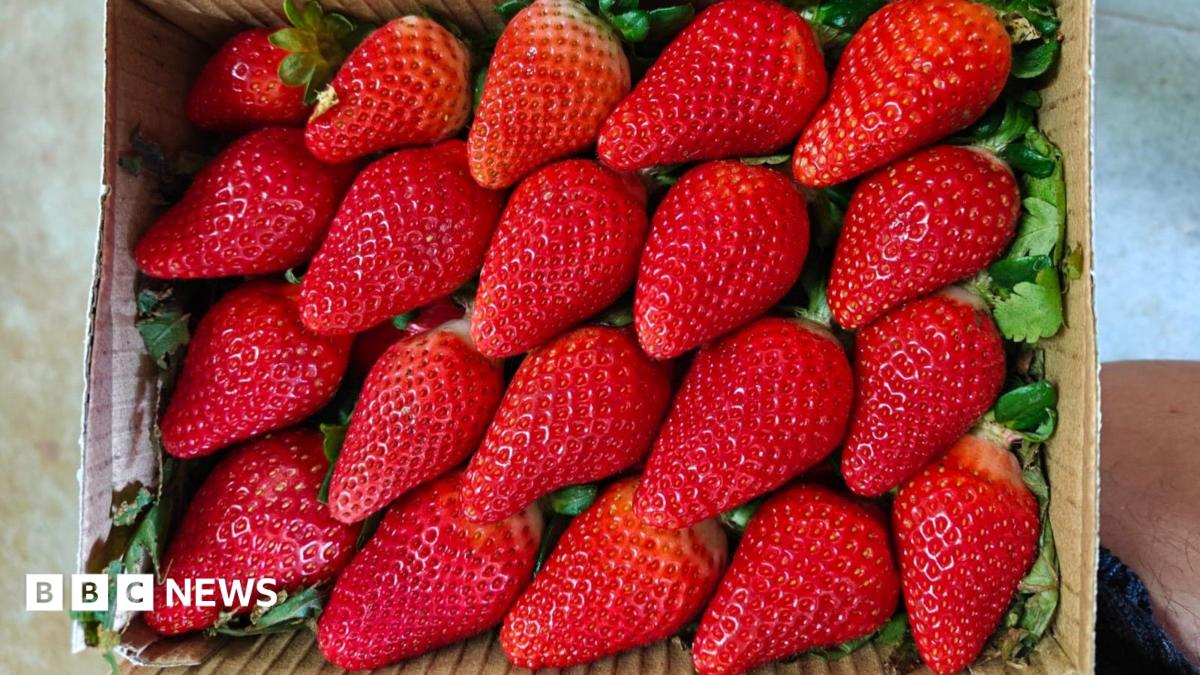
High-density exotic cherry varieties are transforming Kashmir's orchards, enabling farmers to earn significantly higher prices compared to traditional cultivars, according to a report in The Hindu BusinessLine. A one-kilogram box of imported varieties such as Regina, Kordia, Lapin, Areko, Santina, and Sweet Sarreta now sells for between ₹400 and ₹500, while traditional varieties fetch only ₹200 to ₹400 per kg, the report said.

Price Premium Driving Adoption

The price differential is a major incentive for growers in the key cherry-producing districts of Srinagar, Ganderbal, and Shopian. Mohammad Ashraf, a cherry cultivator from Ganderbal, told the publication that these varieties "fetch comparatively better prices and have improved farmers’ returns." The transition from traditional to imported high-yielding cultivars has accelerated over the past few years, driven by government support and the promise of earlier fruiting, better fruit quality, and reduced weather-related losses.

Variety Type Price per kg (₹) Yield Advantage
Traditional varieties 200 – 400 Standard
Exotic high-density varieties (Regina, Kordia, etc.) 400 – 500 Earlier fruiting, higher quality

Government Initiatives Scaling Up Production

Backed by the Holistic Agriculture Development Programme (HADP), an increasing number of growers are shifting to high-density cherry plantations. Javid Ahmad Dar, Jammu and Kashmir's Agriculture Production minister, said the transition "has not only improved fruit quality and productivity but has also enhanced farmers’ incomes by enabling them to access premium domestic and export markets." He noted that farmers are availing various government schemes for multiple crops, not just cherries.

Currently, cherries are cultivated across 2,952.91 hectares in Kashmir, yielding an annual production of approximately 23,230.59 metric tons. To further strengthen the value chain, the J&K government is implementing the Cherry Cluster Development Project under HADP in Ganderbal and Baramulla districts. The ₹125.93-crore project, executed by Chhabeela Greengene Propagation and Chhabeela Energy Foods Pvt. Ltd. (JV), covers around 1,440 hectares of cherry orchards and is expected to directly benefit nearly 4,000 growers.

The initiative focuses on scientific orchard management, high-density plantations, improved planting material, Good Agricultural Practices (GAP) certification, organic cultivation, precision farming, and modern post-harvest infrastructure. It aims to enhance productivity, add about 4,000 metric tonnes to annual cherry production, improve value addition and market access, and create more than 150 direct employment opportunities in nursery development, processing, storage, logistics, packaging, marketing, and allied services.

Transport Infrastructure Reduces Post-Harvest Losses

Fast transportation of cherries to wholesale markets across India via railways has further benefited farmers by preventing post-harvest losses. Railway officials at the Jammu Division reported that this season around 250 tonnes of cherries were transported to major Indian cities including Mumbai, Surat, and Vadodara. An agriculture official added that cherries are also being transported by air cargo to Mumbai and other destinations, ensuring timely delivery to premium markets.

Outlook for Cherry Traders

For commodity traders and procurement teams, the shift to high-density exotic varieties in Kashmir signals a supply of higher-grade cherries with consistent quality, potentially increasing India's presence in premium domestic and export markets. The planned addition of 4,000 metric tonnes of annual production from the cluster project — a roughly 17% increase over current output — could influence regional pricing dynamics and open new sourcing opportunities for processors and traders. The success of this model may also serve as a blueprint for other horticultural commodities in the region.


Sources: AGRI_TIO

Keep Reading

Recommended Stories

HAS Invests in Nano-Agriculture for Indian Farmers Commodities

HAS Invests in Nano-Agriculture for Indian Farmers

Germany-based HAS is investing €1 million in India's nano-agriculture sector to introduce advanced nanotechnology solutions. This initiative aims to reduce chemical dependency and improve crop yields for Indian farmers.

June 1, 2026
Kharif Pulses Sowing Off to a Weak Start: Acreage Down 43% as of June 12 Commodities

Kharif Pulses Sowing Off to a Weak Start: Acreage Down 43% as of June 12

Kharif pulses sowing in India has started weakly with acreage down 43% as of June 12 due to a delayed and deficient monsoon. Tur acreage fell 57%, urad 22%, and moong 55% compared to last year. Farmers in key regions await rains, while the government holds buffer stocks of 4.3-4.5 million tonnes to keep prices in check.

June 16, 2026
India Soyabean Acreage Seen Rising Up to 10% on High Prices, Weak Monsoon Outlook Commodities

India Soyabean Acreage Seen Rising Up to 10% on High Prices, Weak Monsoon Outlook

India's soyabean acreage is expected to rise by up to 10% in 2026, from 12 million hectares in 2025, driven by four-year-high prices and a forecast of below-normal monsoon rainfall due to El Nino. Farmers are shifting from water-intensive crops like sugarcane and corn. Higher output could help curb edible oil imports and ease domestic soyabean and soyameal prices.

June 16, 2026
India's foodgrain output hits record 357.7 mt in 2024-25, transforming global trade landscape Commodities

India's foodgrain output hits record 357.7 mt in 2024-25, transforming global trade landscape

India's agricultural sector achieved record foodgrain production of 357.7 million tonnes in 2024-25, according to a government report. Rice output hit an all-time high, making India the world's largest rice producer. The growth in oilseeds and horticulture reduces import dependence but significant edible oil imports continue. Policy shifts including higher public investment and expanded procurement are driving the transformation, with implications for global commodity trade.

June 15, 2026