
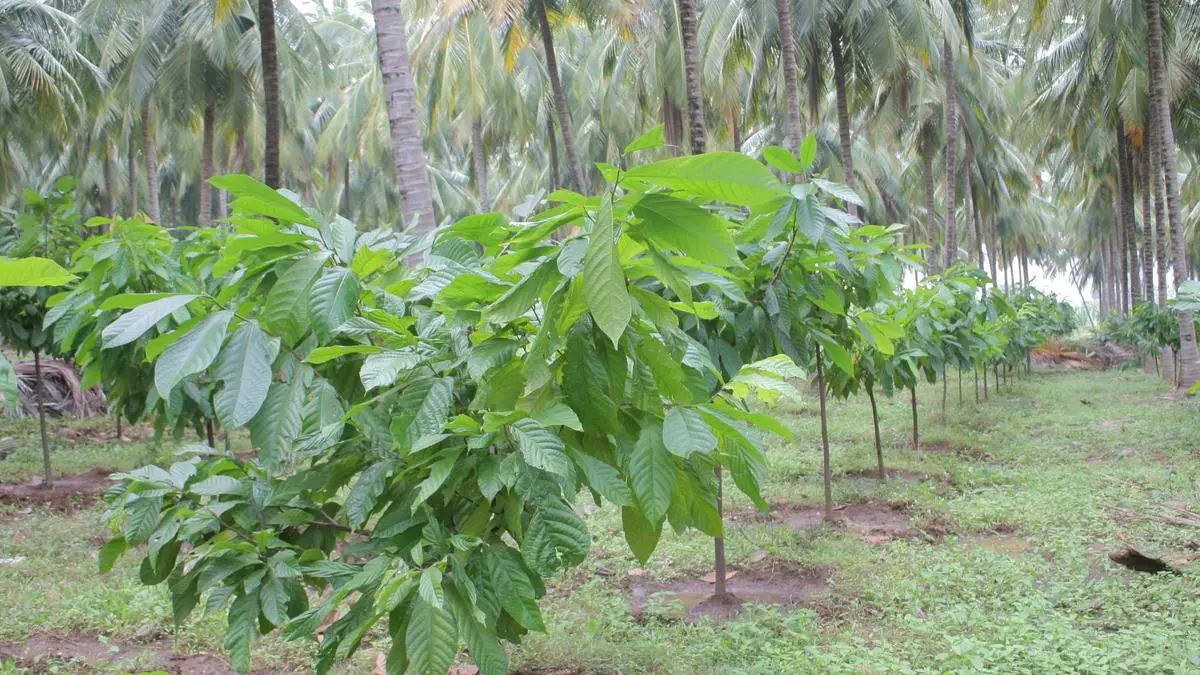
A Tamil Nadu farmer, Valluvan, has successfully transformed his coconut farming losses into a profitable agroforestry model. Initially facing a loss of Rs 200 per coconut tree, Valluvan revamped his 11-hectare farm in Pollachi district, turning it into a lucrative enterprise earning Rs 2.5-3 lakh per acre annually.
Innovative Agroforestry Approach
Valluvan's turnaround began in 2009 after engaging with the Isha Foundation’s Save Soil - Cauvery Calling programme. This initiative, led by Sadhguru Jaggi Vasudev, encouraged a shift to multi-crop, tree-based agriculture. Valluvan expanded from three crop varieties to over 14, including coconut, nutmeg, pepper, and various bananas.
Resilience Against Drought
The farm's resilience was tested during two severe droughts, including a 2017 crisis. Through mulching and rainwater harvesting, Valluvan maintained moisture levels, reducing water usage to one-tenth of previous requirements. "Even sensitive crops like nutmeg and pepper survived without extra irrigation," Valluvan noted.
Economic and Environmental Benefits
The multi-crop model not only increased income but also acted as a hedge against market fluctuations. Anand Ethirajalu, Project Director at Save Soil - Cauvery Calling, likened the strategy to a cricket team with competent substitutes. The initiative has planted 13.4 crore trees across Tamil Nadu and Karnataka, aiming to restore the Cauvery river basin.
"Tree-based agriculture is the only solution for global warming and the climate crisis threatening the entire world," Valluvan emphasized.
Challenges and Future Outlook
Despite successes, scaling and policy barriers remain. Ethirajalu calls for drip-irrigation support, removal of restrictive timber-sale regulations, and insurance schemes for tree-based agriculture. The model's success could inspire broader adoption, enhancing both economic and environmental resilience.
| Crop Type | Initial Income (Rs) | Current Income (Rs) |
|---|---|---|
| Coconut | 30,000 | 2.5-3 lakh |
| Nutmeg | - | - |
| Pepper | - | - |


