
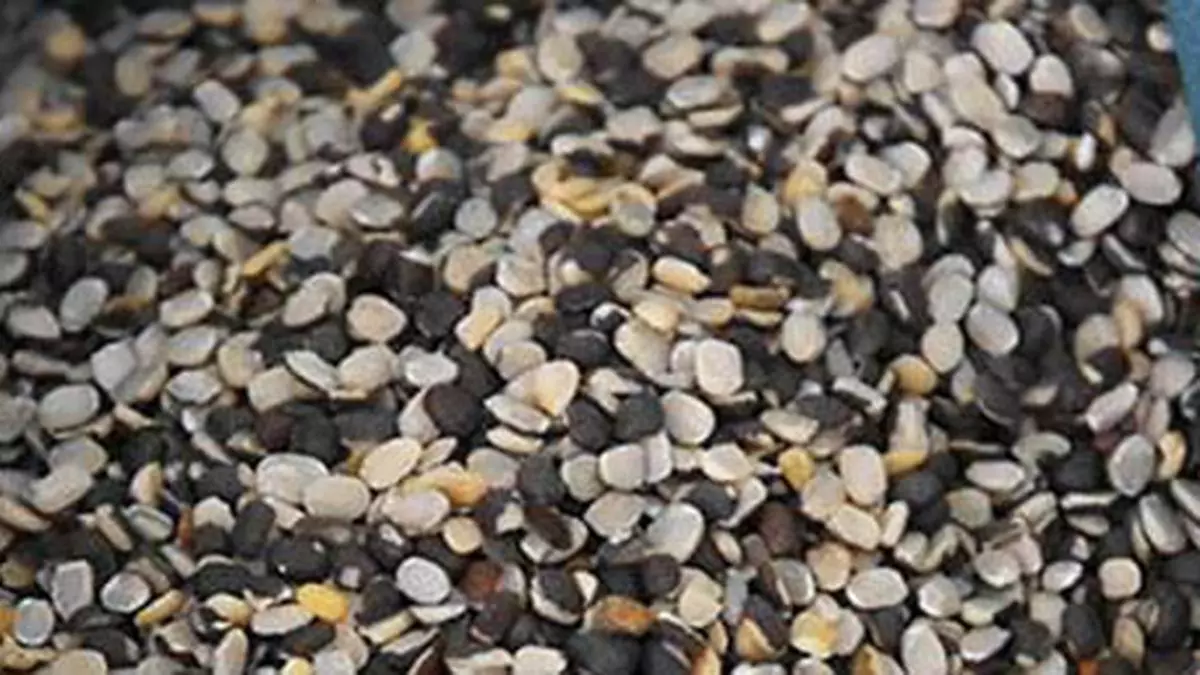
For the first time this kharif season, urad (black matpe) acreage has surpassed last year's levels, rising 8% to 18.67 lakh hectares (lh) as of July 24, 2026, according to data released by the Agriculture Ministry on Friday. A week earlier, the area stood at 13.51 lh versus 14.36 lh a year ago, but a surge of over 5 lh in the past week pushed the cumulative area above the previous year's 17.27 lh. The expansion is concentrated in northern states — Uttar Pradesh, Madhya Pradesh, and Rajasthan — where recent rains spurred sowing.
Acreage Recovery Driven by Rains and Attractive Prices
"There's a good recovery in the acreage in the past two weeks due to pick up in rains in some states. Farmers are preferring to plant urad as prices are attractive. There is a good demand for seeds and in some areas of Gujarat and Rajasthan, we feel farmers could take up re-sowing of urad," said Satish Upadhyaya, Honorary Secretary of the India Pulses and Grains Association (IPGA), the apex trade body. He cautioned, however, that the final output will depend on rainfall during the September-October period.
Rahul Chauhan of IGrain India noted that prevailing high prices likely attracted farmers' interest in the northern states. Additional factors favouring urad include its short duration of 60-80 days and lower water requirement compared to other crops, making it an attractive option amid variable monsoon conditions.
State-Wise Performance: Northern Gains vs. Southern Declines
The following table summarizes the state-wise acreage changes as per the Agriculture Ministry's latest data:
| State | Acreage 2026 (lh) | Acreage 2025 (lh) | Change (%) |
|---|---|---|---|
| Madhya Pradesh | 6.17 | 5.48 | +13% |
| Uttar Pradesh | 4.99 | 2.84 | +75% |
| Rajasthan | 3.25 | 2.79 | +16% |
| Gujarat | 0.49 | 0.39 | +25% |
| Maharashtra | 1.60 | 3.43 | -53% |
| Karnataka | 0.71 | 0.94 | -24% |
| All-India | 18.67 | 17.27 | +8% |
In Madhya Pradesh, the largest urad-producing state, acreage grew 13% to 6.17 lh. Uttar Pradesh saw the sharpest jump at 75% to 4.99 lh, while Rajasthan increased over 16% to 3.25 lh. Gujarat also recorded a 25% rise to 0.49 lh.
Conversely, the delayed onset and slower monsoon progress in Maharashtra and Karnataka severely dented plantings. Maharashtra's acreage plummeted 53% to 1.60 lh, and Karnataka's fell 24% to 0.71 lh.
Trade Hopes on Northern Output to Offset Southern Losses
Trade sources in southern India are looking to the northern crop to compensate for declines in Maharashtra and Karnataka. B KrishnaMurthy of Four P International in Chennai stated: "We are expecting only about a fourth of the crop to come in in Maharashtra and Karnataka this year due to the less rains. We are hoping that the higher output in MP will offset the decline in these states."
The southern shortfall is substantial — combined losses in Maharashtra and Karnataka amount to over 2.06 lh compared to last year — but the northern gains (especially Uttar Pradesh's +2.15 lh and Madhya Pradesh's +0.69 lh) more than compensate at the national level. However, as IPGA's Upadhyaya emphasised, final production hinges on September-October rainfall, which is critical for pod development.
"The output of urad will all depend on the rains during September-October period." — Satish Upadhyaya, IPGA
For commodity traders and procurement teams, the acreage rebound in key northern states signals potential easing of supply tightness later in the season, provided weather remains favourable. The acreage data will continue to be closely watched in weekly ministry releases, alongside monsoon progress reports, to gauge the ultimate kharif harvest.
Sources:


