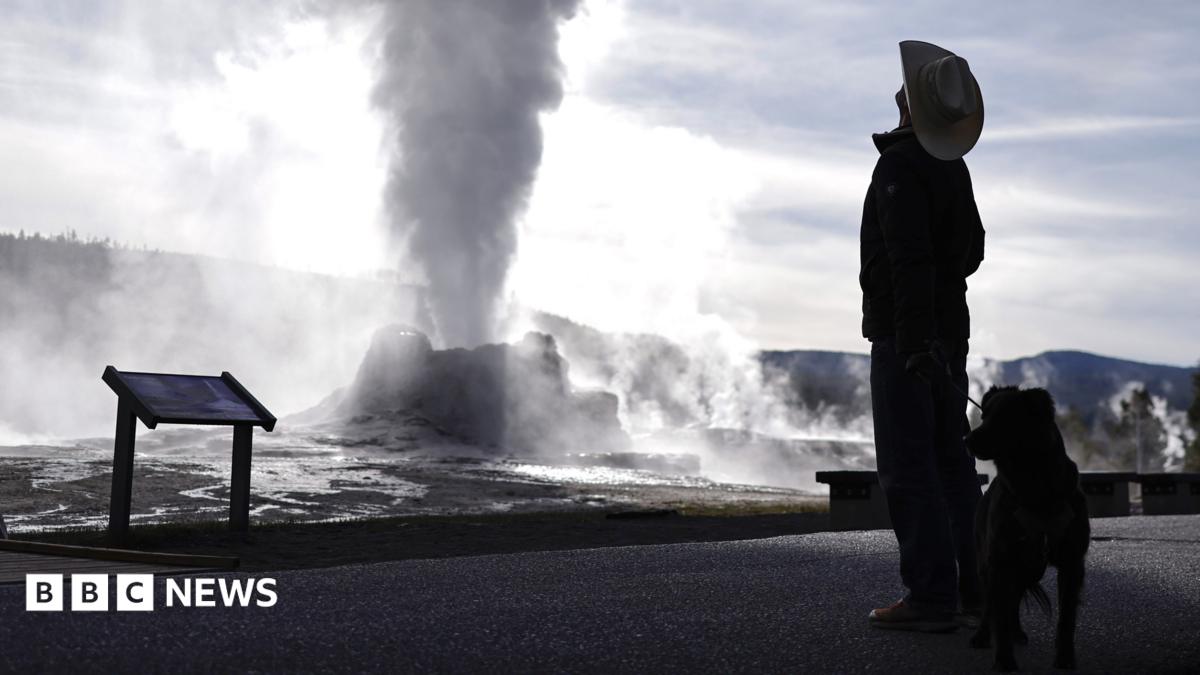
Bipartisan agreement on geothermal energy's potential is rare in US politics, but investment is needed to develop next-generation technologies, according to BBC.
Bipartisan Support for Geothermal
According to BBC, it is hard to get Democrat and Republican politicians to agree on much, but the benefits of geothermal energy is one rare area of consensus. Broadly, the low greenhouse gas emissions of geothermal plants appeals to liberals, while conservatives like the additional energy independence of geothermal, plus the use of drilling technology familiar in the oil and gas industry. Some US states are trying to accelerate permits for geothermal plants, and in April senators from both parties introduced the Next-Generation Geothermal Research and Development Act. The legislation would direct the Department of Energy to support the development and commercialisation of the next generation of geothermal energy systems.
Enhanced Geothermal Systems and Fracking
One emerging type is known as enhanced geothermal systems (EGS). In EGS, underground rock is fractured hydraulically by pumping pressurised fluid into one well, and then collecting steam or hot water from another well. Better known as fracking, this technique has become well known and controversial (particularly in the UK) in the oil and gas industry. Gernot Wagner, a climate economist at Columbia Business School in New York, told BBC: "It's the same techniques and up to a point it's the same industry as well." But "from a climate perspective, there's a huge difference," he adds. For him, the risk of seismic activity, by creating cracks underground, is outweighed by the benefits of an energy source that is renewable, always-on and large-capacity. Wagner says: "Based on where we are, moving much faster, much bigger in the direction of using much more geothermal, frankly, is all good news."
Next-Generation Drilling Technologies
To go faster and deeper will require advances in drilling technologies. Companies are developing drilling equipment that is more stable when breaking through hard rock at high temperatures. Some firms are even aiming to penetrate rock without using standard drills. Quaise, a company with roots at the Massachusetts Institute of Technology (MIT), is using a technology called millimetre wave drilling. The frequency is similar to that of microwaves. Quaise's application involves "sending electromagnetic waves in the microwave millimetre wave spectrum to essentially melt and vaporise through the rock," explains Harry Kelso, Quaise's communications manager. Traditional geothermal energy clusters around hotspots on the earth's surface where very hot rocks can be easily accessed. Kelso says: "Millimetre wave drilling really enables you to access super-hot geothermal just about anywhere in the world." While Quaise is planning to use some conventional drilling at the project site it's developing in Oregon, Kelso says that conventional drills start to break down more quickly when they reach very hard rock. Replacing drill bits increases the cost and time of drilling. In Quaise's case, Kelso says, "millimetre wave drilling is really what changes that because we're not using a physical drill bit." Other companies are also working on advanced drilling technology, such as projectiles that move several times faster than the speed of sound.
| Technology | Traditional Geothermal | Next-Generation (EGS / Millimetre Wave) |
|---|---|---|
| Location dependency | Requires surface hotspots | Can be used almost anywhere |
| Drilling method | Mechanical drill bits | Hydraulic fracturing or millimetre wave vaporisation |
| Key risk | Limited geography | Seismic activity, water contamination (mitigable) |
| Commercial status | Established | Development / early commercialisation |
Investment and Commercialization Hurdles
Another crucial resource in the process is water. While some types of next-generation geothermal could create risks of water contamination or overconsumption, careful design can mitigate these issues, according to BBC. The BBC article emphasises that to realise the potential of these technologies, significant investment is required. The Next-Generation Geothermal Research and Development Act aims to channel federal support, but private capital will also be needed to scale up pilot projects like Quaise's Oregon site and to bring new drilling methods to commercial viability. For commodity traders and energy analysts, the development of geothermal as a baseload renewable source could eventually shift the energy mix, reducing demand for fossil fuels and altering power price dynamics. However, the timeline remains tied to funding and regulatory acceleration.
Implications for Commodity Markets
While geothermal energy does not directly trade on exchanges like LME or NYMEX, its growth could reduce long-term demand for natural gas and coal in electricity generation. Traders monitoring renewable energy capex trends should watch for increased investment flows into geothermal technology companies and project developers. The bipartisan support in the US suggests policy tailwinds that could accelerate project permitting, potentially impacting future power supply forecasts.
Sources: