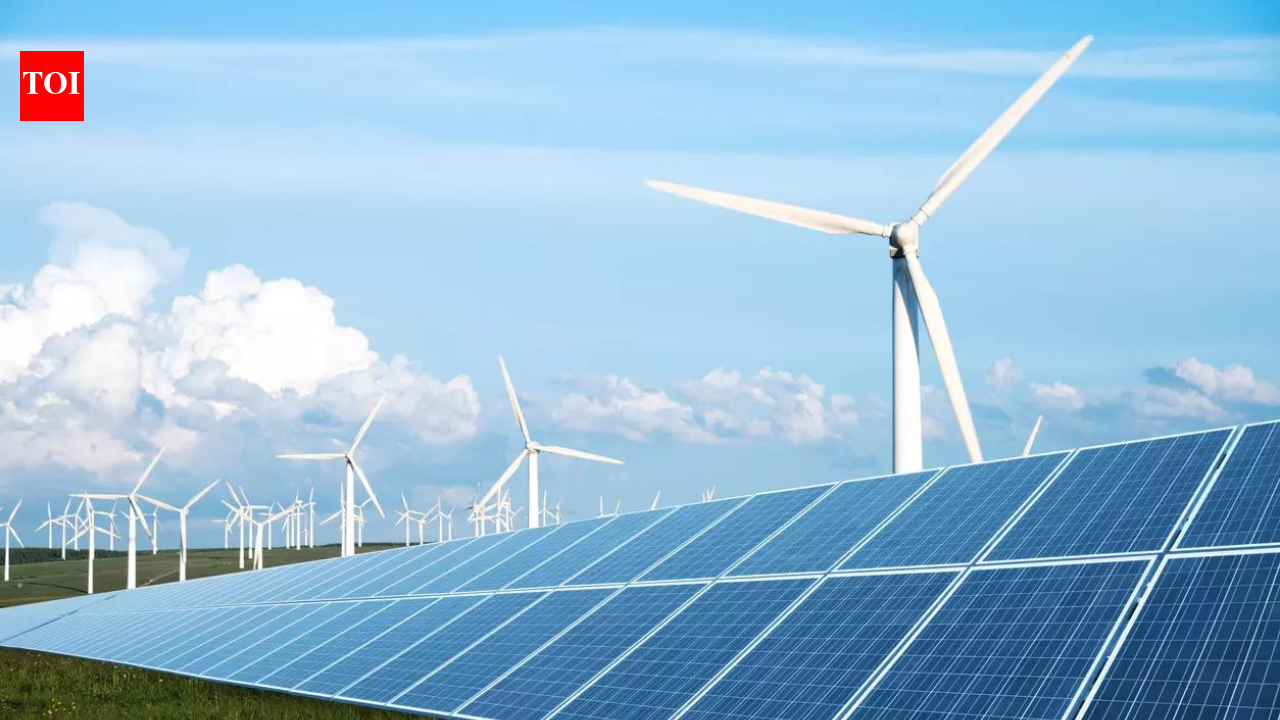
India has crossed 300 GW of installed non-fossil fuel-based electricity generation capacity, reaching more than 60 per cent of its stated target of 500 GW by 2030, according to the Ministry of New and Renewable Energy. As of July 31, the country's total non-fossil fuel capacity stood at 300.50 GW, while overall installed electricity generation capacity was around 552 GW, the ministry said in a statement. Non-fossil sources now account for more than 54 per cent of India's total installed power capacity.
Record annual additions in 2025-26
The government said India added a record 55.29 GW of non-fossil fuel-based electricity capacity in 2025-26. Solar power contributed 44.6 GW of the additions, while wind contributed 6 GW. Solar capacity has increased sharply from 2.8 GW in 2014 to around 165 GW currently, while wind power capacity has risen from 21 GW in 2014 to 58.14 GW.
Solar dominates the non-fossil mix
Non-fossil sources now account for more than 54 per cent of India's total installed power capacity, the ministry said.
Solar power remains the largest component of India's non-fossil capacity at 164.59 GW, followed by wind power at 58.14 GW and hydro power at 57.24 GW. The remaining capacity comprises 11.75 GW of bio-power and 8.78 GW of nuclear power. The composition of India's non-fossil fleet is summarised below:
| Source | Installed capacity (GW) |
|---|---|
| Solar | 164.59 |
| Wind | 58.14 |
| Hydro | 57.24 |
| Bio-power | 11.75 |
| Nuclear | 8.78 |
| Total non-fossil | 300.50 |
Renewable generation more than doubles
The increase in installed capacity has also been accompanied by higher renewable electricity generation. According to the ministry, renewable energy generation increased from 190.96 billion units (BU) in 2014-15 to 477.79 BU in 2025-26.
Domestic solar manufacturing capacity crosses 200 GW
Domestic manufacturing capacity for solar equipment has also expanded. The capacity listed under the Approved List of Models and Manufacturers (ALMM) for solar photovoltaic modules has crossed 200 GW, compared with 2.3 GW in 2014. The ministry attributed the expansion to measures including the Production Linked Incentive (PLI) scheme, which supports domestic manufacturing of high-efficiency solar modules.
Path to 500 GW by 2030
With non-fossil capacity at 300.50 GW as of July 31, India needs to add roughly 199.5 GW to reach its stated target of 500 GW by 2030. The ministry said the expansion is also being accompanied by efforts to reduce industrial emissions and develop the green hydrogen sector. It is implementing the National Green Hydrogen Mission, with the stated aim of developing India as a hub for the production, use and export of green hydrogen and its derivatives. The latest capacity figures were released by the Ministry of New and Renewable Energy.
Sources: