West African leaders have formally signed off the $25bn (£19bn) Nigeria-Morocco Atlantic Gas Pipeline, one of Africa's most ambitious energy infrastructure projects, ending roughly a decade of negotiations involving more than a dozen countries. The agreement, reached at a ceremony in Freetown, establishes the legal and governance framework for the pipeline and is widely seen as the last major political hurdle before financing and construction decisions, according to the BBC.
Project Overview
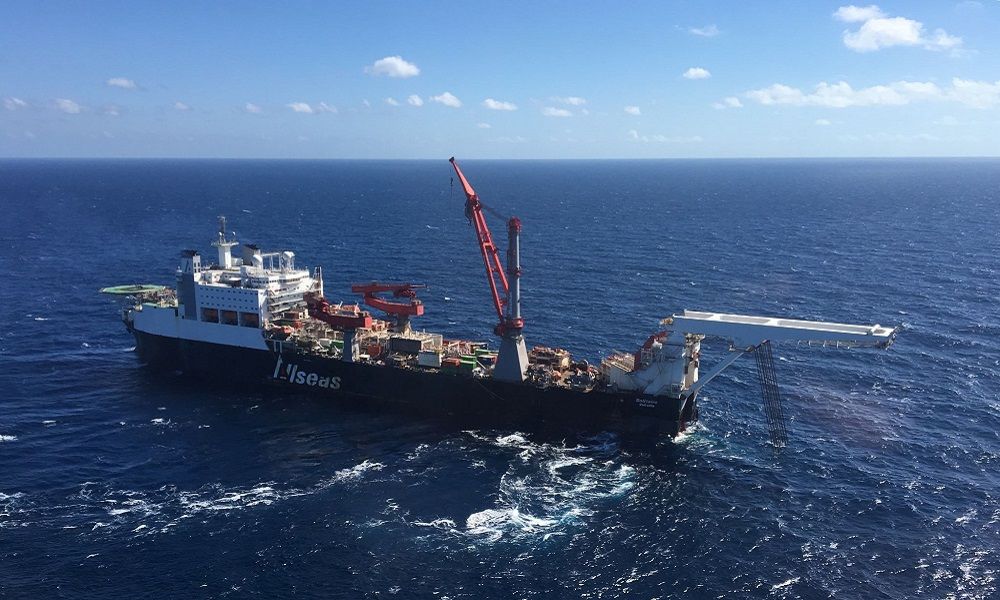
The vast 6,000km (3,700 miles) pipeline will run along the Atlantic coast of 14 African nations, carrying Nigerian gas to Morocco before linking into Europe's existing gas network via Spain. Nigeria will be the source – it has Africa's largest proven natural gas reserves. If all goes to plan, a whopping 30bn cubic metres of gas per year will pass through the pipeline, serving 400 million consumers, making this one of the world's longest offshore gas pipelines and reshaping West Africa's energy landscape, the BBC reported.
| Key Parameter | Detail |
|---|---|
| Length | 6,000 km |
| Estimated Cost | $25bn (£19bn) |
| Annual Capacity | 30bn cubic metres of gas |
| Consumers Served | 400 million |
| Countries Involved | 13 member nations plus Western Sahara |
| Construction Start | Expected 2028 |
Financing and Construction
Construction is expected to begin in 2028 with a total estimated cost of $25bn. The project is expected to be built in phases over several years rather than all at once. According to energy expert and former Nigerian government advisor Charles Majomi, speaking to BBC Focus on Africa, "The plan is finance the project in segments starting with the Morocco-Mauritania-Senegal axis, then moving to the Ghana-Côte d'Ivoire axis... then the final connection would be to Nigeria which would then provide the gas." Unlike the Trans-Saharan Gas Pipeline through Niger and Algeria, this Atlantic route largely avoids the Sahel's most insecure regions, although offshore construction significantly increases costs.
Feasibility studies are said to be complete, as are the front-end engineering design (FEED) studies. The route that the pipelines will pass through have largely been agreed. Financing may prove stickier – the projected $25bn cost could be pushed up by inflation, plus the success of a project of this scale relies on all 13 member nations (plus the disputed territory of Western Sahara) playing their part to protect the infrastructure from attacks.
Economic and Strategic Implications
"Don't be surprised when the gas comes your way," quipped Julius Maada Bio, Sierra Leone's president and the current head of West Africa regional bloc Ecowas, following Sunday evening's ceremony in Freetown. The pipeline signals a change from current models where gas is typically extracted from African nations, refined and processed abroad then shipped back to African nations at three or four times the price, Majomi said. That practice must end, because it is a "complete devaluation of the resource that is so fortunately endowed in places like Nigeria and other countries," he told BBC Focus on Africa.
By contrast, if leveraged correctly, the new pipeline has the potential not just to stimulate regional industrial growth but also boost Africa's power on the international stage. "In terms of Africa's regional security and its ability to negotiate and have a seat at the global table, if you will, it does need this measure of usefulness to countries [in] Europe and Asia potentially," argued Majomi. "Beyond energy security, it will open up Africa as a corridor to international markets," Prof Ganiyat Adejoke Adesina-Uthman of the National Open University of Nigeria said. "It is a symbol of what Africa can achieve when countries collaborate and work together," she added.
While construction has not yet begun, the project has entered a more advanced political and technical phase than at any point since it was first proposed in 2016. The pipeline will involve 14 African nations (including the disputed territory of Western Sahara) and ultimately link into Europe's gas grid via Spain, providing a new route for Nigerian gas to reach international markets.
Sources: