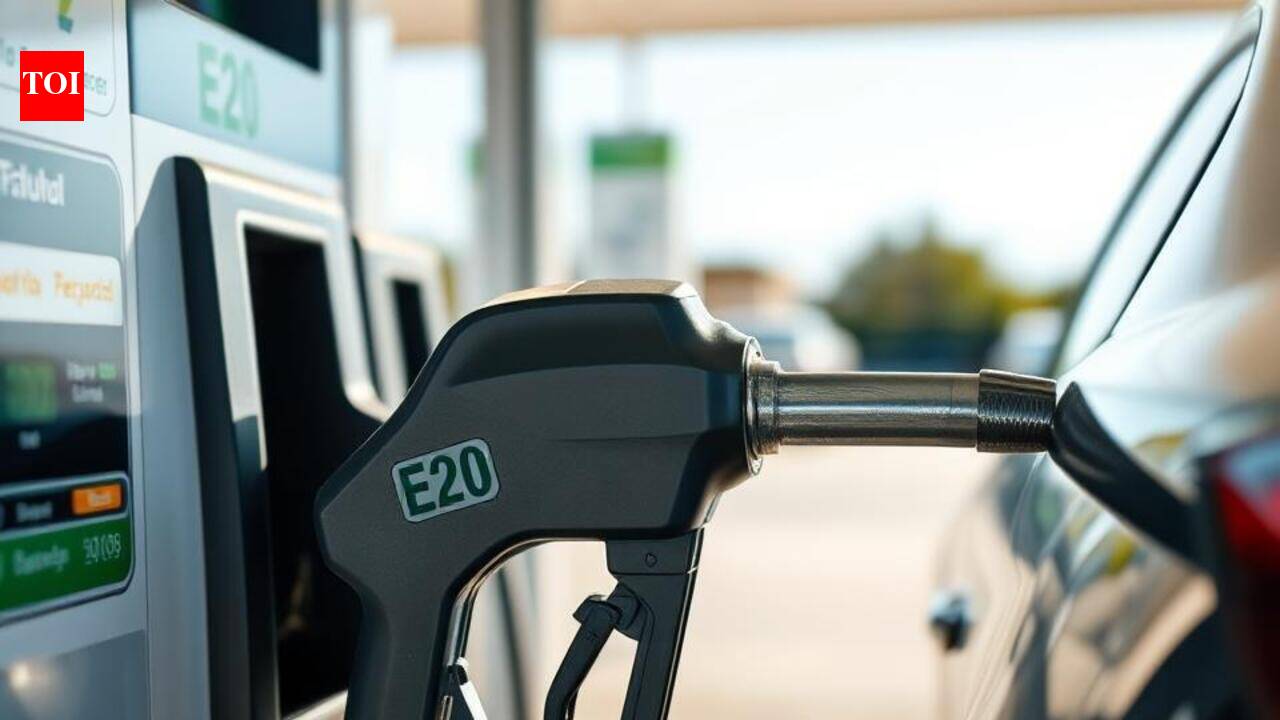
Oil Minister Hardeep Singh Puri said oil marketing companies (OMCs) began rigorous testing for E20 fuel contamination at retail outlets from mid-July, collecting 2,000 samples per day, according to a report by The Hindu Business Line published on August 7, 2026. Addressing the CII International Energy Conference and Exhibition (IECE), Puri said only 4 contamination cases were found across India's 107,000 retail outlets.
Contamination testing: 2,000 samples a day
The testing drive was launched in response to concerns flagged by an industry body. Without naming the Society of Indian Automobile Manufacturers (SIAM), whose July 28 letter to the government highlighted high chloride and moisture contamination in E20 fuel, Puri said: "Some organisation wrote a letter. That letter, I think, was July 28. Two weeks before that we had started rigorous testing. They (OMCs) used to collect 2,000 samples from 2,000 ROs a day. They formed crack teams."
The Minister said OMCs covered a very large number of pumps and found "4 cases (of contamination) out of the 107,000 ROs." He accused unnamed parties of trying to "create some controversy around the E20 fuel" and of placing something "out of context."
| Metric | Number | |---|---|---| | Samples collected per day | 2,000 | | Retail outlets (ROs) tested daily | 2,000 | | Contamination cases found | 4 | | Total retail outlets in India | 107,000 | | Daily customers served | ~7 crore |
India's network of 107,000 petrol pumps serves roughly 7 crore customers every day, the Minister noted.
Supply security despite Strait of Hormuz disruption
Turning to energy security, Puri said India maintained uninterrupted fuel supplies despite disruptions in the Strait of Hormuz, the world's most critical energy choke point. The country's supplies of crude oil, LPG and LNG were disrupted, but India diversified its sources to prevent any dryout, the Minister said.
"I can say with a degree of confidence, not one station went dry, not one," Puri said.
He was referring to the network of more than 1,07,000 fuel retail outlets across the country.
Deepwater exploration push under Samudra Manthan
Speaking about the Samudra Manthan, or the National Offshore Exploration Scheme, Puri said the intent is to encourage private players to enter the domestic exploration & production (E&P) sector. He noted that only two drilling rigs are currently operating in India, with a third expected.
"We have two (drilling) rigs operating just now and we are getting a third one with ONGC chairman telling me that one rig costs $300,000 per day or whereabouts," Puri said, adding that "there are not too many rigs available in the world."
The Minister stressed that deepwater E&P of oil and gas requires heavy expenditure, financial support and perseverance. He reiterated India's commitment to exploring its offshore deepwater and ultra-deep waters to search for hydrocarbons.
For commodity analysts and traders, the key signals from the Minister's address are the scale of E20 testing — a sign that India's ethanol-blended fuel programme is advancing — and the reaffirmation of supply resilience through the Strait of Hormuz disruption, which directly affects crude, LPG and LNG flows into India.
Sources: