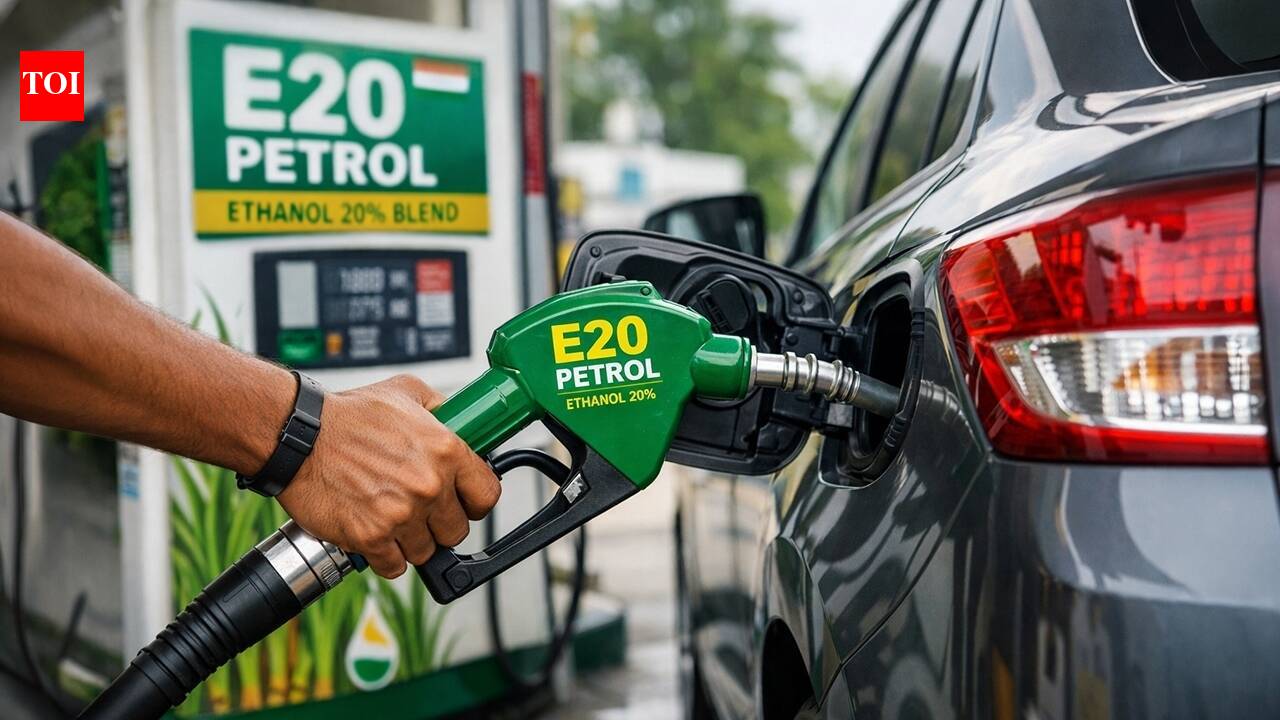
The public sector oil marketing companies (OMCs) said on Friday, August 7, 2026, that claims of 500 ppm chloride and presence of moisture in E20 fuel have not been validated, according to a consolidated statement issued on behalf of Indian Oil Corporation (IOCL), Bharat Petroleum Corporation (BPCL) and Hindustan Petroleum Corporation (HPCL). More than 100 randomly selected petrol samples tested across refineries confirm that chloride content is consistently low, with all samples reported at or below 1 ppm (parts per million).
Nationwide testing across the EBMS supply chain
Under the intensified monitoring programme, more than 160 samples have been analysed for chloride content in the last few days, with levels in the range of 0–3 ppm — contrary to claims of several hundred ppm, the statement said. A dedicated task force comprising members of the three OMCs and the Centre for High Technology (CHT) checked ethanol samples from 80 distilleries across India in the last 10 days, with all samples having a chloride content of less than 3 ppm. The OMCs also tested ethanol and E20 samples at depots and terminals, with more than 80 samples collected from various OMC terminals showing chloride content below 3 ppm.
| Sample category | Number of samples / coverage | Chloride content |
|---|---|---|
| Petrol samples across refineries | More than 100 | At or below 1 ppm |
| Ethanol samples from distilleries | 80 distilleries across India | Less than 3 ppm |
| Ethanol and E20 samples at OMC terminals | More than 80 samples | Below 3 ppm |
| Total samples under intensified monitoring | More than 160 | Range 0–3 ppm |
Isolated instances and corrective action
The surveillance system identified only two isolated instances where elevated chloride levels were detected, the statement said. These were suspended immediately, followed by detailed root-cause analysis and implementation of appropriate corrective measures before restoration of supplies.
Water ingress monitoring at retail outlets
On water ingress testing, about 90,000 retail outlets (ROs), or petrol pumps, have commenced mandatory inspection and monitoring of underground storage tanks. The underground tanks at ROs are being inspected 8–12 times every day and have not revealed any water ingress so far, according to the statement.
Besides, the OMCs have further strengthened surveillance by conducting water-ingress and density tests 8–12 times daily at every retail outlet. Mobile fuel quality testing laboratories have also been deployed across locations, while test results are being independently validated through fuel laboratories to ensure the highest standards of quality assurance, the statement said.
Regulatory framework and supply chain enforcement
The government has prescribed a stringent chloride specification for ethanol used in petrol blending and has instituted a high-frequency monitoring mechanism to ensure compliance across the entire supply chain. Chloride monitoring is being done at multiple points of the supply chain including refineries, distilleries, depots/terminals and retail outlets nationwide, confirming that quality is being consistently maintained throughout the supply chain.
Amid recent media reports on moisture and chloride in ethanol blended motor spirit, or E20 petrol, the OMCs carried out a nationwide additional intensive testing covering the entire EBMS supply chain, the statement said.
"The findings reaffirm that fuel quality remains consistently well within prescribed limits. Contrary to certain assertions being made, there is no evidence of any alarm on account of fuel contamination validated by extensive and scientifically designed tests," the statement emphasised.
For ethanol suppliers and downstream fuel buyers monitoring India's E20 blending push, the consolidated data provides a state-backed benchmark on chloride levels across refineries, distilleries and terminals, with all monitored samples inside the 0–3 ppm band. The two suspended instances, while isolated, show that the surveillance mechanism is designed to detect and correct deviations before product reaches retail pumps, according to the statement. With approximately 90,000 retail outlets now on mandatory daily tank inspection, the compliance net covers the full length of the ethanol blended motor spirit supply chain from distillery to dispensing station.
Sources: