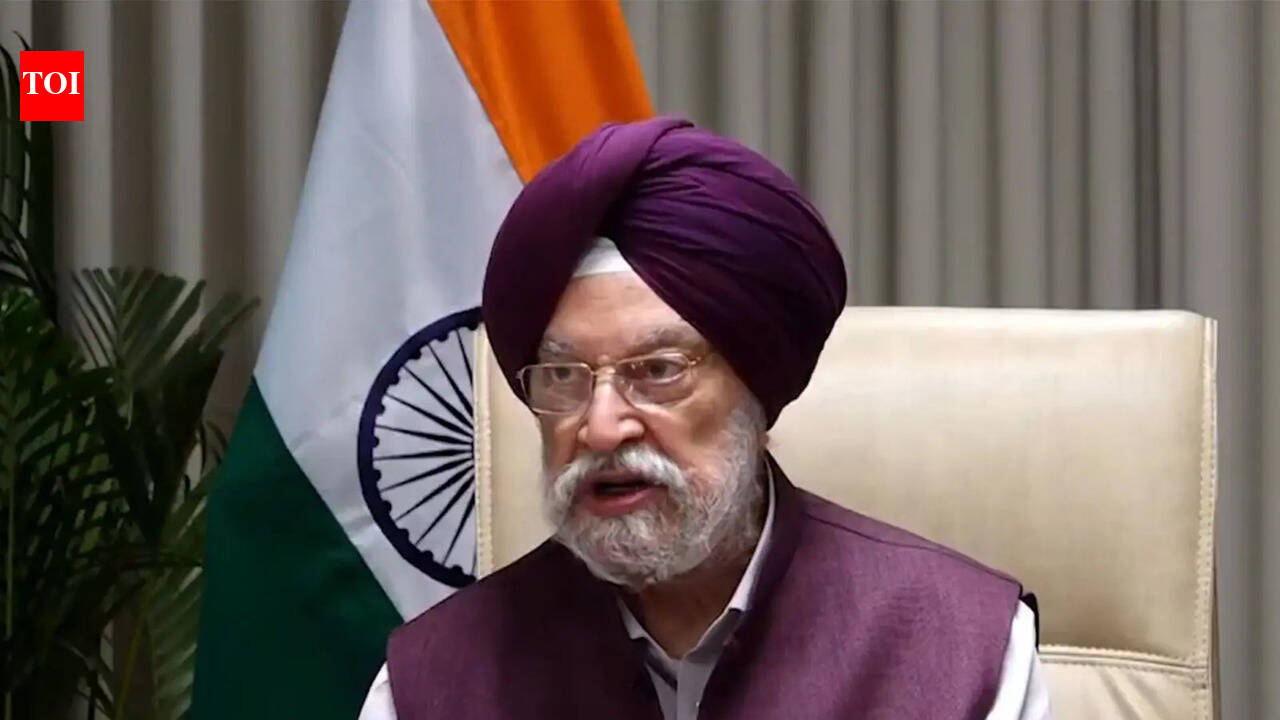
Union petroleum and natural gas minister Hardeep Singh Puri on Saturday pushed back against social media claims that ethanol-blended fuel damages vehicle engines, stating the government welcomes criticism but not misinformation about the biofuel programme, according to a Business Today report. The minister's remarks follow heightened scrutiny of E20 petrol — a blend of 20% ethanol with 80% petrol — after viral videos alleged engine failures.
"Over the past few days, you may have noticed a stir on social media regarding biofuel blending. I welcome criticism. If you feel there are shortcomings in the work we are doing, please point them out, and we will listen to you," Puri said. He specifically dismissed rumours that ethanol attracts pests, causes engine failure, or damages fuel pumps. The minister noted that ethanol as a fuel is not a new concept, referencing Henry Ford's use of biofuels and India's earlier attempt in 2006–2008 under the Congress government to achieve 5% blending across ten states and union territories, which stalled at 1.4%.
ARAI Controlled Test Results
In an exclusive interview with ANI, Dr Reji Mathai, Director of the Automotive Research Association of India (ARAI), said controlled joint tests with original equipment manufacturers (OEMs) found that vehicles running on E20 recorded a 2 to 6 per cent drop in fuel consumption compared with E10. The tests were conducted under controlled laboratory conditions to isolate the impact of the fuel blend.
Dr Reji Mathai stated: "The studies were done along with the OEMs, the vehicle manufacturers who understand their vehicles very well, to assess the impact of E20 compared to E10." The tests covered vehicles of different ages jointly selected by ARAI and manufacturers.
| Fuel Blend | Fuel Consumption Change (vs E10) | Notes |
|---|---|---|
| E20 | -2% to -6% | Controlled lab tests by ARAI & OEMs |
| E10 (baseline) | 0% | Reference fuel |
Toyota Vehicle Incident Clarified
The controversy intensified after a social media video claimed E20 petrol had damaged a Toyota Hycross. However, Toyota Kirloskar Motor said its technical assessment confirmed the vehicle was E20-compatible and that the issue was caused by contaminated fuel. "Further, based on our detailed technical assessment of the vehicle, the issue was due to fuel contamination. Our inspection confirmed that there was no damage to any vehicle component or its fuel system," the company said, advising customers to refuel only at authorised and reputed fuel stations.
Policy Context and Implications
Puri emphasized that the government does not claim to have invented ethanol usage, noting that work on biofuels has been ongoing for a century. He recalled his tenure as Ambassador to Brazil (2006–2008) when Sharad Pawar was agriculture minister and a 5% blending target was set but not met. The current E20 push is part of India's broader aim to reduce oil imports and promote renewable energy.
For commodity traders and procurement teams, the debate centres on ethanol demand. While the minister defends the fuel's viability, the reported 2-6% drop in fuel consumption could influence consumer acceptance and, consequently, ethanol-blending rates. The ARAI data provides official validation, but ongoing social media sentiment may temper short-term adoption. No price movements or inventory data were reported in the source. Traders should watch for Ministry of Petroleum and Natural Gas announcements on blending targets and any adjustments to ethanol procurement policies.
Sources: