A single litre of helium-3 costs approximately $2,000 (£1,500), though the price can fluctuate, according to the BBC. This rare isotope of helium is one of the most expensive materials in the world, stored in beer-keg-like containers at Lancaster University in the UK. Its current primary source is tightly controlled: the decay of tritium inside nuclear weapons. Around the world, tens of thousands of litres are likely produced this way each year, estimates David McCollum, distinguished scientist at Oak Ridge National Laboratory in Tennessee. But future demand—driven by quantum computing and nuclear fusion—could far exceed that supply, the BBC reports.
What Is Helium-3?
Helium-3 is an isotope of helium defined by the number of neutrons in its nucleus. The common form, helium-4, which fills party balloons, is comparatively cheap. Helium-3, however, has unique physical properties. When mixed with helium-4 at very low temperatures, the two isotopes separate, with pure helium-3 rising to the top. This phase change consumes energy, creating a cooling effect down to the millikelvin range (-273°C). This process, called dilution refrigeration, is crucial for quantum computers. Dima Zmeev, senior lecturer at Lancaster University, uses helium-3 in physics experiments to detect dark matter particles: if a particle strikes a helium-3 atom, the atom jiggles, generating measurable heat. The helium-3 can be reused repeatedly, according to the BBC.
Current Supply and Demand Constraints
Today, almost all helium-3 comes from the decay of tritium within nuclear weapons. The US and other nations produce tens of thousands of litres annually, but this supply is highly controlled and limited. The BBC notes that researchers and entrepreneurs believe new sources are needed. Helium-3 exists in Earth's ground, but at very low concentrations. In contrast, samples of moon dust (regolith) from the Apollo missions suggest relatively high concentrations on the lunar surface. This has spurred plans to mine the moon for the isotope.
| Aspect | Details |
|---|---|
| Current source | Decay of tritium in nuclear weapons |
| Estimated annual production | Tens of thousands of litres (global) |
| Price per litre | ~$2,000 (£1,500) |
| Key demand drivers | Quantum computing, nuclear fusion, dark matter research |
| Alternative source | Lunar regolith (high concentration) |
Lunar Mining Ambitions
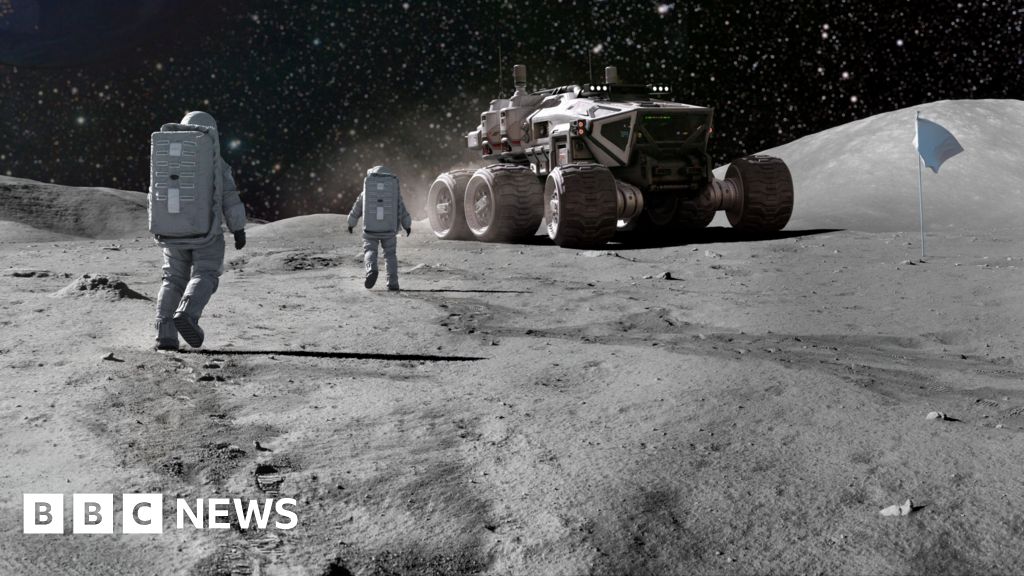
One company pursuing lunar helium-3 extraction is Interlune, based in Seattle. Co-founder and chief executive Rob Meyerson, former president of Blue Origin (2003–2018), says: "We've spent the last four years developing, prototyping and testing technologies… We have a team of 30 people, and growing." The firm has tested equipment during parabolic flights that simulate zero gravity. Interlune's kit could be integrated into a lunar lander as early as autumn 2027, the company told the BBC. Ultimately, Interlune aims to deploy autonomous excavators on the moon that scoop up regolith, crush and churn it to release the embedded helium-3.
"The lab has been going for 50 years or so. Back then, the helium was quite cheap. Our very wise predecessors stocked up." – Dima Zmeev, Lancaster University
Implications for Commodity Markets
For commodity traders and procurement professionals, helium-3 represents a niche but potentially transformative market. The current supply chain is geopolitically sensitive, tied to nuclear weapons programs. If lunar mining becomes viable, it could open a new source outside Earth's geopolitical constraints, but the timeline remains uncertain. The price of $2,000 per litre already reflects scarcity; any disruption to tritium decay supplies could spike prices further. Key upcoming milestones include Interlune's 2027 lander integration and further test flights. The BBC also notes that helium-3 is crucial for quantum computing, a sector with rapidly growing demand for dilution refrigeration. Supply developments from the moon may take years to materialise, but early movers like Interlune are positioning themselves to meet future demand that could far exceed today's production.
Sources: