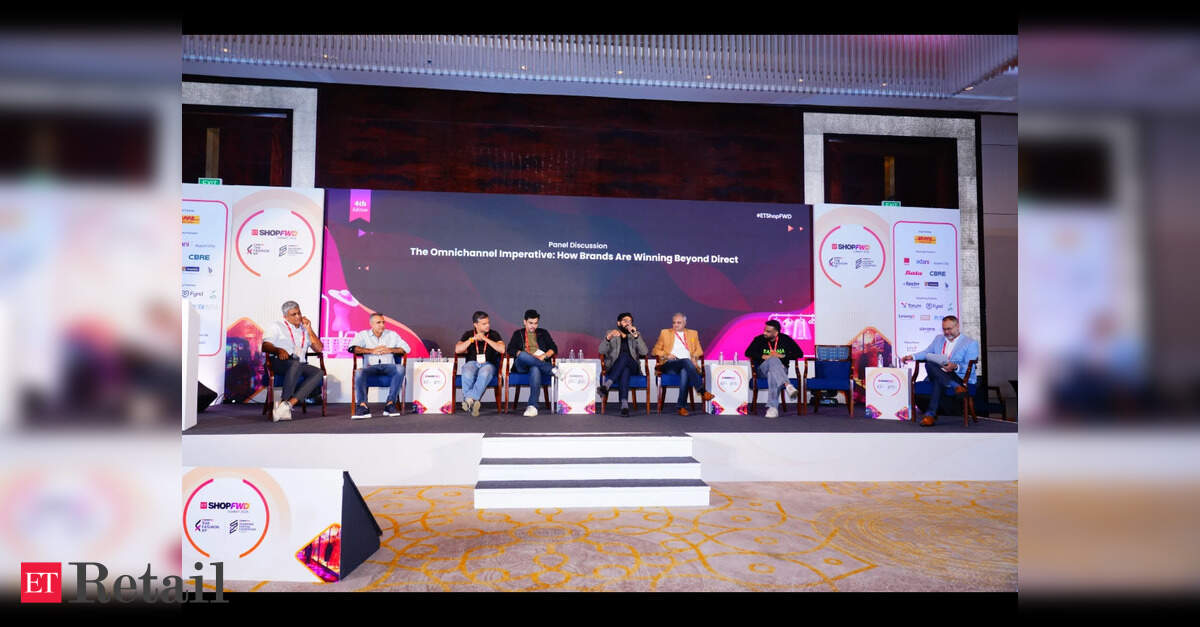
At the 4th ETRetail ShopFWD Summit 2026 in Bengaluru, a panel discussion titled "The Omnichannel Imperative: How Brands Are Winning Beyond Direct" brought together leaders from TEN x YOU, Tresmode, Koskii, Banana Club, Kushals Fashion Jewellery, Express Avenue, Escape Plan and Unity Group. The executives argued that brands must move beyond online-versus-offline thinking, using data, speed, localised assortments and aligned incentives to follow consumers seamlessly across channels, according to ETRetail.
The omnipresent customer
Moderator Zubair Patel framed the challenge around an increasingly "omnipresent" customer, reported ETRetail. This customer may discover a brand on social media, visit a mall, try a product in-store, eventually purchase online and continue the relationship across several other touchpoints. For brands and shopping centres, the implication is that channel ownership matters far less to the consumer than continuity of experience.
Data as a roadmap for physical expansion
Karthik Gurumurthy, CEO of TEN x YOU, said data from digital commerce can provide a remarkably granular roadmap for physical expansion. TEN x YOU built its early community around cricket by working with coaches and academies rather than depending solely on celebrity visibility. "You have to get the experience over there, and then you can build the community online," Gurumurthy said. He added that online data allows the business to identify which pin codes are generating orders, the price points customers are buying at and which malls are closest to those demand clusters.
Organisational design and assisted sales
Kapil Mahtani, CEO of Tresmode, argued that the consumer was effectively omnichannel even before retailers began using the term. Customers were already moving between social platforms, malls, department stores, websites and marketplaces, he said, with some interactions generating immediate purchases and others merely influencing decisions that converted later.
"What really mattered is each time they interacted with the brand, not the channel they interacted with the brand," Mahtani said.
The organisational problem, Mahtani said, begins when businesses continue to attribute success rigidly to individual channels. He suggested mechanisms that recognise assisted sales and reward store teams when their interactions ultimately generate transactions through another channel, including trackable codes, attribution models or allowing customers who purchased digitally following a store interaction to return to that store for support.
Offline economics require a different discipline
Umar Akhter, CEO of Koskii, brought the perspective of an offline-first business that expanded digitally. He likened offline expansion to a long-term commitment, according to ETRetail, where mistakes around stores, leases and inventory cannot be reversed as quickly as a digital campaign. Location, sustainable occupancy economics, customer fit and inventory management therefore become crucial.
| Executive | Company | Core viewpoint |
|---|---|---|
| Karthik Gurumurthy | TEN x YOU | Online data maps physical expansion by pin code, price point and mall proximity |
| Kapil Mahtani | Tresmode | Consumers are already omnichannel; success must be attributed to assisted sales, not channels |
| Umar Akhter | Koskii | Offline growth is a long-term commitment with less reversible mistakes than digital campaigns |
For marketplace operators, cross-border sellers and B2B platform managers, the panel's central theme — that channel ownership matters less than continuity of experience — reinforces the need to design fee structures, logistics integrations and seller compliance workflows around the full customer journey, rather than siloed channel performance. The specific remedies discussed, such as trackable codes and attribution models, are directly transferable to platforms that must reconcile online and offline transaction data across channels.
Sources: