iGEN
Visit IGEN World Explore IGEN Expo
EXPLORE UPGRADE PLANS
BREAKING
TCL Note A1 Nxtpaper Review: Hybrid Tablet Blends Note-Taking with Video on a Matte LCD Crude Oil, West Asia Developments, Inflation Data to Drive Markets This Week: Analysts Beats Powerbeats Pro 2 Top WIRED's Sweatproof Workout Earbuds After Hundreds Tested AI Barons Pledge Fortunes to Charity, but Critics Question Philanthropy's Limits India considers restricting Carbosulfan insecticide use weeks after proposing ban on Paraquat Tractor sales grew 28% in July on better monsoon, rural demand The food fortified frontier: Corporate India’s next major FMCG growth engine From infrastructure to energy storage: Zinc's expanding role in India's development journey India’s markets have strong domestic cushion, but global risks loom: Sebi AI's role in making complex agricultural technologies easier to discover, compare and evaluate TCL Note A1 Nxtpaper Review: Hybrid Tablet Blends Note-Taking with Video on a Matte LCD Crude Oil, West Asia Developments, Inflation Data to Drive Markets This Week: Analysts Beats Powerbeats Pro 2 Top WIRED's Sweatproof Workout Earbuds After Hundreds Tested AI Barons Pledge Fortunes to Charity, but Critics Question Philanthropy's Limits India considers restricting Carbosulfan insecticide use weeks after proposing ban on Paraquat Tractor sales grew 28% in July on better monsoon, rural demand The food fortified frontier: Corporate India’s next major FMCG growth engine From infrastructure to energy storage: Zinc's expanding role in India's development journey India’s markets have strong domestic cushion, but global risks loom: Sebi AI's role in making complex agricultural technologies easier to discover, compare and evaluate
Home ›› Ecommerce Marketplaces ›› Trade Payments ›› UPI MDR Clarified: Sitharaman Says Merchants Will Bear Fee, Customers Won't Pay

UPI MDR Clarified: Sitharaman Says Merchants Will Bear Fee, Customers Won't Pay

Finance Minister Nirmala Sitharaman clarified that any Merchant Discount Rate on UPI transactions would be levied on merchants, not customers, responding to Congress leader Jairam Ramesh's concerns. No decision on MDR has been made yet; the NPCI-headed UPI and Services Steering Committee will examine the matter only after Parliament passes the Taxation and Other Laws (Amendment) Bill, 2026.

iG
iGEN Editorial
August 7, 2026
UPI MDR Clarified: Sitharaman Says Merchants Will Bear Fee, Customers Won't Pay

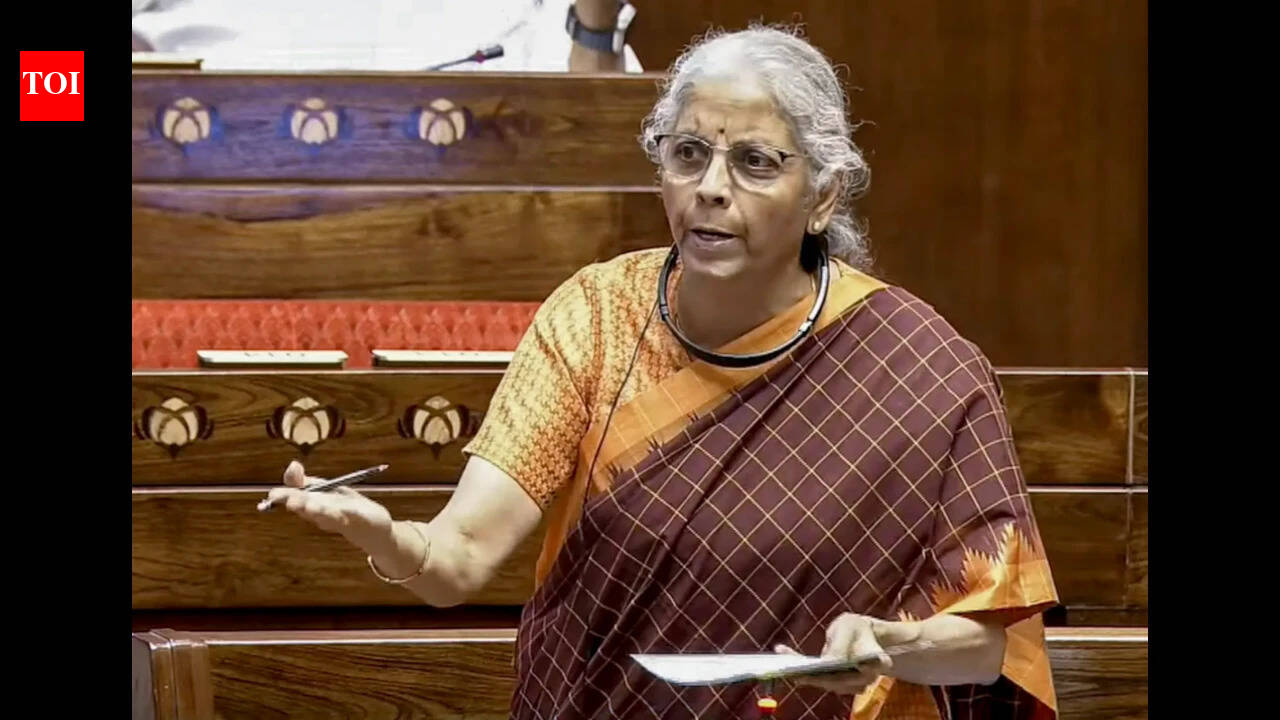
Finance Minister Nirmala Sitharaman on Thursday pushed back against claims that ordinary UPI users could end up paying more, clarifying that any Merchant Discount Rate (MDR) on digital transactions would be levied on merchants and not on customers, according to Business Today. Responding to Congress leader Jairam Ramesh on social media platform X, Sitharaman said the purpose of MDR is to strengthen the digital payments ecosystem by enabling banks and fintech firms to invest in infrastructure, innovation and security.

Who bears the MDR cost?

In a post on X, Sitharaman wrote:

Before spreading a canard, @Jairam_Ramesh ji, please consider this: Merchant Discount Rate (MDR) applies only on the merchants and not on the end users/customers. It will support the Banks & Fintech to invest more on infrastructure, innovation & security. All users of UPI will reap the benefits of this investment.

The finance minister's statement came after Ramesh argued that the burden of the MDR would ultimately be borne by ordinary people, and that the government's contention that such a charge is the only way to make UPI financially sustainable is "entirely wrong." Sitharaman rejected that assertion, maintaining that customers would not be required to pay the merchant fee.

No MDR decision until Bill is passed

Sitharaman also clarified that no decision has yet been taken on introducing an MDR on UPI transactions. The UPI and Services Steering Committee, headed by the National Payments Corporation of India (NPCI), will examine the matter only after Parliament passes the Taxation and Other Laws (Amendment) Bill, 2026. The proposed legislation empowers the central government to notify which electronic payment modes or transactions will continue to remain free. Sitharaman said the committee's deliberations on the merchant fee would take place only after the Bill receives parliamentary approval.

What the Bill does and does not do

The Taxation and Other Laws (Amendment) Bill, 2026 proposes an amendment to Section 10(A) of the Payment and Settlement Systems Act, 2007, giving the central government the legal authority to modify the existing zero-MDR framework for UPI and RuPay card transactions.

The Bill itself does not introduce a Merchant Discount Rate or prescribe any fee. Instead, it creates the legal framework under which the government may decide to modify the current zero-MDR regime through a notification at a later stage.

Issue Sitharaman's position Jairam Ramesh's position
Who pays MDR? Only merchants, not end users/customers Burden ultimately borne by ordinary people
Why levy MDR? To let banks and fintech invest in infrastructure, innovation, security Government's claim that it's the only way to make UPI sustainable is "entirely wrong"
When will a decision be made? Only after Parliament passes the Taxation and Other Laws (Amendment) Bill, 2026

What this means for merchants

The clarification is directly relevant to merchants, marketplace operators and B2B platform managers in India that accept UPI payments. Under the current zero-MDR framework for UPI and RuPay, merchants are not charged a merchant discount rate. The Bill, if passed, would allow the central government to modify that framework through a notification. Any such modification would, according to the finance minister, apply to merchants and not to customers. The source report provides no specific rate, timeline or implementation mechanism; the first step is the Bill's passage and the subsequent examination by the NPCI-headed committee.

Parliamentary context

Sitharaman also criticised the opposition over repeated disruptions during the ongoing Monsoon session of Parliament, saying the proposed legislation could have been debated if proceedings had not been stalled. Referencing disruptions in both the Lok Sabha and the Rajya Sabha since the Monsoon session began on July 20, she said, "could have been discussed on the floor of the House if your party @INCIndia engages constructively in Parliament when the Bill was/is tabled. (LS/RS respectively)."

The exchange on X highlights the political sensitivity of any move to charge MDR on UPI, which has become the dominant digital payments rail in India. For now, the zero-MDR framework for UPI and RuPay remains unchanged, and customers will not bear any merchant fee, according to the finance minister's clarification. The next milestone for merchants is the Bill's parliamentary passage, after which the NPCI-headed committee is expected to examine the MDR question.


Sources: Business-Today
Keep Reading

Recommended Stories

UPI MDR Charges: 0.25–0.4% Levy Proposed on Transactions Above Rs 2,000 for Merchants E-Commerce & Marketplaces

UPI MDR Charges: 0.25–0.4% Levy Proposed on Transactions Above Rs 2,000 for Merchants

The Lok Sabha cleared a Bill amending the Payment and Settlement Systems Act, 2007, enabling charges on UPI and other notified payment modes. The government is expected to permit a Merchant Discount Rate of 0.25–0.4% on UPI transactions above Rs 2,000 made to businesses, while consumers and small merchants remain exempt, according to Business-Today.

August 7, 2026
India moves to allow UPI merchant discount rate via payments act amendment E-Commerce & Marketplaces

India moves to allow UPI merchant discount rate via payments act amendment

India has moved a step closer to allowing merchant charges on UPI transactions after proposed amendments to the Payment and Settlement Systems Act were introduced in Parliament by Finance Minister Nirmala Sitharaman. The amendment would create the legal framework for a merchant discount rate; sources quoted by Reuters say no fee quantum or transaction categories have been decided, while a government source cited a possible 0.3%–0.5% MDR on transactions above Rs 2,000 for merchants with turnover above Rs 15 million.

August 4, 2026
RBI Governor Says 'Someone Has to Pay' on UPI MDR Above Rs 2,000 E-Commerce & Marketplaces

RBI Governor Says 'Someone Has to Pay' on UPI MDR Above Rs 2,000

India is expected to allow a Merchant Discount Rate of 0.25% to 0.4% on UPI transactions above Rs 2,000 made to businesses. RBI Governor Sanjay Malhotra said the costs have to be paid by someone, while P2P payments are likely to remain exempt.

August 5, 2026
Consumers already bearing UPI costs via broader economy: RBI governor E-Commerce & Marketplaces

Consumers already bearing UPI costs via broader economy: RBI governor

RBI governor Sanjay Malhotra said consumers already bear the cost of UPI transactions indirectly through the broader economy, even when no merchant fee is charged. He called any decision on enabling merchant fees premature, while the government has proposed amendments to the law that barred fees and reports suggest a fee could apply to transactions over Rs 2,000.

August 5, 2026