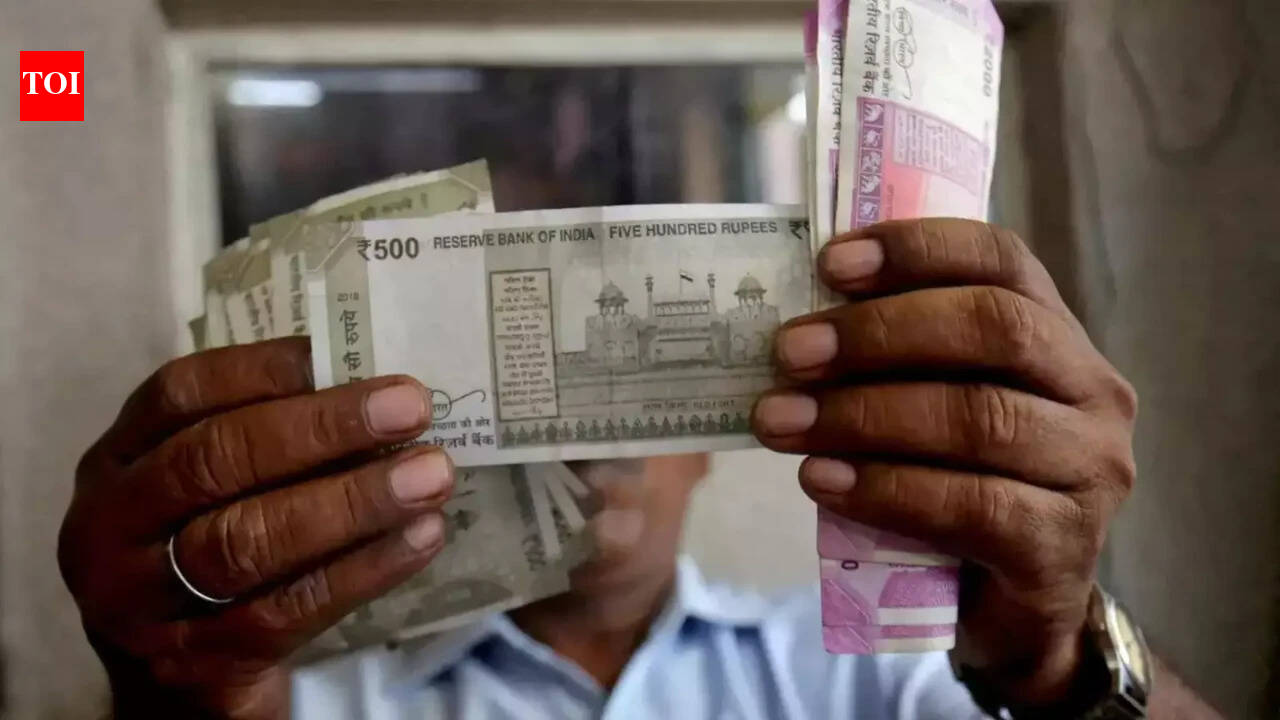
Indian banks collected nearly Rs 7,100 crore in penalties from customers for failing to maintain minimum average balance (MAB) in their savings accounts in financial year 2025-26, according to data tabled by the government in Parliament. This represents an increase from around Rs 6,800 crore in the preceding year.
Breakdown of Penalty Collections
Private sector banks collected Rs 4,948 crore, or nearly 70% of the total penalties. The top private bank contributors were:
| Bank | Amount Collected (Rs crore) |
|---|---|
| HDFC Bank | 1,800 |
| Axis Bank | 1,081 |
| ICICI Bank | 353 |
| Kotak Mahindra Bank | 290 |
| Yes Bank | 195 |
| IDBI Bank | 175 |
Public sector banks (PSBs) collected Rs 2,137 crore in FY26, down from Rs 2,775 crore in FY25. Among PSBs:
| Bank | Amount Collected (Rs crore) |
|---|---|
| State Bank of India (SBI) | 477 (on current accounts) |
| Bank of Baroda | 394 |
| Indian Bank | 299 |
| Canara Bank | 213 |
Private Sector Banks Dominate Penalty Charges
Private banks saw MAB penalty collections rise by 17% in FY26 compared to the previous year. HDFC Bank alone collected nearly Rs 1,800 crore, followed by Axis Bank at Rs 1,081 crore. ICICI Bank levied Rs 353 crore, Kotak Mahindra Bank Rs 290 crore, Yes Bank Rs 195 crore, and IDBI Bank Rs 175 crore. Cumulatively, since FY23, private banks have collected around Rs 16,000 crore as penalties from customers, according to the government data.
Public Sector Banks Reduce Reliance on MAB Penalties
The government stated that of the 12 public sector banks, 10 have discontinued penal charges for non-maintenance of MAB in savings accounts, while two have rationalised the charges in accordance with board-approved policies and commercial considerations. This led to a 23% decline in PSB collections to Rs 2,137 crore in FY26 from Rs 2,775 crore in FY25. Since FY22, PSBs have collected nearly Rs 12,000 crore as MAB charges.
Among PSBs, State Bank of India (SBI) levied Rs 477 crore on current accounts, followed by Bank of Baroda (Rs 394 crore), Indian Bank (Rs 299 crore), and Canara Bank (Rs 213 crore).
Regulatory Context and Customer Notifications
The government informed Parliament that the Reserve Bank of India (RBI) has advised banks to notify customers through SMS, email, letter, or other appropriate means in cases of non-maintenance of the agreed minimum balance. Customers are generally provided time to restore the required balance before penal charges are applied, the government said.
Implications for Corporate Treasury
For CFOs, treasury directors, and finance executives, the data reveals a significant and growing revenue stream for banks from penalty charges. The trend among PSBs to discontinue MAB penalties on savings accounts contrasts with the aggressive approach of private lenders, which increased collections by 17% year-on-year. SBI's continued levy on current accounts directly affects corporate cash management accounts, making it a relevant cost for treasury operations. The regulatory emphasis on prior notification suggests that compliance and automated balance monitoring can help corporates avoid such charges when managing current account balances. The cumulative total of Rs 28,000 crore (Rs 12,000 crore from PSBs since FY22 and Rs 16,000 crore from private banks since FY23) underscores the materiality of these fees in the Indian banking system.
Sources: