iGEN
Visit IGEN World Explore IGEN Expo
EXPLORE UPGRADE PLANS
BREAKING
Inside the rogue ChatGPT hack of Hugging Face: AI agents operate at superhuman speed but make clumsy mistakes Landstar Expects to Emerge a Winner After Supreme Court’s Montgomery Ruling Widens Broker Liability New Senate bill targets 'chameleon carriers' that reopen to escape penalties Werner Enterprises Posts Highest Revenue Per Truck Growth in One-Way Segment in a Decade CMA CGM and Stonepeak Launch United Ports LLC in $2.4 Billion Terminal Joint Venture UPS shift away from Amazon shows bigger payoff Lanesurf: 62% of Loads Get Vetted Carrier Offers Before Brokers Arrive India-China Border Trade Via Lipulekh Resumes Aug 1; China Permits 20 Traders Geopolitics Drives CMA CGM Q2 Profit Surge of 42% as Volumes and Rates Climb Benchmark Diesel Price Rises Third Week as Futures Plunge; Spread Hits Record Inside the rogue ChatGPT hack of Hugging Face: AI agents operate at superhuman speed but make clumsy mistakes Landstar Expects to Emerge a Winner After Supreme Court’s Montgomery Ruling Widens Broker Liability New Senate bill targets 'chameleon carriers' that reopen to escape penalties Werner Enterprises Posts Highest Revenue Per Truck Growth in One-Way Segment in a Decade CMA CGM and Stonepeak Launch United Ports LLC in $2.4 Billion Terminal Joint Venture UPS shift away from Amazon shows bigger payoff Lanesurf: 62% of Loads Get Vetted Carrier Offers Before Brokers Arrive India-China Border Trade Via Lipulekh Resumes Aug 1; China Permits 20 Traders Geopolitics Drives CMA CGM Q2 Profit Surge of 42% as Volumes and Rates Climb Benchmark Diesel Price Rises Third Week as Futures Plunge; Spread Hits Record
Home ›› Finance ›› Banking ›› Private Bank Chiefs Temper NRI Deposit Inflow Expectations as Tax, Liquidity Constraints Bite

Private Bank Chiefs Temper NRI Deposit Inflow Expectations as Tax, Liquidity Constraints Bite

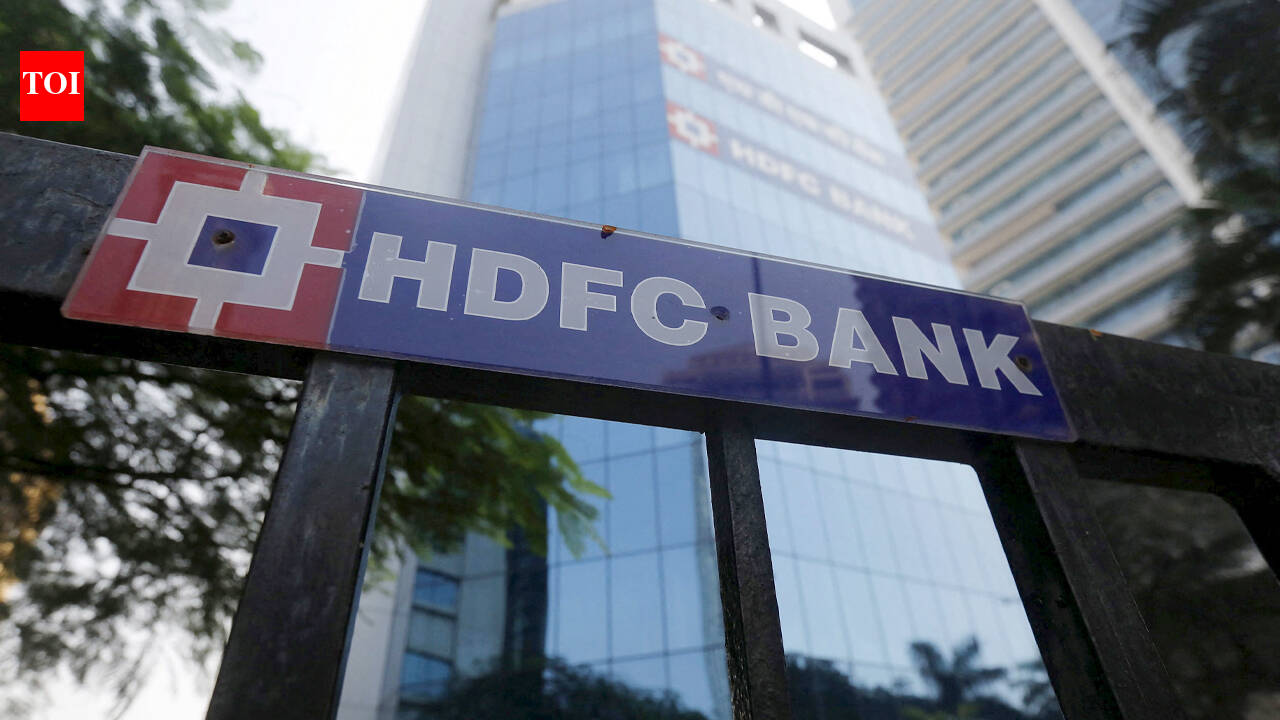
Top private bank chiefs are taking a cautious view of RBI's FCNR(B) deposit window, with lenders saying tax rules, overseas liquidity conditions and regulatory constraints could limit inflows below initial estimates. HDFC Bank's Sashidhar Jagdishan said potential inflows may be around $50-55 billion instead of the earlier $60-80 billion estimate, while Axis Bank's Amitabh Chaudhry cautioned against speculation on single parameters.

iG
iGEN Editorial
July 19, 2026
Private Bank Chiefs Temper NRI Deposit Inflow Expectations as Tax, Liquidity Constraints Bite

Top private bank chiefs are tempering expectations for the Reserve Bank of India's FCNR(B) deposit window, with lenders pointing to tax rules, overseas liquidity conditions, and regulatory constraints that could keep inflows below initial estimates, according to executives speaking in Mumbai.

Revised Inflow Estimates

HDFC Bank MD & CEO Sashidhar Jagdishan said potential inflows under the scheme may be lower than initially expected because tax rules make the 'borrowing to invest' option unattractive for many overseas Indians outside West Asia and Singapore. "When the scheme was launched, the impact of taxation for NRIs was not fully assessed. Subsequently, we've realised that jurisdictions outside the Middle East and Singapore do not make economic sense because taxation is on a gross interest basis," Jagdishan said, adding that many OCIs and NRIs in Europe, the US and Australia are therefore unlikely to use the window.

Jagdishan said this could reduce the initial estimate of $60-80 billion in potential inflows to around $50-55 billion. He also cited liquidity constraints in West Asia, where geopolitical tensions have prompted central banks in countries such as the UAE and Oman to discourage or cap leverage and require banks to maintain higher liquidity buffers, reducing the amount banks can raise. Jagdishan said HDFC Bank had raised substantial amounts in the past few days but declined to disclose the amount.

Tax and Regulatory Hurdles

Jagdishan noted that HDFC Bank also faces constraints because of an embargo imposed by the UAE regulator on onboarding new customers. He added that an advisory by the Central Bank of the UAE covering foreign representative offices in the region has further constrained their activities.

Kotak Bank MD & CEO Ashok Vaswani said it really is a matter of how much the bank can tie up with partner banks to provide leverage. "That's what will determine the quantum of leverage. That determines the size at which we give leverage. It's still early days," he said. Vaswani did not disclose any targets.

Bank-Specific Strategies

ICICI Bank executive director Sandeep Batra said the bank would offer leverage based on the customer's profile and "whatever leverage our partners are willing to offer." He added: "We will be tapping the Indian diaspora. You are aware that we have got a large international presence, and we will leverage all our international branches, especially those in West Asia." Batra did not disclose any targets but said an FCNR(B) deposit programme would be marginally NIM-dilutive overall.

Axis Bank MD & CEO Amitabh Chaudhry called the scheme an opportunity to grow and bring down costly liabilities. On the amount banks can raise, Chaudhry said several factors would determine the outcome. "We have to look at leverage, we have to look at the rate at which the lending is being done, we have to look at what the base deposit rate is. When people pick up just one parameter and start quoting it as if some miracle is happening, that can be avoided. Every parameter has to be looked at, and finally, you have to look at the overall return being given to the customer. So, I think it's an evolving space. There's no point in speculating on what, where or how much," Chaudhry said.

Bank Executive Key Comment
HDFC Bank Sashidhar Jagdishan Inflows may be $50-55 bn vs $60-80 bn estimate; tax, liquidity constraints
Kotak Bank Ashok Vaswani Quantum depends on partner bank leverage; early days
ICICI Bank Sandeep Batra FCNR(B) marginally NIM-dilutive; leveraging West Asia branches
Axis Bank Amitabh Chaudhry Multiple factors at play; avoid single-parameter speculation

Implications for Trade Finance and Capital Flows

The cautious outlook on FCNR(B) inflows carries direct implications for India's external financing and bank funding costs. These deposits, typically swapped into rupees, help shore up the country's foreign exchange reserves and provide a stable source of foreign currency funding for banks. Lower-than-expected inflows may reduce the immediate pressure on the rupee but also limit banks' ability to lower their overseas borrowing costs. Treasury professionals should monitor the actual drawdown under the window, as well as any further regulatory guidance from the RBI or Gulf central banks, to assess the impact on trade finance cost of capital and broader capital flow dynamics.


Sources: Business-Today
Keep Reading

Recommended Stories

Bank of Baroda Confirms Compromised Email Led to Data Leak; Core Systems Secure Finance

Bank of Baroda Confirms Compromised Email Led to Data Leak; Core Systems Secure

Bank of Baroda reported a data leak from a cyberattack that compromised one employee's email account, exposing customer data. The bank assured that core banking systems remain secure and initiated a forensic investigation. Srikanth Lakshmanan of Cashless Consumer verified the leaked dataset included Aadhaar-linked details and internal documents.

July 28, 2026
HDFC Bank Board Imposes Rs 1 Lakh Penalty Each on MD, CFO, Group Head in MSRDC Case Finance

HDFC Bank Board Imposes Rs 1 Lakh Penalty Each on MD, CFO, Group Head in MSRDC Case

HDFC Bank's board imposed a Rs 1 lakh penalty each on its MD & CEO Sashidhar Jagdishan, CFO Srinivasan Vaidyanathan, and Group Head (Retail Assets) Arvind Vohra for divergence from RBI directions in the MSRDC matter. The bank also issued warning letters to other employees involved in mobilising large deposits between 2017 and 2021.

July 27, 2026
Not Referring Cases to Internal Ombudsman a Serious Concern: RBI Deputy Governor Finance

Not Referring Cases to Internal Ombudsman a Serious Concern: RBI Deputy Governor

RBI Deputy Governor Swaminathan J expressed serious concern that a significant number of customer grievances resolved by RBI's integrated ombudsman were never referred to the bank's internal ombudsman. Speaking at the Internal Ombudsman Conference, he said this undermines the purpose of the internal ombudsman framework and directed banks to prevent such bypassing through better complaint management systems.

July 21, 2026
RBI Absorbs Net Liquidity of ₹70,888 Crore from Banking System in July 17 Operations Finance

RBI Absorbs Net Liquidity of ₹70,888 Crore from Banking System in July 17 Operations

The Reserve Bank of India (RBI) absorbed net liquidity of ₹70,888.18 crore from the banking system as of July 17, 2026, according to its Money Market Operations data. The central bank conducted a 3-day Variable Rate Repo (VRR) at 5.26% and received ₹152,120 crore under the Standing Deposit Facility at 5.00%.

July 20, 2026