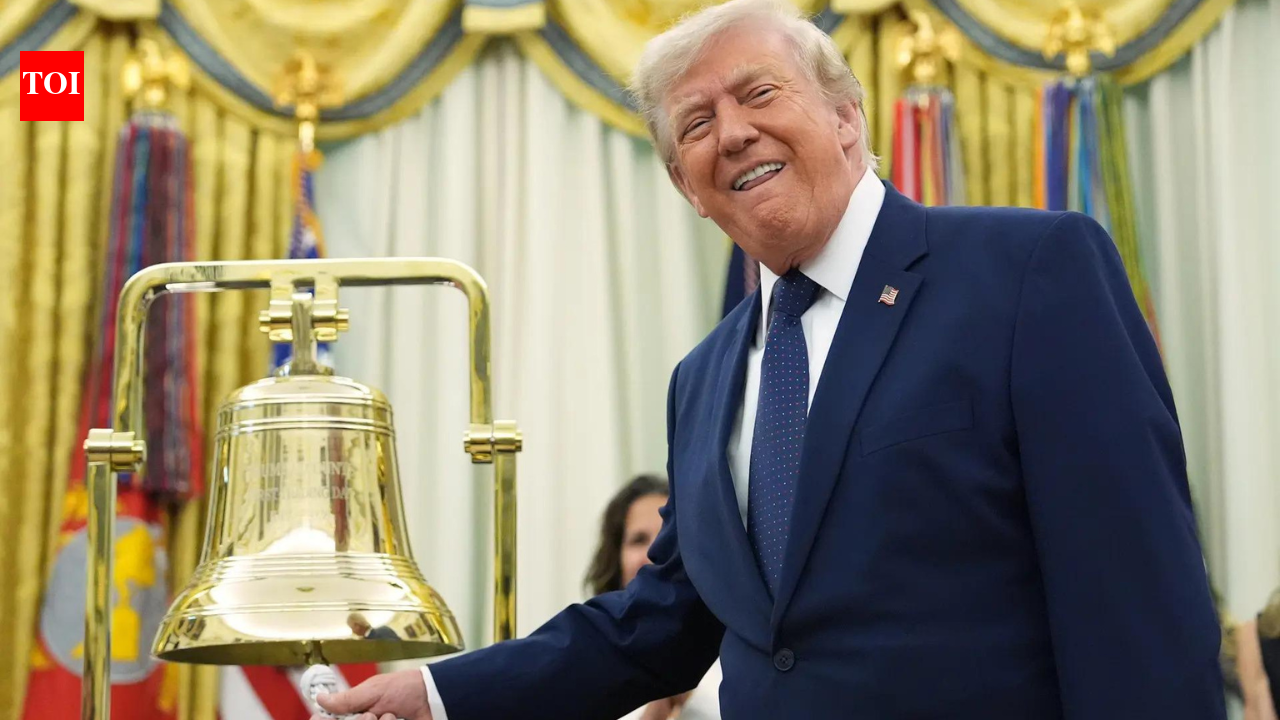
President Donald Trump on Monday rang the opening bells of the New York Stock Exchange and the Nasdaq from the Oval Office to mark the launch of Trump Accounts, a new investment programme for children created under Republicans' 2025 tax and spending law, according to a report by Business Today.
Programme Details
In a public statement, the White House announced, "> FOR THE FIRST TIME FROM THE OVAL: President Donald J. Trump rings the NYSE and Nasdaq opening bell to officially launch http://TRUMPACCOUNTS.GOV!" according to Business Today. The programme is designed to enable children to invest in stock index funds. Treasury Secretary Scott Bessent explained the initiative's rationale, stating, "38% of American families do not have any exposure to our great equity markets," as quoted by Business Today.
Market Performance
Trump has increasingly pointed to stock market gains as evidence of his economic policies. Business Today reported that the S&P 500 has recorded strong gains in recent years:
| Year | S&P 500 Return |
|---|---|
| 2023 | 26.3% |
| 2024 | 25.0% |
| 2025 | 17.9% |
| 2026 (year-to-date) | ~10.0% |
Speaking after formally opening trading, Trump expressed confidence in the market's outlook: "It’s going to go up — I think the market’s going to go through the roof," as reported by Business Today. He also joked, "We should have acted faster."
Economic Sentiment
Despite the market gains, inflation and cost of living remain public concerns. According to Business Today, a June survey by the Associated Press-NORC Center for Public Affairs Research found that only 33% of US adults approve of Trump's handling of the economy. The symbolic ceremony came as Trump continues to highlight the stock market as a measure of the US economy ahead of the November midterm elections.
Implications for Investment Professionals
For CFOs, treasury directors, and institutional investors, the launch of Trump Accounts represents a policy-driven expansion of retail participation in equity markets. The programme targets a segment of the population—the 38% of families without stock exposure—that could gradually increase demand for index funds. However, the persistent inflation and low approval ratings on economic management introduce uncertainty about consumer sentiment and market volatility. The S&P 500's strong recent performance (up ~10% year-to-date in 2026) provides a favourable backdrop, but the disconnect between market returns and public perception of the economy warrants attention from finance executives monitoring demand-side signals. The programme's long-term impact on equity market breadth and capital flows will depend on adoption rates and broader fiscal policy continuity.
Sources: