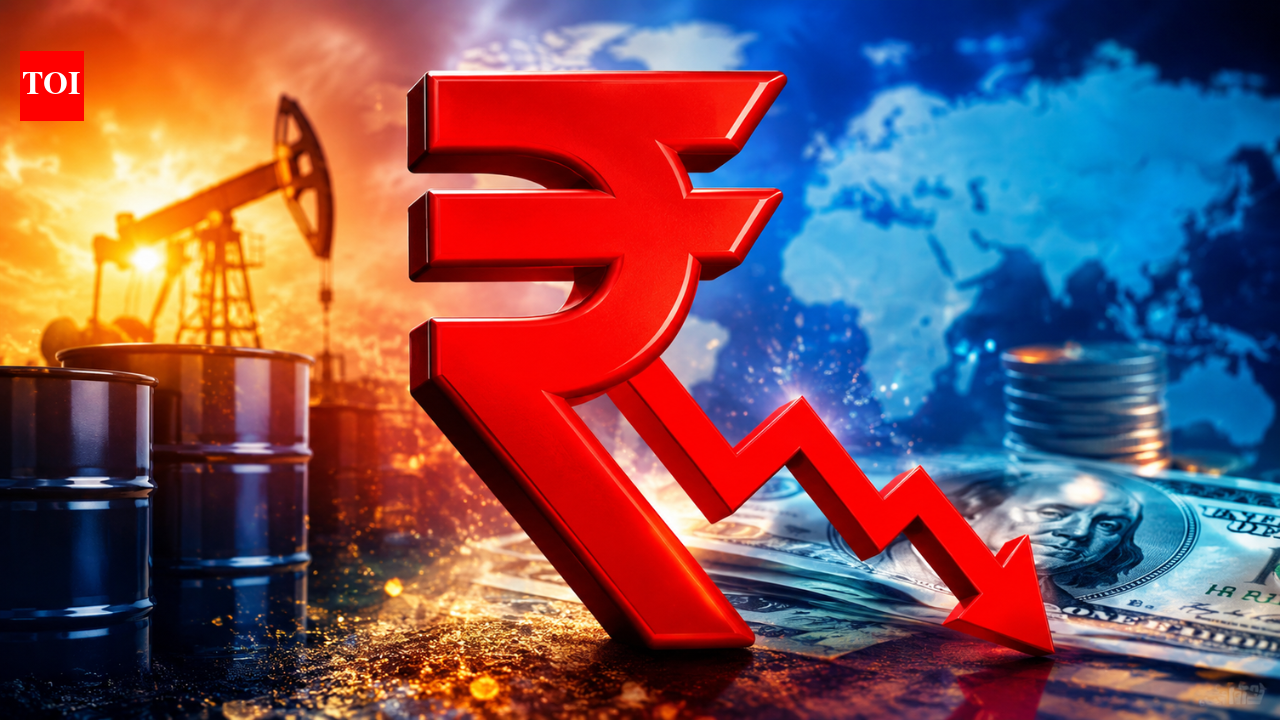
Finance Minister Nirmala Sitharaman stated that India remains the world's fastest-growing economy, but uncertainty in West Asia and dependence on imports of crude oil, gas, fertilisers, and gold have weakened the rupee against the dollar, according to a Business Today report.
Rupee Pressure and RBI Intervention
Sitharaman explained that whenever there is severe fluctuation or volatility in the rupee versus the dollar, the Reserve Bank of India (RBI) intervenes in the market. "It is not to fix a price but to stop the slide and stabilise it," she said. Forex reserves are used for this purpose. However, on account of increased foreign institutional investors (FII) and foreign direct investments (FDI) booking profits and exiting the country due to strategic investments developing in the US, India's reserves are coming down. "This is causing the fluctuation," she added.
Import Dependence and Dollar Demand
The minister highlighted the more significant challenge: persistent uncertainty in West Asia, while imports of crude oil, gas, fertilisers, and gold were also pushing up dollar demand. "With crude and gas not being produced in India and limited internal supply of fertilisers and gold, there is a huge amount of money which has to be paid in forex which is adding to the rupee versus dollar situation," she said. She also noted the scale of the fertiliser subsidy: India is buying fertiliser at about Rs 3,000 per bag and selling it to farmers at Rs 300, implying a subsidy of roughly Rs 2,700 to Rs 2,800 per bag.
| Commodity | Import-driven? | Key detail from FM |
|---|---|---|
| Crude oil | Yes (not produced in India) | Adds to dollar demand |
| Natural gas | Yes (not produced in India) | Adds to dollar demand |
| Fertilisers | Yes (limited internal supply) | Subsidy of Rs 2,700–2,800 per bag |
| Gold | Yes (limited internal supply) | Adds to dollar demand |
Global Currency Context
Sitharaman noted that it's not only the rupee that's under pressure. Currencies such as the Japanese Yen and the Korean Won have also fallen sharply against the dollar, according to the report. This underscores a broader emerging-market currency weakness amid a strong US dollar and shifting global capital flows.
Implications for Trade Finance and Import Costs
For CFOs and treasury professionals monitoring India's trade finance environment, the combination of persistent West Asia uncertainty and heavy import dependence creates structural dollar demand that keeps the rupee under pressure. The RBI's use of forex reserves to stabilise the currency, while effective in cushioning volatility, is constrained by the parallel reduction in reserves from FII and FDI outflows directed toward US investments. This dynamic raises the cost of hedging for importers, particularly those in energy, fertilisers, and gold sectors. The fertiliser subsidy figure—Rs 2,700–Rs 2,800 per bag—illustrates the fiscal cost of insulating domestic prices from FX-driven import inflation. Companies reliant on dollar-denominated inputs can expect continued pressure on margins unless the global uncertainty in West Asia abates or domestic supply alternatives emerge.
Sources: