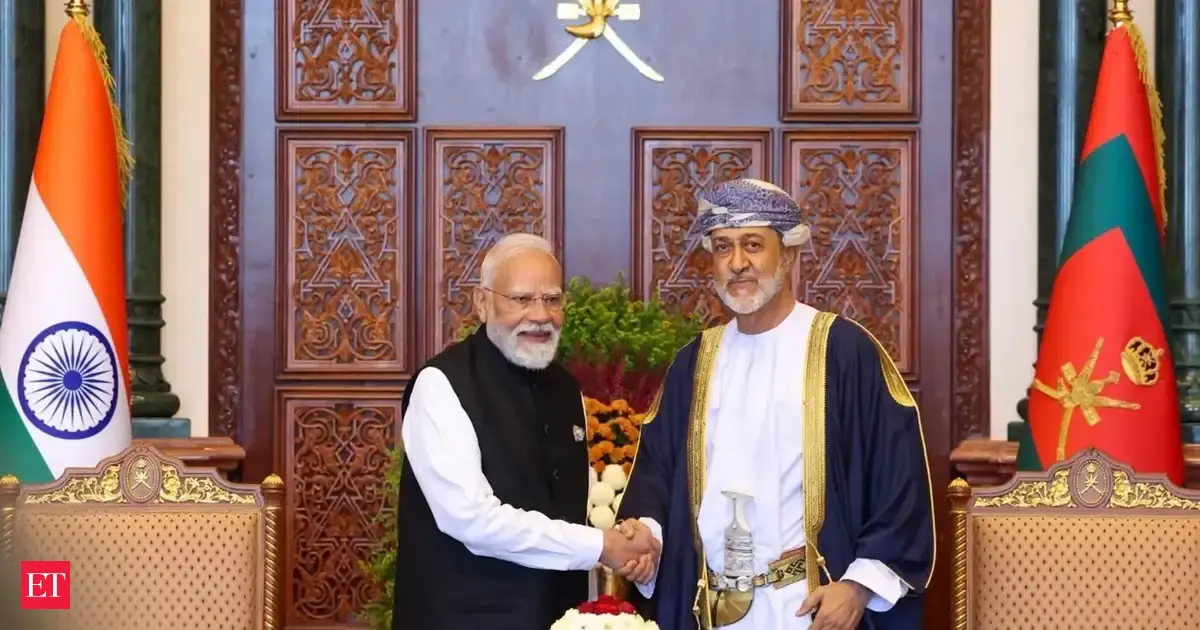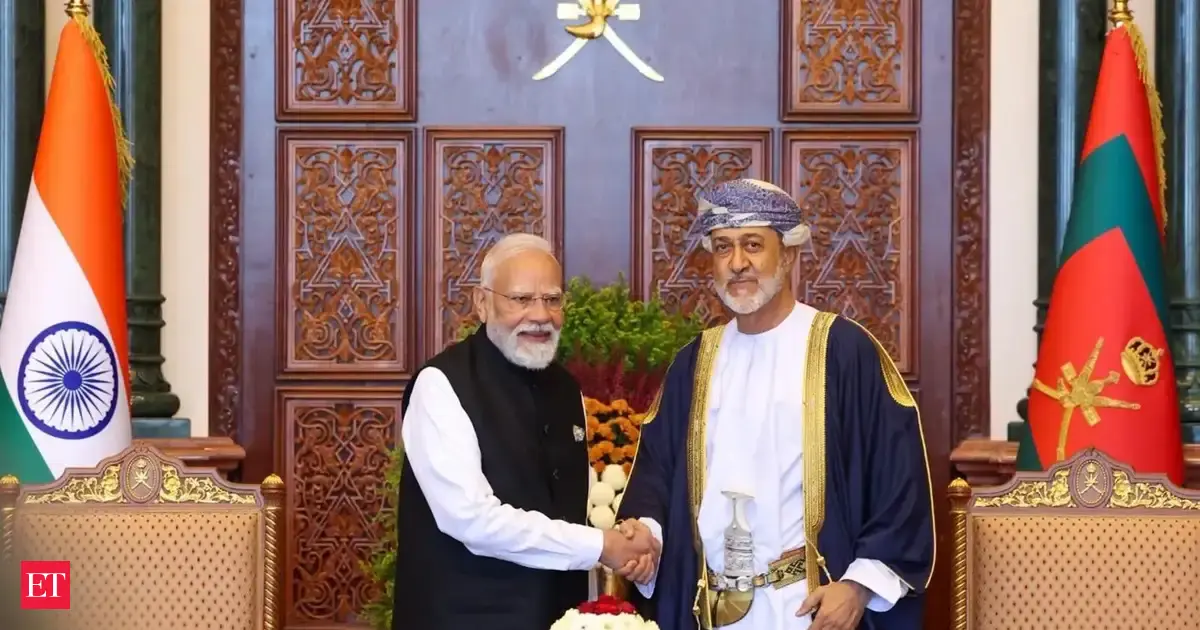
The India-Oman Comprehensive Economic Partnership Agreement (CEPA) is poised to significantly enhance bilateral trade and energy security between the two nations. The agreement, effective from FY2026, is strategically important for deepening India's economic integration with the Gulf region.
Key Trade Developments
Under the CEPA, India will gain 100% duty-free market access in Oman across 98.08% of tariff lines, covering 99.38% of India's export value. This is expected to boost exports in sectors such as engineering goods, pharmaceuticals, and textiles.
- Engineering exports to Oman are projected to rise to USD 1.3-1.6 billion by 2030.
- Textile products, previously facing 5% duties, will now have zero-duty access.
- In agriculture, India already accounts for 10.24% of Oman's imports, with duty-free access expected to enhance competitiveness.
Energy Security Enhancements
Oman's role in India's energy ecosystem has grown, with imports of petroleum gases doubling from USD 0.7 billion in FY2022 to USD 1.4 billion in FY2026. Oman emerged as India's largest LNG supplier in March and April 2026, accounting for 30-31% of total LNG imports.
"The Middle East-India Deepwater Pipeline (MEIDP) is expected to significantly strengthen India's long-term energy security," the report stated.
Bilateral Trade Growth
Bilateral goods trade between India and Oman rose 5.7% year-on-year to USD 11.2 billion in FY2026. The CEPA is expected to further improve trade momentum by reducing tariffs and encouraging investment.
| Sector | Projected Growth by 2030 | Key Benefits |
|---|---|---|
| Engineering | USD 1.3-1.6 billion | Tariff elimination |
| Textiles | Zero-duty access | Increased competitiveness |
| Agriculture | Enhanced competitiveness | Duty-free access for key goods |
Strategic Importance
The agreement is not only about trade but also about strategic logistics and supply chain integration, with Oman emerging as a key partner in India's energy and trade strategy.
The India-Oman CEPA represents a significant step forward in strengthening bilateral relations and enhancing economic resilience for both countries.