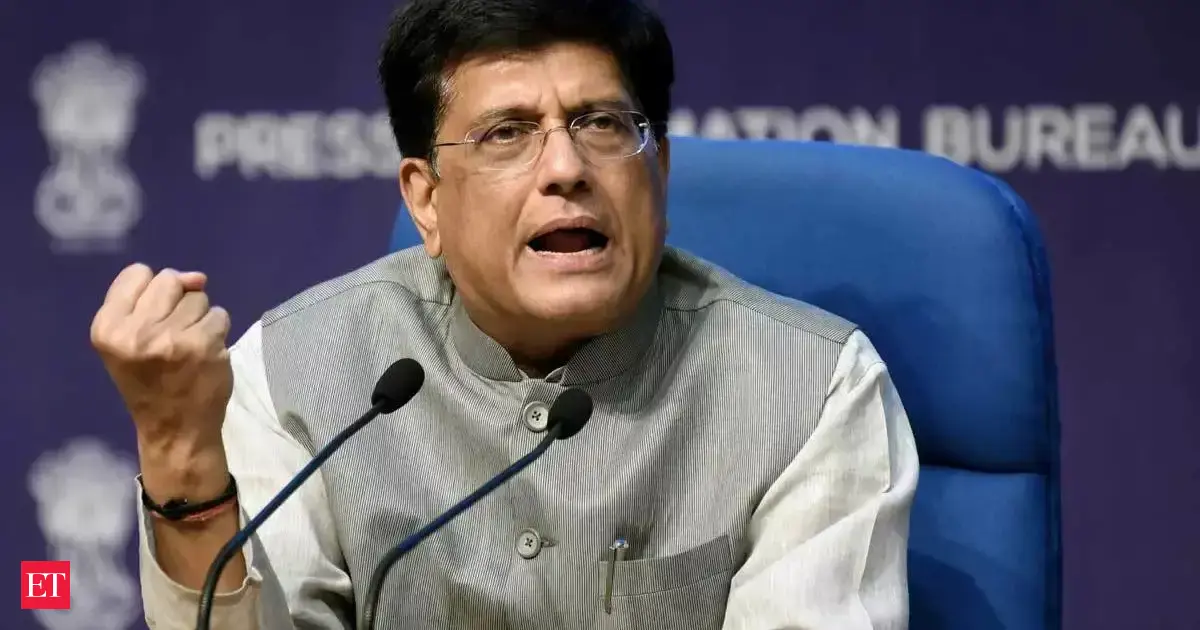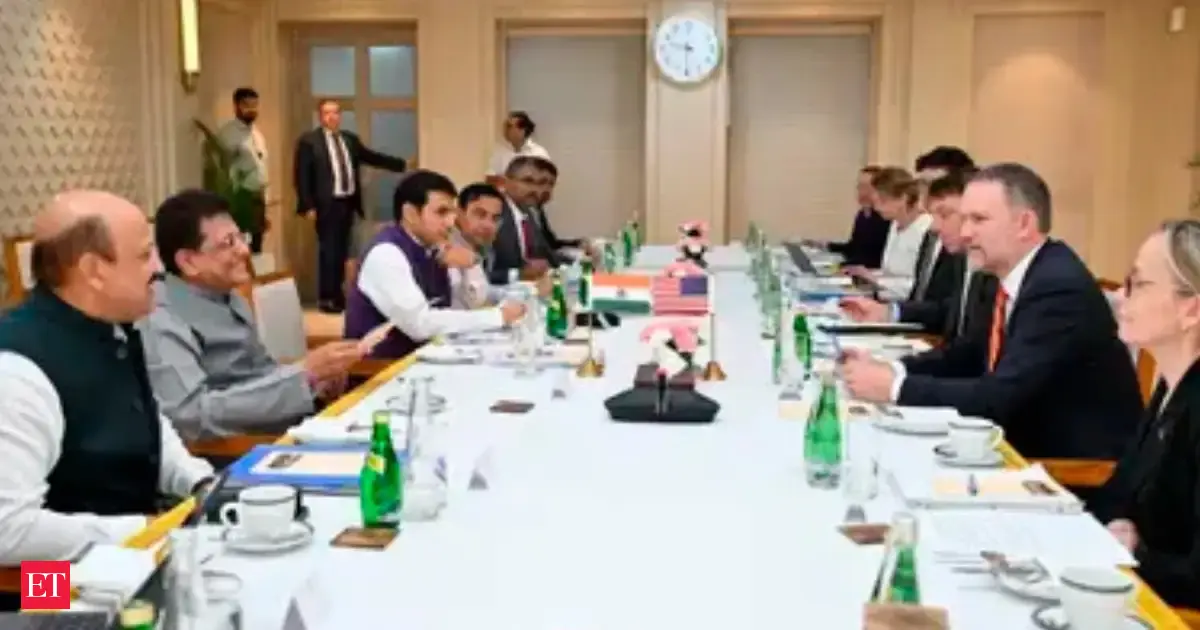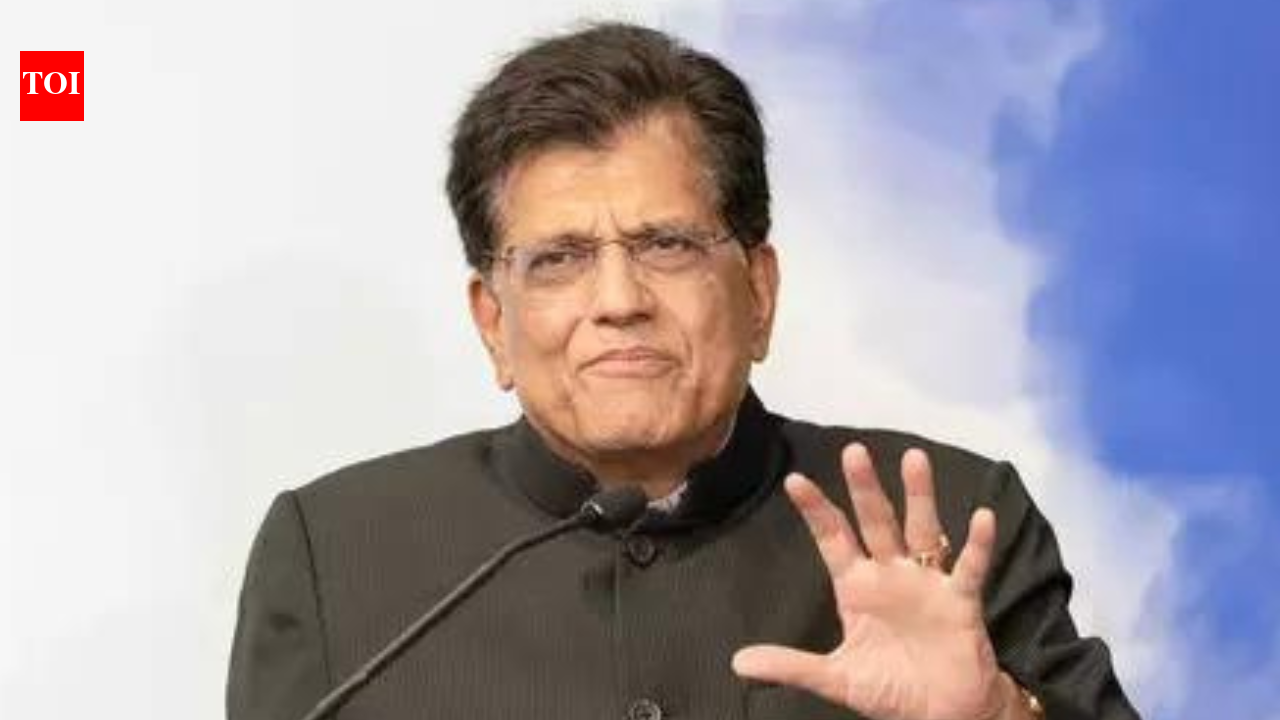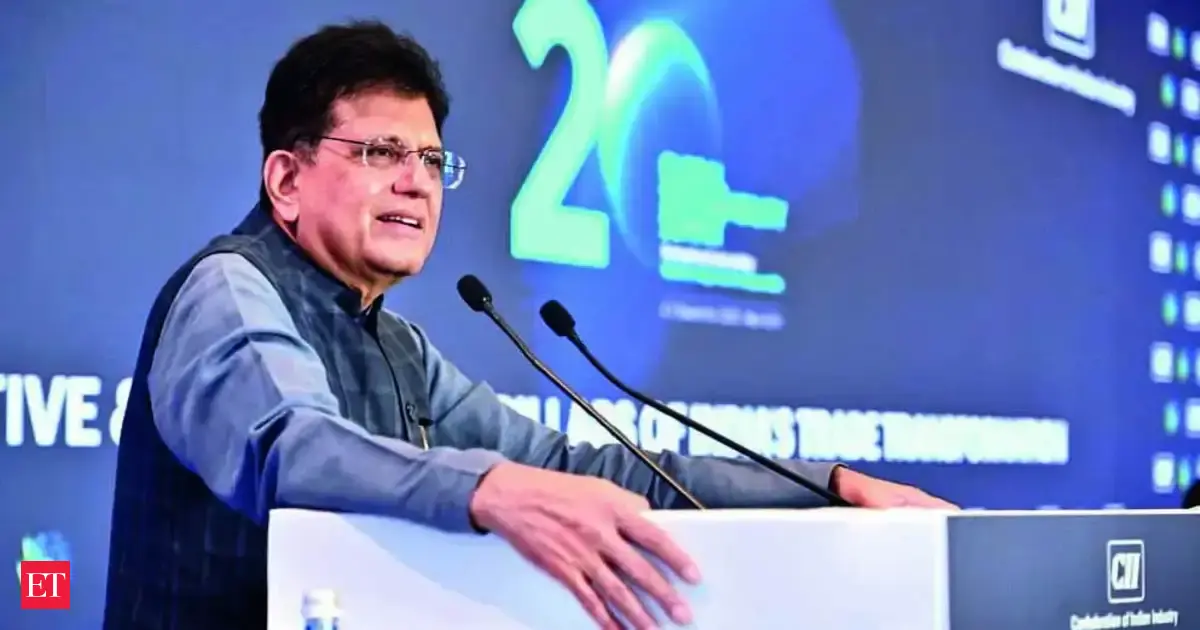
India's Commerce Minister Piyush Goyal has stated that the bilateral trade deal with the United States will be finalized on the day India secures a tariff advantage over its competitors. Speaking a day after concluding meetings with United States Trade Representative Jamieson Greer in New Delhi, Goyal described the deal as "close," quoting Greer as saying it is "99% complete."
US Trade Deal: Tariff Edge and IEEPA Context
India and the US reached an interim trade understanding on February 6 after months of tariff tensions, according to Goyal. "The broad contours were all fixed up at that time," he said. "Our teams have been working since then to finalise the fine print, and there's always a little give and take."
Goyal explained that at the time the deal was negotiated, the US had imposed a 50% tariff on India under the International Economic Emergency Powers Act (IEEPA). "We had negotiated that deal based on bringing down that 50% tariff to 18%. The whole deal was centred around that competitive advantage that we got with 18% over our neighbours and other competing countries, so we were lower than all our neighbouring and Asean countries, other than Singapore, and that is why the deal was attractive for us," Goyal stated.
However, the US Supreme Court had invalidated the IEEPA tariffs in February, creating a changed legal landscape for the agreement.
| Tariff Regime | Rate | Status |
|---|---|---|
| IEEPA tariffs before deal | 50% | Invalidated by US Supreme Court in February |
| Negotiated target tariff under US deal | 18% | Subject to finalisation |
| Competing countries (neighbours & ASEAN, except Singapore) | Higher than 18% | — |
India-UK CETA: Implementation from July 15
Goyal also provided an update on the India-UK trade front. Describing the free trade deal with the UK as "the most comprehensive agreement that India has entered into so far," he said the economic benefits are limitless ("sky is the limit").
During his three-day visit to the UK, Goyal will review preparedness for the implementation of the India-UK Comprehensive Economic and Trade Agreement (CETA), which is scheduled to come into force from July 15. "Ministers may have changed, but I must compliment the UK for continuity in decisions and continuity in following through what was already negotiated," he said.
Goyal highlighted the India-UK strategic partnership across technology, investments, defence, and critical minerals. He contrasted the UK deal with other trade agreements: "An agreement with a small economy like New Zealand has its own value propositions, has its own dynamics, and an agreement with the United States of America has a different story to tell. One thing is for sure, that the UK free trade agreement is going to be the most comprehensive agreement that India has entered into so far, which will come into force in July."
The two sides share objectives including fighting terrorism, Goyal noted, adding that "What the UK has to offer can be useful for India's growth imperatives while what New Delhi offers can help the UK keep its costs under control and reach global markets."
Broader Trade Strategy
Goyal's remarks underline India's dual-track approach: a near-complete US deal that provides a competitive tariff edge, and a comprehensive UK agreement that sets a new benchmark for India's trade pacts. The US deal's reliance on IEEPA tariffs—now invalidated—may require re-evaluation, but Goyal's confidence suggests fundamental terms remain intact. For importers and exporters, the UK CETA implementation on July 15 offers a clear timeline for accessing new preferential tariffs, while the US deal's outcome will shape India's competitive position relative to ASEAN neighbours.
Sources: