iGEN
Visit IGEN World Explore IGEN Expo
EXPLORE UPGRADE PLANS
BREAKING
UPS shift away from Amazon shows bigger payoff Lanesurf: 62% of Loads Get Vetted Carrier Offers Before Brokers Arrive India-China Border Trade Via Lipulekh Resumes Aug 1; China Permits 20 Traders Geopolitics Drives CMA CGM Q2 Profit Surge of 42% as Volumes and Rates Climb Benchmark Diesel Price Rises Third Week as Futures Plunge; Spread Hits Record Indian Government Limits Sugar Dealers to 400 Tonnes Stock Until November to Curb Hoarding Tenants signing longer leases for larger warehouses as 3PLs lock in capacity US stock market flat as S&P 500 and Dow barely move, Nasdaq slides over 1% on chip rout TruAlt Bioenergy Q1 Net Zooms to ₹59.27 Crore on Higher Revenues, Capacity Expansion India’s cotton sowing crosses 100 lakh hectares as monsoon picks up, area expands in key states UPS shift away from Amazon shows bigger payoff Lanesurf: 62% of Loads Get Vetted Carrier Offers Before Brokers Arrive India-China Border Trade Via Lipulekh Resumes Aug 1; China Permits 20 Traders Geopolitics Drives CMA CGM Q2 Profit Surge of 42% as Volumes and Rates Climb Benchmark Diesel Price Rises Third Week as Futures Plunge; Spread Hits Record Indian Government Limits Sugar Dealers to 400 Tonnes Stock Until November to Curb Hoarding Tenants signing longer leases for larger warehouses as 3PLs lock in capacity US stock market flat as S&P 500 and Dow barely move, Nasdaq slides over 1% on chip rout TruAlt Bioenergy Q1 Net Zooms to ₹59.27 Crore on Higher Revenues, Capacity Expansion India’s cotton sowing crosses 100 lakh hectares as monsoon picks up, area expands in key states
Home ›› Intl Trade ›› Import Export ›› Export Docs ›› WTO Urges India to Cut Reliance on Trade-Restrictive Measures, New Delhi Flags Global Non-Tariff Barriers

WTO Urges India to Cut Reliance on Trade-Restrictive Measures, New Delhi Flags Global Non-Tariff Barriers

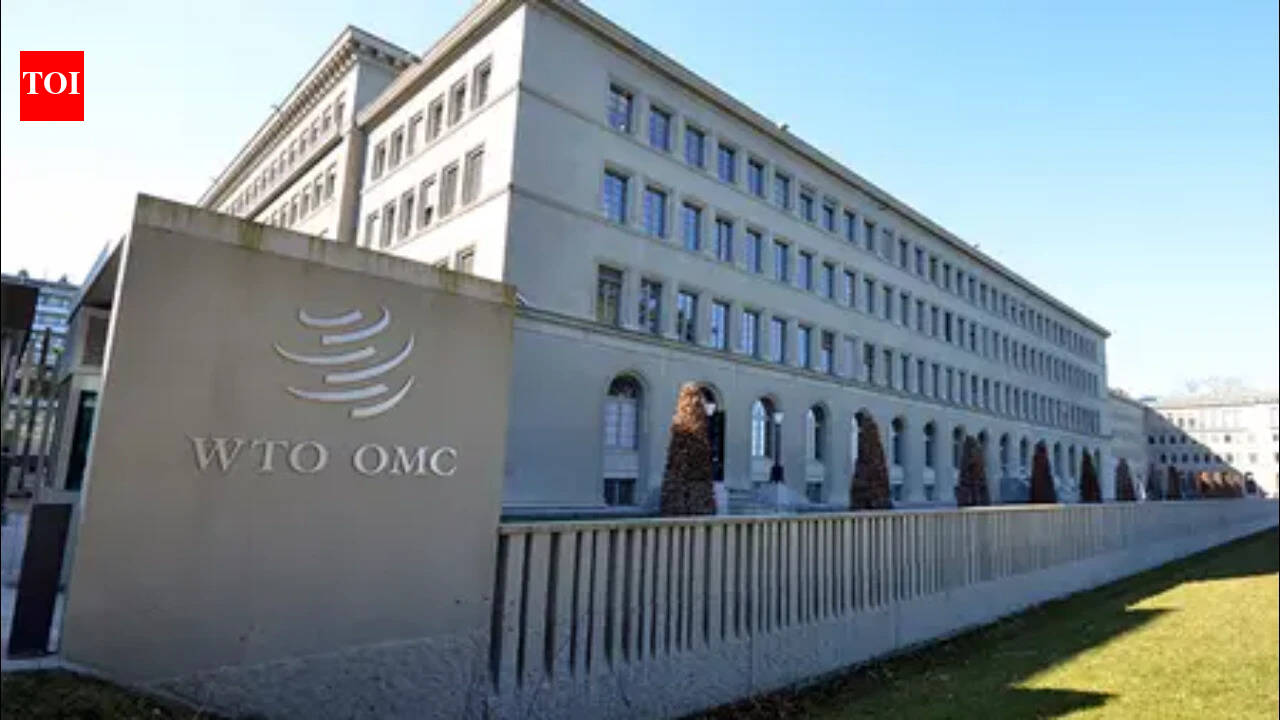
The WTO's 8th Trade Policy Review for India urges New Delhi to reduce reliance on high tariffs, import/export controls, and state trading enterprises. India counters by flagging rising non-tariff measures by trading partners that constrain its market access. The TPR meeting is scheduled for July 21 and 23.

iG
iGEN Editorial
July 21, 2026
WTO Urges India to Cut Reliance on Trade-Restrictive Measures, New Delhi Flags Global Non-Tariff Barriers

The World Trade Organization (WTO), in its report on India’s 8th Trade Policy Review (TPR), has urged India to reduce its reliance on trade-restrictive measures, according to an Economic Times report dated July 21, 2026. The WTO noted that India’s policy framework continues to rely on relatively high tariffs, import and export controls, state trading enterprises, and extensive budgetary support programmes. New Delhi, in its own report submitted for the review, countered by highlighting that non-tariff measures imposed by some trading partners—including complex standards, conformity assessment procedures, and regulatory requirements—are constraining its market access.

WTO Findings on India's Trade Regime

The WTO’s Trade Policy Review report stated that India aims to increase its share of global merchandise exports to around 10% by 2047, from about 1.8% in 2024. During the review period, India was the fastest-growing G20 economy, and the WTO forecasts India’s real GDP growth to range between 6.8% and 7.2% in the short term (FY28). However, the WTO’s assessment highlights that India’s trade policy still depends on multiple restrictive instruments that may hinder its export ambitions.

Indicator Current Value Target (by 2047) Source
India's share of global merchandise exports ~1.8% (2024) ~10% WTO Trade Policy Review
Real GDP growth forecast (FY28) 6.8–7.2% WTO

India's Response: External Challenges and Non-Tariff Barriers

New Delhi, in its report for the TPR, said that its trade performance in recent years has been impacted by a range of external challenges, including global supply chain disruptions arising from geopolitical tensions, the pandemic, climate-related events, and export controls by some countries. These factors, India argued, have “adversely affected the availability and cost of critical inputs”.

India also pointed to “issues of excess capacity and overproduction in certain sectors” that have led to trade distortions and price fluctuations in international markets. Furthermore, India is facing “an increased use of non-tariff measures by some trading partners, including complex standards, conformity assessment procedures and regulatory requirements”. According to New Delhi, these measures have resulted in “constrained market access for Indian industry in foreign markets”.

India's Commitment to Multilateral Trading System

Despite these challenges, India reaffirmed its commitment to WTO rules. In the multilateral arena, India believes that continued commitment to WTO rules is necessary for global trade. Its trade policy will remain “firmly aligned with its broader reform agenda, deepening integration with the global economy while advancing a strengthened and equitable rules-based multilateral trading system”, as stated in its TPR report. India also aspires to safeguard the development priorities and legitimate policy space of the Global South, while advancing toward its long-term objective of attaining high middle-income status by 2047, the centenary year of its independence.

Upcoming TPR Meeting

The WTO’s TPR meeting for India is scheduled to be held on July 21 and 23, 2026, where member countries will discuss the findings and India’s trade policies. This review provides a platform for WTO members to examine India’s trade and trade-related policies and offer recommendations.

For importers, exporters, and trade policy professionals, the WTO’s recommendations signal potential future adjustments in India’s tariff and non-tariff regime, while India’s own complaints about foreign non-tariff barriers highlight ongoing friction points in global market access. The outcome of the TPR meeting could influence bilateral trade negotiations and customs practices in the near term.


Sources: Economic Times – Foreign Trade
Keep Reading

Recommended Stories

WTO Nations Query India’s PLI, QCO, Import Substitution; New Delhi Defends Public Policy Objectives Trade

WTO Nations Query India’s PLI, QCO, Import Substitution; New Delhi Defends Public Policy Objectives

At India's Trade Policy Review, 44 WTO members submitted over 1,090 written questions, with more than 700 answered before the meeting. Concerns focused on predictability and transparency of India's PLI schemes, QCOs, import substitution policies, and other trade measures. New Delhi defended its policies as legitimate public policy objectives.

July 23, 2026
India's Growth Strong but Trade Barriers Threaten 2047 Goal: WTO Trade Policy Review Trade

India's Growth Strong but Trade Barriers Threaten 2047 Goal: WTO Trade Policy Review

A WTO Trade Policy Review report highlights India's strong economic growth as the fastest-growing G20 economy, with GDP projected at 6.8-7.2% for FY2027-28. However, it warns that structural challenges including high trade costs, tariffs, and regulatory complexity must be addressed for India to achieve its Viksit Bharat vision of becoming a developed nation by 2047. The report notes India's record exports of $863.1 billion in 2025-26 and a strategic shift towards free trade agreements.

July 21, 2026
India Deposits Instrument of Acceptance for WTO Agreement on Fisheries Subsidies on 20 July 2026 Trade

India Deposits Instrument of Acceptance for WTO Agreement on Fisheries Subsidies on 20 July 2026

India deposited its Instrument of Acceptance of the WTO Agreement on Fisheries Subsidies on 20 July 2026, becoming a party to the pact. The agreement, adopted in June 2022 and effective from September 2025, prohibits subsidies for illegal, unreported and unregulated fishing and for overfished stocks. It disciplines harmful subsidies for industrial fishing fleets, benefiting small-scale fishers in India, while aquaculture and inland fisheries remain outside its scope.

July 20, 2026
Global wheat rally revives India's export prospects as government allows 5 million tonnes of exports Trade

Global wheat rally revives India's export prospects as government allows 5 million tonnes of exports

India has authorised the export of 5 million tonnes of wheat after a four-year ban, according to the Economic Times. The decision follows a global wheat rally and a domestic surplus of 57.8 million tonnes in the central pool. The government had previously allowed an additional 2.5 million tonnes in April 2026.

July 26, 2026