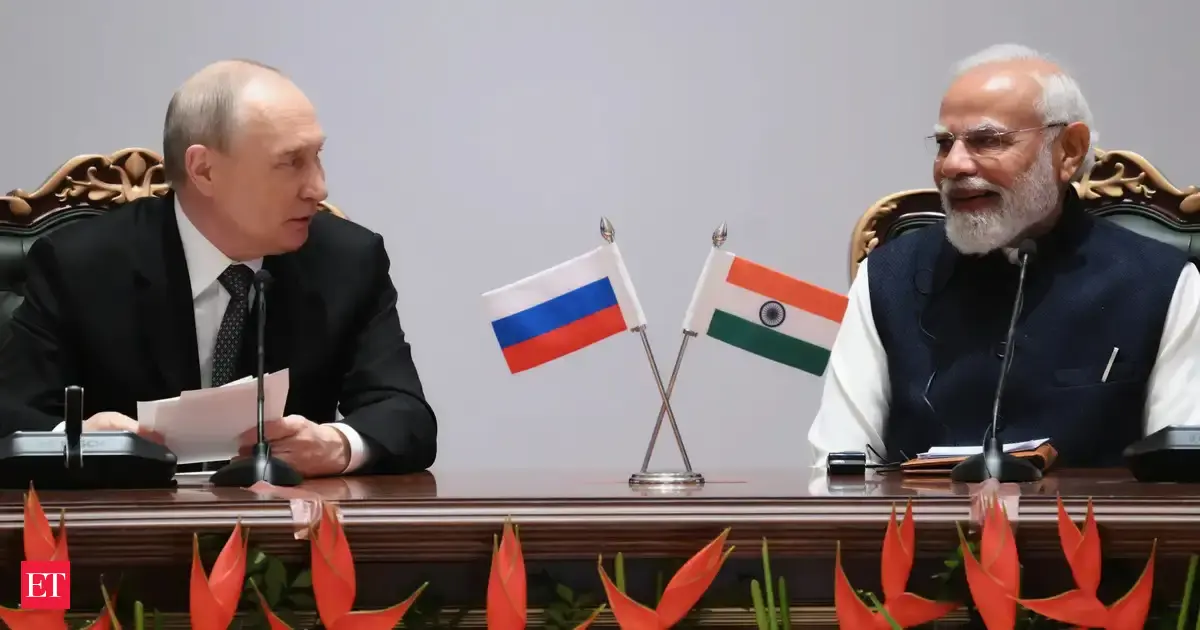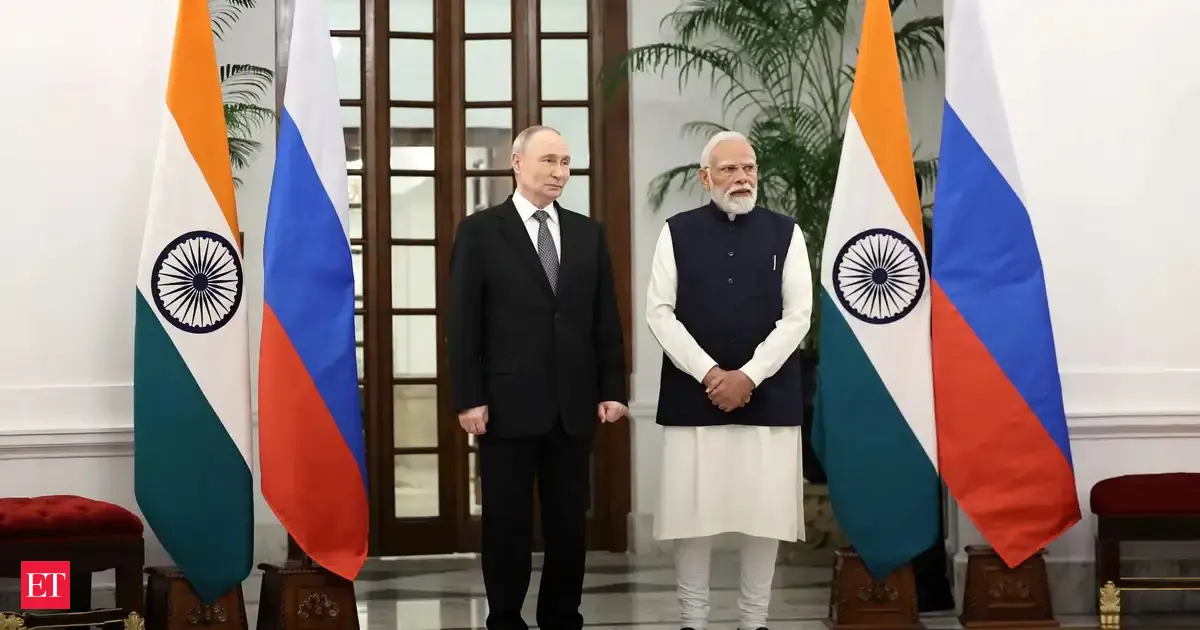
India and Russia have set a $50 billion bilateral investment target by 2030, according to a report by the Economic Times. The announcement follows a meeting of the India-Russia Joint Working Group on Priority Investment Projects in Moscow in early June 2026, co-chaired by DPIIT Secretary Amardeep Singh Bhatia and Russian Deputy Minister of Economic Development Vladimir Iliychev.
Joint Working Group Meeting
The working group agreed to encourage private companies to explore investment opportunities in both countries and promote joint projects across key sectors. The Indian side presented ongoing investment reforms and highlighted the availability of cost-effective skilled manpower, positioning India as a platform for Russian industry to invest and grow jointly with Indian industry.
Priority Sectors
The following sectors were identified for enhanced cooperation:
| Sector | Examples |
|---|---|
| Advanced manufacturing | High-tech production |
| Green hydrogen | Clean energy production |
| Energy storage | Battery technologies |
| Metallurgy | Steel, aluminium |
| Mining | Mineral extraction |
| Critical minerals | Lithium, rare earths |
| New and emerging technologies | AI, quantum computing |
Additionally, India's Ambassador to Russia, Vinay Kumar, pitched a "Making in Russia for India" model covering fertilisers, critical minerals, and mining to deepen industrial partnership.
Industry Participation
Rajasekharan Jambulingam, Managing Director of Value Energy Technologies Pvt Ltd, led a CII delegation to the Russia-India Investment Forum held in Moscow. He highlighted the growing potential for bilateral investments and resilient supply chains. The DPIIT Secretary was accompanied by representatives from CII and FICCI.
Ambassador's Remarks at SPIEF
Speaking at the India-Russia Business Dialogue session during the St Petersburg International Economic Forum in May 2026, Ambassador Kumar referred to a "special opportunity" for doing business between the two countries. The forum provided a platform to strengthen economic ties.
Outlook
The $50 billion target signals a strategic push to diversify bilateral economic engagement beyond traditional defence trade. The focus on green hydrogen and critical minerals aligns with global energy transition goals, offering new avenues for partnership.
Sources: