iGEN
Visit IGEN World Explore IGEN Expo
EXPLORE UPGRADE PLANS
BREAKING
Home ›› Intl Trade ›› Trade Policy ›› India Eyes Economic Resilience Amid Global Trade Challenges

India Eyes Economic Resilience Amid Global Trade Challenges

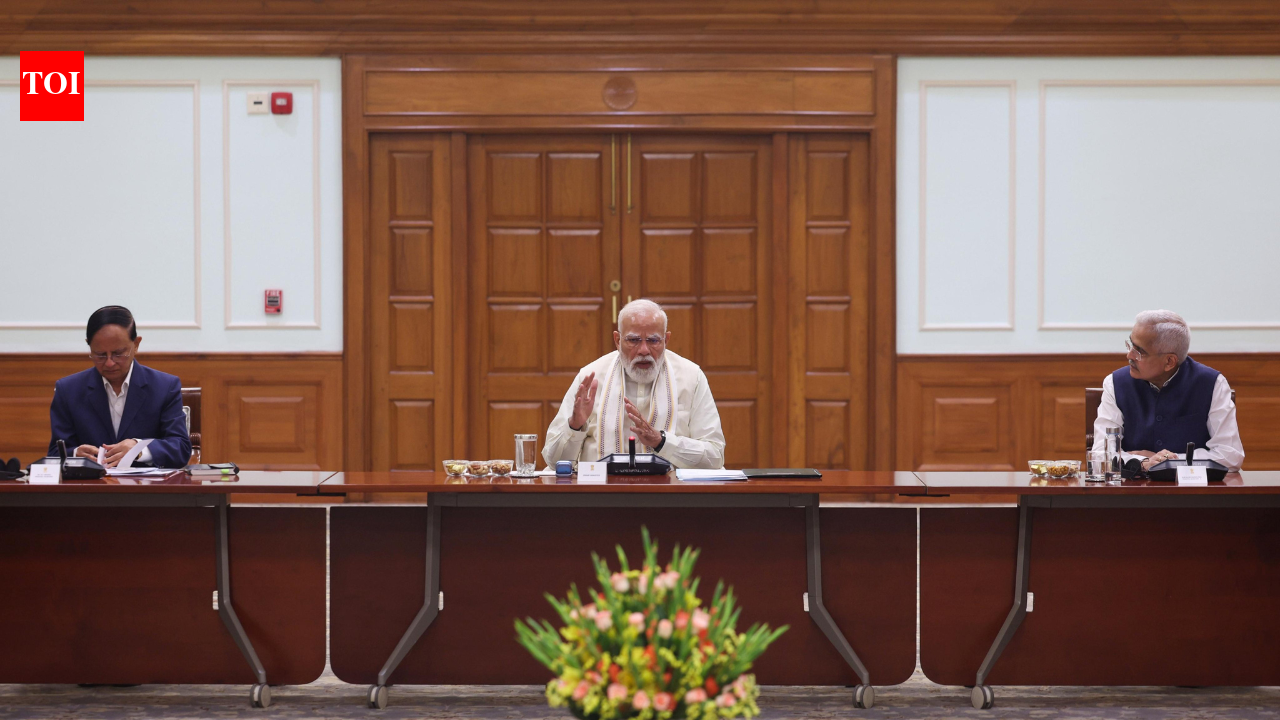
Prime Minister Narendra Modi chaired a meeting with the Economic Advisory Council to discuss strategies for bolstering India's economic growth amid global uncertainties. Key discussions included trade reforms and measures to attract foreign investment.

iG
iGEN Editorial
June 7, 2026
India Eyes Economic Resilience Amid Global Trade Challenges

Prime Minister Narendra Modi convened a meeting with the Economic Advisory Council (EAC) to address strategies for enhancing India's economic growth amidst global trade challenges. The meeting, held on June 6, 2026, focused on reforms to improve the ease of doing business and living in India.

Economic Growth Amid Global Turmoil

The EAC meeting comes in the wake of the Reserve Bank of India's (RBI) decision to maintain the policy repo rate at 5.25%, reflecting a neutral stance amid geopolitical tensions and supply chain disruptions. RBI Governor Sanjay Malhotra emphasized the need for economic resilience, citing heightened uncertainty and disruptions to trade routes as significant challenges.

"Policymakers should use the disruption as an opportunity to further strengthen economic resilience," said Malhotra.

Revised Economic Outlook

The RBI has revised its GDP growth forecast for FY2026-27 to 6.6%, down from 6.9%, due to elevated energy prices and global financial volatility. Inflation projections have also been adjusted upward to 5.1%, driven by rising global crude oil prices.

Indicator Previous Estimate Revised Estimate
GDP Growth 6.9% 6.6%
Inflation 4.6% 5.1%

Attracting Foreign Investment

The RBI expects stronger foreign capital inflows following measures to ease external financing conditions. These include expanding foreign investor access to government securities and easing restrictions under the Fully Accessible Route.

Impact of Geopolitical Tensions

The EAC discussed the impact of the Middle East conflict on India's trade and economic outlook. Soaring energy prices and supply chain pressures were identified as key risks, with central banks globally balancing growth support with inflation control.

Conclusion

India's strategic focus on economic resilience and attracting foreign investment aims to mitigate the impact of global trade challenges. The EAC's discussions underscore the importance of adaptive policy measures in navigating economic uncertainties.
Keep Reading

Recommended Stories

India's Growth Strong but Trade Barriers Threaten 2047 Goal: WTO Trade Policy Review Trade

India's Growth Strong but Trade Barriers Threaten 2047 Goal: WTO Trade Policy Review

A WTO Trade Policy Review report highlights India's strong economic growth as the fastest-growing G20 economy, with GDP projected at 6.8-7.2% for FY2027-28. However, it warns that structural challenges including high trade costs, tariffs, and regulatory complexity must be addressed for India to achieve its Viksit Bharat vision of becoming a developed nation by 2047. The report notes India's record exports of $863.1 billion in 2025-26 and a strategic shift towards free trade agreements.

July 21, 2026
Iran-US Interim Peace Deal May Support India's Growth But Inflation and Fiscal Risks Remain: RBI Trade

Iran-US Interim Peace Deal May Support India's Growth But Inflation and Fiscal Risks Remain: RBI

The Reserve Bank of India, in its bi-annual Financial Stability Report, stated that the interim peace deal between Iran and the United States could support India's economic growth by normalising supply chains and easing geopolitical tensions. However, it warned that elevated oil and commodity prices, along with weaker global growth, could weigh on domestic expansion in 2026-27, while inflation and fiscal deficit pressures remain key concerns.

July 8, 2026
India's Core Sector Grows 5% in June, Fastest in Five Months on Iron Ore Boost Business

India's Core Sector Grows 5% in June, Fastest in Five Months on Iron Ore Boost

India's expanded core sector grew 5% in June 2026, the fastest pace in five months, driven by a 43.9% surge in iron ore and 9.8% cement growth. Energy-intensive sectors such as crude oil, natural gas, and refinery products continued to contract, while fertiliser production fell for the fourth straight month. The data, based on a revised base year 2022-23, showed Q1 FY27 core sector expansion of 3.6%.

July 21, 2026
IMF Says India Remains a Key Driver of Global Economic Growth Business

IMF Says India Remains a Key Driver of Global Economic Growth

The International Monetary Fund has retained India's growth projection at 6.5% for fiscal year 2026-27, citing robust domestic demand and US tariff reductions. Director Julie Kozack noted India's economy outperformed expectations in Q1, while the IMF sees positive developments from the Middle East ceasefire and Strait of Hormuz reopening.

July 8, 2026