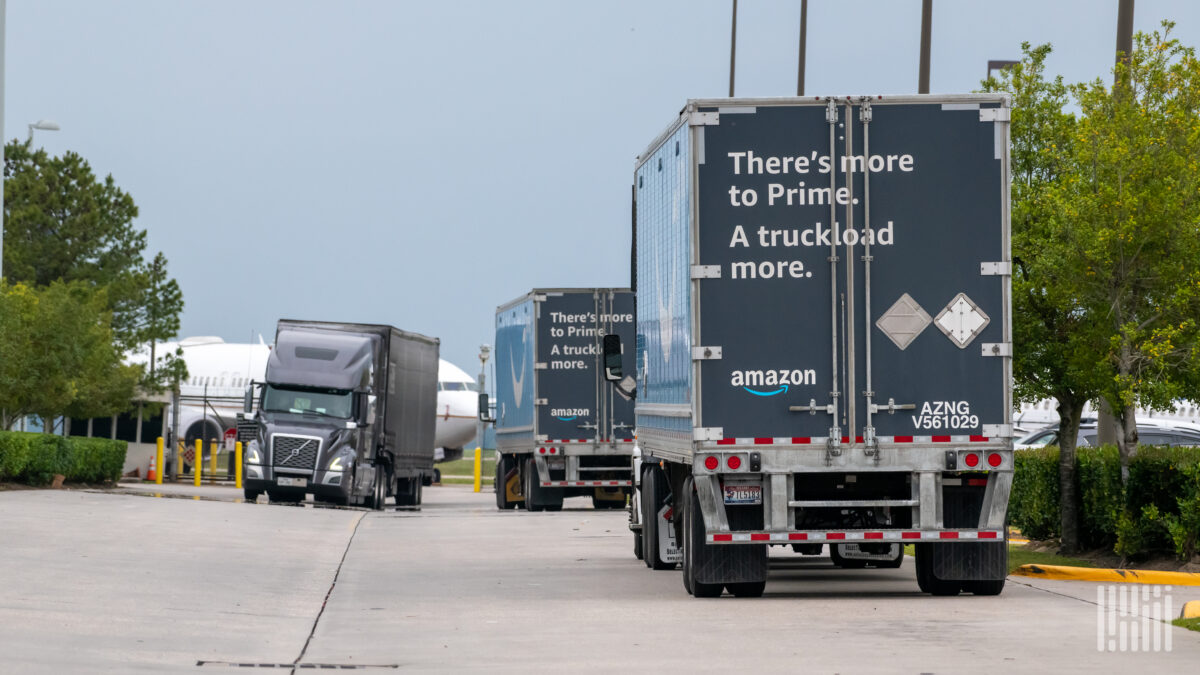
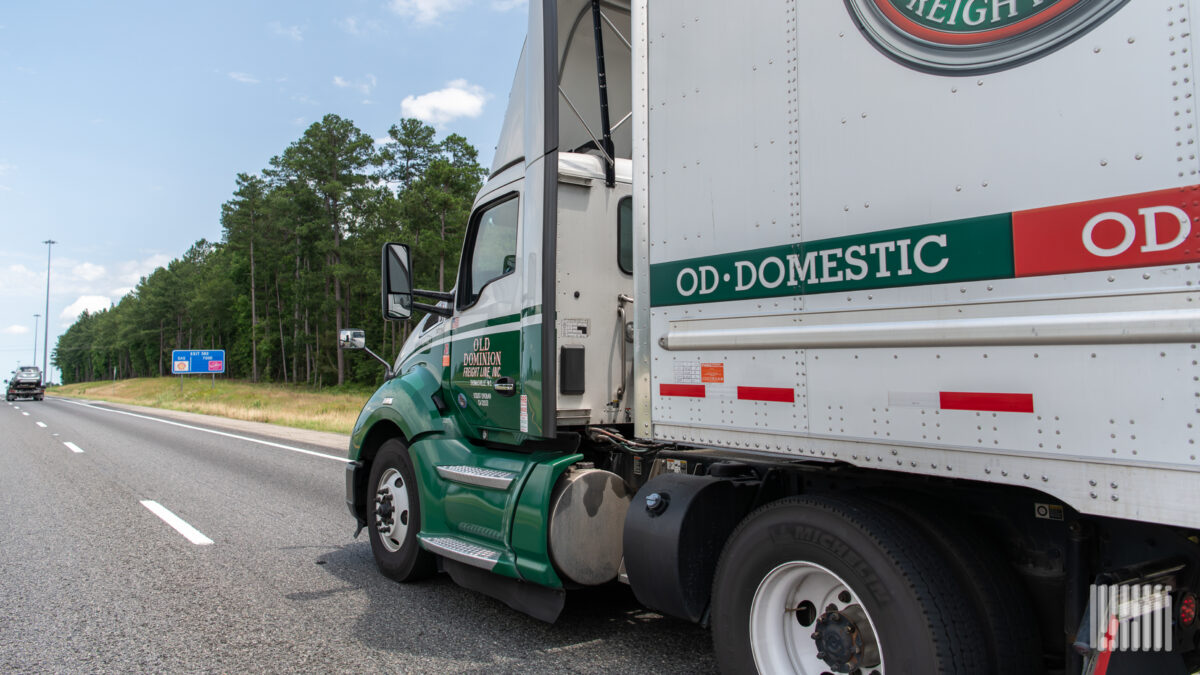
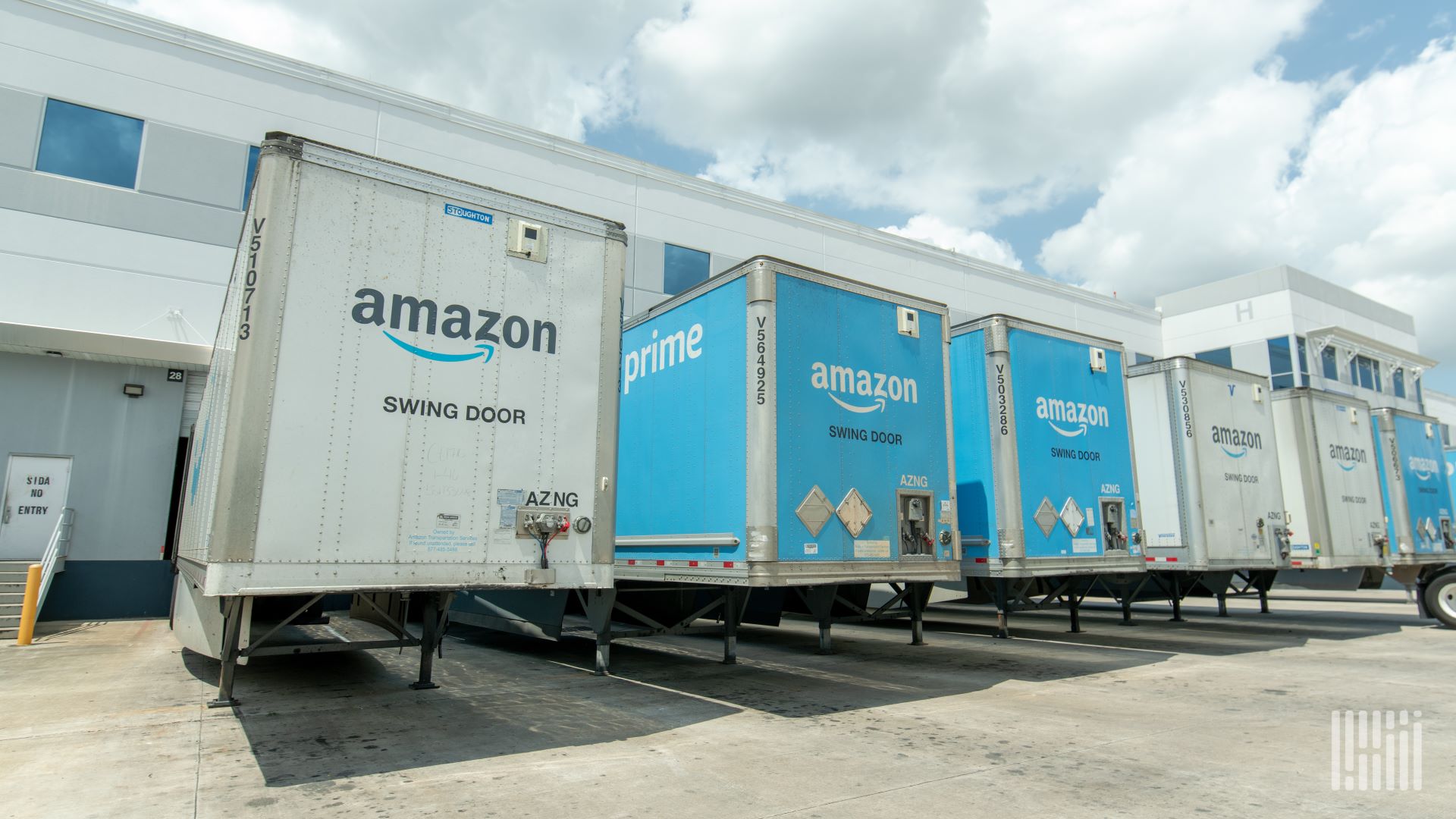
Amazon's (NASDAQ: AMZN) new less-than-truckload network, opened to all businesses this week, has drawn a muted market reaction and analyst consensus that it is a strong economy-tier offering — but not yet a full hub-and-spoke carrier in the mold of Old Dominion (NASDAQ: ODFL) or FedEx Freight (NYSE: FDFX). According to FreightWaves, the real story lies not in what Amazon launched, but in what it is missing: a premium expedited tier. The fastest way to add one, the analysis suggests, is to buy Forward Air (NASDAQ: FWRD), a carrier already built for expedited and currently mid-strategic review at a depressed equity value.
Amazon's LTL Launch: Economy Tier, Not Premium
Amazon's expanded LTL service covers shipments of one to six pallets (150 to 15,000 pounds), picked up, transferred at a nearby terminal, and delivered intact at a lower cost than legacy carriers, according to FreightWaves. It runs on an asset-light model across roughly 30 terminals stitched into a package-delivery network, with real density in the Eastern U.S. and a growing set of Western metros. For the economy end of LTL, that is a credible national entry on day one.
Analysts generally downplayed the threat. Deutsche Bank's Richa Harnain told investors Amazon's footprint is not yet that of a "formidable full-fledged nationwide asset-based operator," characterizing the current service as more akin to what brokers offer. TD Cowen's Jason Seidl argued the offering will mostly compete in the economy three-to-four-day sub-segment and take share "on the margins." However, one analyst dissented: Morgan Stanley's Ravi Shanker warned that even an asset-light model could be a disruptor because Amazon "has repeatedly demonstrated an ability to gain traction in transportation markets through a flexible and iterative operating model."
| Metric | Amazon LTL (current) | FedEx Freight (comparison) |
|---|---|---|
| Terminals | ~30 | 365 |
| Service tier | Economy / cost-sensitive | Premium & economy |
| Network density | Eastern US + Western metros | National (every US ZIP code) |
| Operating model | Asset-light | Asset-based hub-and-spoke |
Why Expedited Matters — and Why Forward Air Owns It
FreightWaves notes that Amazon's own pitch leans on attributes such as real-time GPS tracking, automated appointment scheduling, electronic proof of delivery, and a sensor-equipped fleet. Amazon Freight Director Jim Ruiz framed the launch around closing the gap between LTL and the reliability and visibility shippers already get on full-truckload moves. That value proposition, according to FreightWaves, "is, almost word for word, the value proposition of expedited LTL — time-definite, high-intact-rate, premium-service freight. And the purest national expedited LTL franchise in the market is Forward Air."
Forward built its network airport-to-airport, serving time-sensitive, high-value freight that brokers and economy carriers cannot reliably handle. Its expedited segment is engineered around time-definite shipping, industry-leading intact delivery rates, late cutoffs, early recovery, and cross-border reach into Canada and Mexico. Where Amazon's network today is strongest in the East and built for the economy tier, Forward's is national and premium-graded.
The Road Feeder Network: Scheduled Linehaul on Airline Bones
What makes Forward's footprint so valuable to Amazon specifically is its operating model, according to FreightWaves. Forward runs a road feeder network — scheduled linehaul trucks operating like flight legs, moving time-definite freight between terminals at or near more than 80 major U.S. airports (with reach into Canada and Mexico), on a fixed, airline-style hub-and-spoke schedule. The key word is scheduled: a conventional LTL carrier holds freight until it has enough volume to fill a trailer, but Forward runs to a cut-time schedule. Each leg has a published departure time, and the truck leaves when the cut time arrives — full or nearly empty — because the commitment is to the schedule, not to the yield on any individual run. That discipline, the article argues, is precisely the operating posture a premium expedited tier requires.
Further, Forward's network is fundamentally terminal-to-terminal, not door-to-door. City-side pickup and delivery run through a network of agents and contracted cartage operators rather than Forward's own people. That seam — where service consistency frays and margin leaks — could be strengthened by Amazon's own parcel-derived terminal map and assets.
What This Means for Shippers and Carriers
For shippers and freight forwarders, the immediate takeaway is that Amazon's LTL entry adds competitive pressure in the economy three-to-four-day lane, which could drive spot rates lower in that segment. However, the bigger story is the looming possibility of a combined Amazon–Forward Air entity that would instantly offer both economy and premium expedited service across a national network. Incumbent LTL carriers should watch the strategic review at Forward Air closely; a sale to Amazon would shift the competitive landscape dramatically.