For logistics operators and freight forwarders, the story of Victor Newton — a barber who transitioned to box truck owner-operator — offers real-world insights into the small carrier experience, from Amazon Relay onboarding to the harsh realities of the industry's failure rate.
The Unexpected On-Ramp
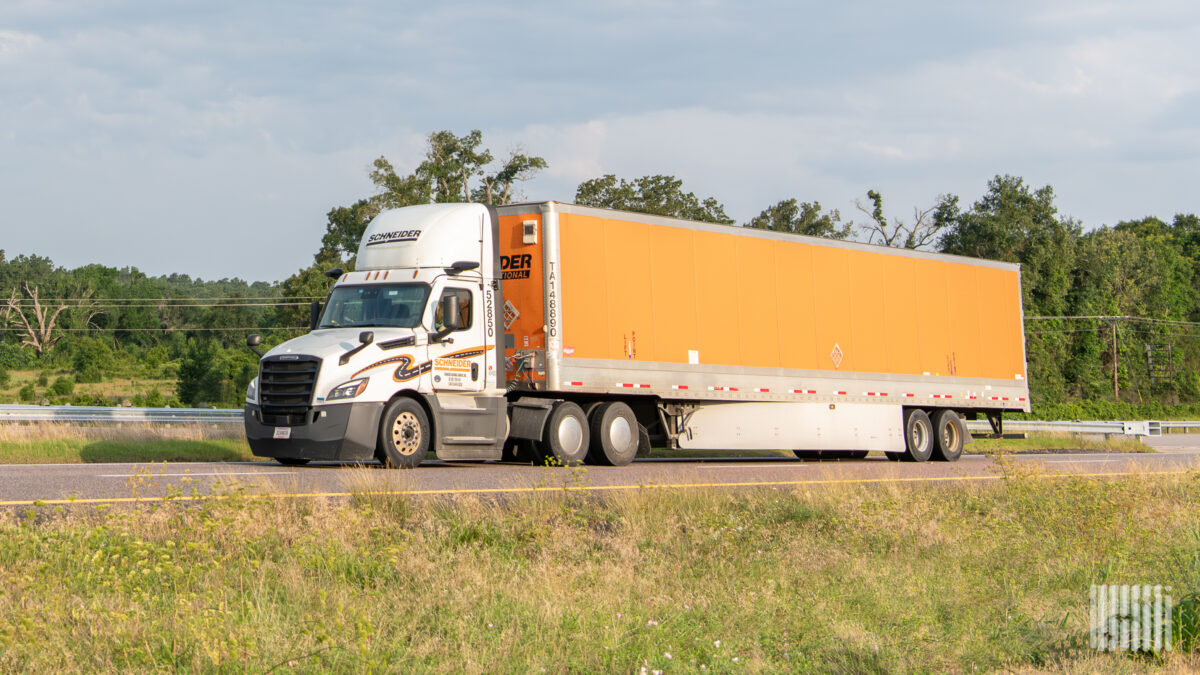
According to a recent episode of The Long Haul podcast, host Adam Wingfield interviewed Newton — known to his more than 100,000 YouTube subscribers as "Bigg Vic" — about his journey from barber to box truck operator. During COVID, Newton saw a YouTube headline: a box truck owner-operator claiming to have made $20,000 in a month. "Wait a minute," he recalled thinking. A client who had quit his job to run Amazon Relay freight showed Newton his invoices, saying "This is like taking candy from a baby." Newton spent $10,000 on his first box truck, a 2006 International with a Detroit engine and 500,000 miles, without a mechanic's inspection or maintenance records. He was, by his own description, "winging all of it." The truck did not require a CDL because it was under 26,000 pounds.
The First 90 Days: A Dangerous Success
Newton's first weeks were extraordinary but not a template. He got approved for Amazon Relay immediately, and his first week brought in a couple thousand dollars. His second week brought a few thousand more. "I'm thinking this is what trucking is all about," he said. Then his Amazon account got dinged when he booked a 53-foot load by mistake, and his performance score dropped, forcing him onto load boards. He ran over the road for a week, sleeping in the truck, and made $5,800. By his first 90 days, he was dreaming of a second truck. But Newton warned that those rates were a moment, not a baseline. "It's trucking. It fluctuates. It goes up and down."
Truck Owner vs. Business Owner: The 70% Failure Factor
Wingfield raised the statistic that about 90% of new carriers wash out in their first couple of years. When asked how much of that failure is a trucking problem versus a decision-making problem, Newton said, "I think it's about 70% the person. I don't think it's the trucking per se." He emphasized the difference between owning a truck and owning a business. "Anybody can go buy a truck. That's what makes this business seem so simple. But that's the easy part. Now we have to run it after that." He cited maintenance, brokers, and shippers who leave drivers sitting at the dock for 2.5 hours. "That's trucking. It's what's going on between those areas." The driver mentality focuses on driving and making money in the truck; the business owner builds a system, hires drivers, and creates something that runs without him.
| Key Insight | Details |
|---|---|
| Failure rate | ~90% of new carriers wash out in first two years (per Wingfield) |
| Person vs. industry | Newton attributes ~70% of failure to the person, not trucking |
| Early earnings | First week: couple thousand; one week: $5,800 in a box truck |
| First truck investment | $10,000 for a 2006 International with 500,000 miles |
Newton's barber background gave him money management skills and experience starting a business. What was hard was learning to drive a 26-foot truck, worrying about clearance heights, and discovering that his first truck's box was too short — he needed at least 96–97 inches of clearance, which he didn't know. He didn't make that mistake on his second truck.
Niche Strategies That Change the Math
When pressed on how box truck operators escape low rates, Newton pointed to niches and partial loads. Most operators treat the load board as the whole business, he said. The operators making real money run niches that are rarely discussed. Press
Implications for Logistics Operators
For freight forwarders and 3PLs, Newton's experience underscores the importance of supporting small carriers with clear guidance on equipment specs, rate expectations, and the operational realities of detention, deadhead, and account management. The box truck segment — often the entry point for new owner-operators — remains volatile, and understanding the failure drivers can help partners build more resilient networks.
"It's trucking. It fluctuates. It goes up and down." — Victor Newton, on freight rates
Sources: