A fragile ceasefire in the Strait of Hormuz has completely broken down as fresh attacks between the US and Iran over the past 24 hours have coincided with a tanker strike off Oman that has left three seafarers missing, according to maritime security reports.
Tanker Strike and US Confirmation
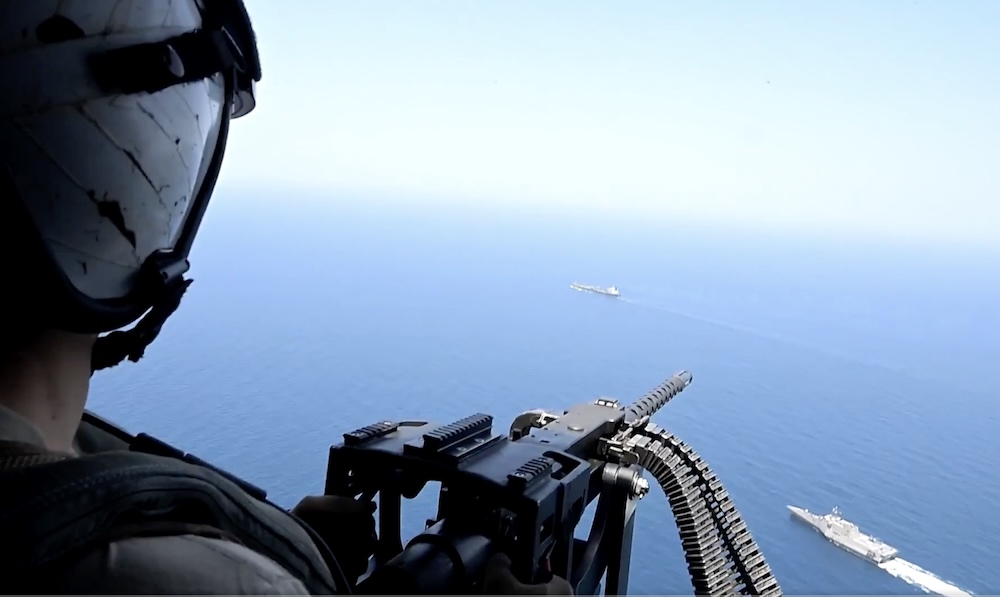
The product tanker Settebello (47,198 dwt) suffered a fire onboard around 20 nautical miles off Sohar, Oman yesterday. Maritime security firm Vanguard Tech said the vessel transmitted a distress call reporting it had been struck by a missile. Three seafarers were reported missing and one seriously injured. The US military separately confirmed striking the Settebello, stating that American aircraft fired precision munitions into the vessel's engine room after the crew repeatedly failed to comply with directions from US forces enforcing a blockade against Iran.
According to US Central Command, the Settebello is the eighth vessel disabled by US forces since mid-April.
Previous Incident and Rescue
The latest attack follows a similar incident involving the tanker Marivex on June 8, when US forces fired into the vessel's engine room, causing a fire. Twenty-four Indian seafarers were subsequently rescued by the Omani Navy.
IMO Condemnation and Casualty Data
The International Maritime Organization (IMO) condemned yesterday's attack by the US. IMO secretary-general Arsenio Dominguez said: “I strongly condemn any act from any party that endangers the lives of seafarers and the safety of international shipping. This is simply unacceptable.”
According to the IMO, 43 attacks on international shipping have been verified in and around the Strait of Hormuz since February 28, resulting in 11 confirmed seafarer deaths.
Ceasefire Breakdown and Wider Strikes
Danish shipping analyst Lars Jensen, who has been providing daily updates on the Hormuz crisis via LinkedIn, reported today “the ceasefire in the Hormuz crisis has fully broken down”, with US strikes targeting roughly a dozen locations in Iran, including sites near Tehran, while Iran launched attacks against locations in Kuwait, Jordan, and Bahrain. Iran also claimed to have struck two tankers attempting to transit the Strait of Hormuz, although Jensen noted he had not seen independent verification of those reports.
Key Incidents at a Glance
| Incident | Date | Vessel | Details |
|---|---|---|---|
| US strike on Settebello | June 10-11, 2026 | Settebello (product tanker) | 3 missing, 1 injured; missile strike; US fired into engine room |
| US strike on Marivex | June 8, 2026 | Marivex (tanker) | Fire; 24 Indian crew rescued by Omani Navy |
| Cumulative since Feb 28 | Ongoing | Various | 43 verified attacks; 11 seafarer deaths |
Implications for Maritime Trade
The systematic targeting of tankers by both the US and Iran in the Strait of Hormuz directly threatens one of the world's most critical chokepoints for oil and liquefied natural gas shipments. With the ceasefire collapsed and attacks continuing, shipping operators face heightened war risk premiums, potential rerouting around the Cape of Good Hope, and crew safety concerns. The IMO's condemnation underscores the growing humanitarian toll, with 11 seafarers confirmed dead. For importers and exporters reliant on Gulf crude and refined products, the absence of a ceasefire raises the probability of sustained disruption to tanker transits. The next key milestone will be whether maritime insurers adjust war risk zones or if a diplomatic push re-emerges.
Sources: