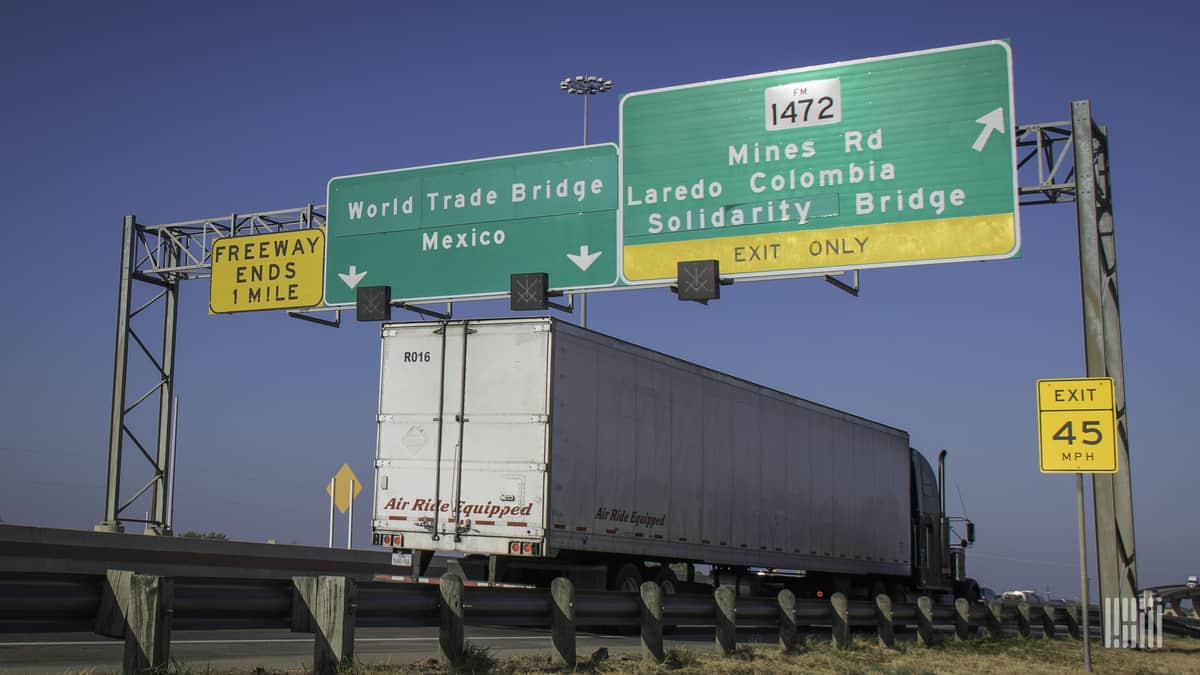
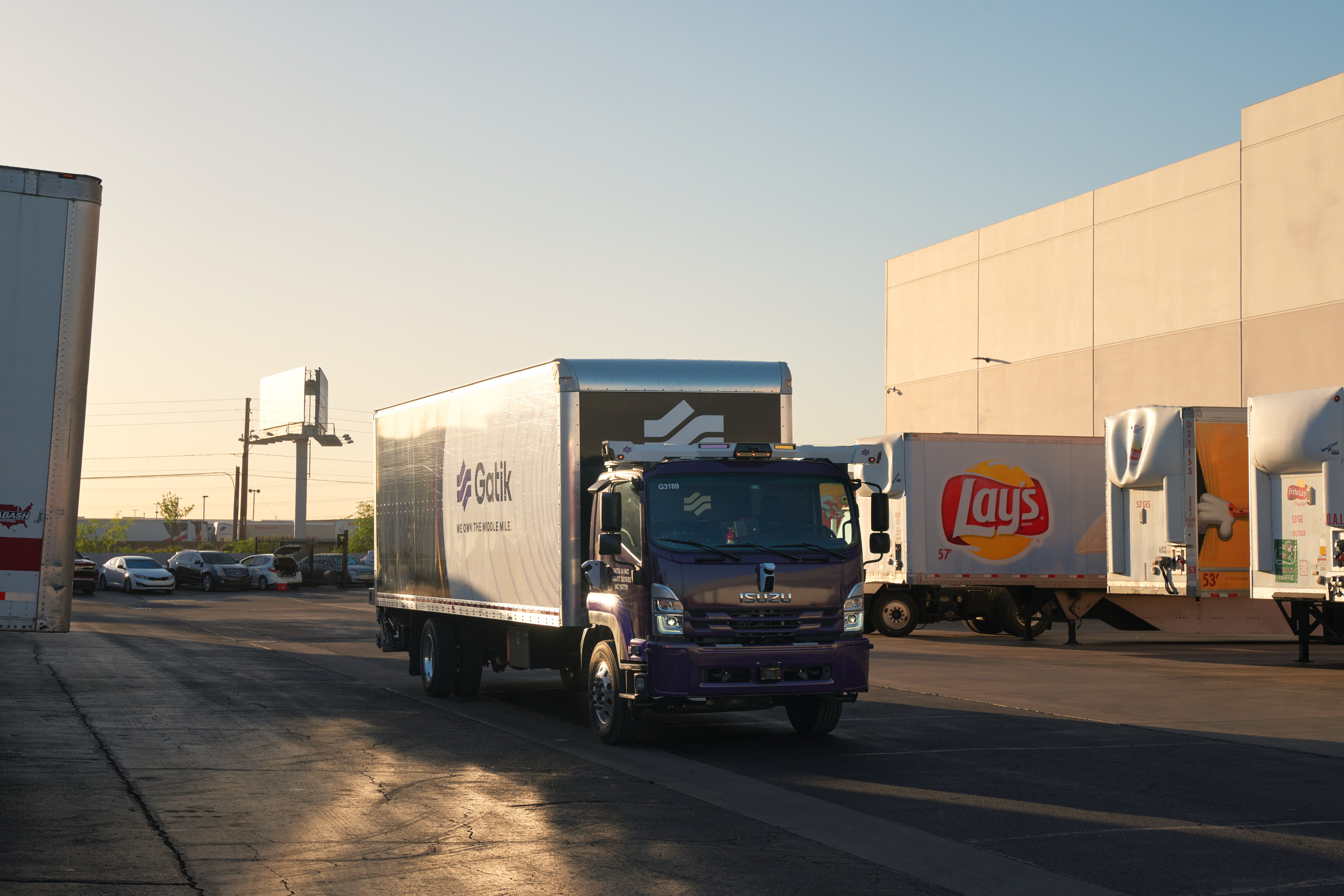
A proposed automated freight corridor connecting Laredo, Texas, and Monterrey, Mexico, and a pilot program allowing U.S. truck drivers to deliver freight into Mexico took center stage at the 9th Annual Modernization of Cross-Border Trade conference, held Tuesday in Laredo. These initiatives, if implemented, could reshape cross-border trucking operations by reducing reliance on Mexican B-1 visa truck drivers and addressing congestion, compliance, and driver shortages.
The conference, hosted by Reliance Partners and Borderless Coverage, brought together more than 500 industry leaders, according to FreightWaves. The “Green Corridors” panel, moderated by Troy Ryley, president of Mexico operations for Echo Global Logistics, featured Marco Antonio González Valdez, secretary of agriculture and regional development for the Mexican state of Nuevo León; Jesus Ojeda, executive vice president of cross-border operations at Redwood Logistics; and José Minarro, managing director of Sunset Transportation’s Laredo operations.
B-1 Visa Alternative: Pilot Program for U.S. Drivers
A major topic was the growing impact of enforcement actions involving Mexican B-1 visa truck drivers at the border. González Valdez said that more than 300 B-1 visas had been revoked for drivers using Laredo’s Colombia-Solidarity International Bridge this year, creating operational challenges for carriers that rely on cross-border drivers. The bridge handles approximately 3,500 freight truck crossings per day.
Rather than pursuing changes in Washington, Nuevo León is testing a different solution: allowing U.S. truck drivers to cross into Mexico, deliver freight, and return northbound with loads. “We started with a pilot program three weeks ago,” González Valdez said. “Have your U.S. truck drivers cross over to Mexican territory. This is the first time it’s happening at the border.” Under the concept, U.S. drivers would be able to deliver freight into locations in Nuevo León, potentially eliminating some transfer operations while reducing reliance on B-1 visa drivers.
González Valdez emphasized that the program offers another option: “U.S. companies can leave their cargo, cross the bridge, leave their cargo in Colombia, pick up cargo and go north. We will eliminate the B-1 problem.” He noted that officials eventually hope to expand the program deeper into Monterrey and other parts of the state. “We will also give a new operating scheme of eliminating transfers for those customers that want to eliminate transfers,” he said. “Also, we are planning in less than two years … We start having U.S. truck drivers driving into Monterrey, Mexico, from a year’s time. You’re going to have U.S. truck drivers crossing through Colombia … leaving their cargo in [Mexican cities of] Salina, Victoria, and coming back north.”
Green Corridors: A Driverless Freight Network
One of the most ambitious projects discussed during the panel was Green Corridors, a privately funded initiative proposing a 165-mile elevated guideway linking Laredo and Monterrey through a network of autonomous freight shuttles. Lorne Alcock, chief of staff for the Green Corridors project, said the system would feature secure terminals in both cities connected by a closed-loop automated corridor, according to FreightWaves.
Implications for Shippers and Operators
For freight forwarders and logistics managers, these developments present potential operational shifts. The B-1 visa alternative pilot program could reduce transfer times and eliminate the need for B-1 licensed drivers, but it requires U.S. carriers to adjust their cross-border procedures. The Green Corridors project, still in concept, could eventually provide a high-capacity, driverless option for the Laredo-Monterrey lane, which is a critical artery for US-Mexico trade. Carriers should monitor the expansion of the pilot program and the progress of the Green Corridors feasibility study.
Watch List
- Expansion of the U.S. driver pilot program to Monterrey and other cities in Nuevo León within the next two years.
- Development of the Green Corridors autonomous freight shuttle system, including funding and regulatory approvals.
- Further B-1 visa revocations and enforcement actions affecting cross-border operations at the Colombia-Solidarity International Bridge.
Sources: