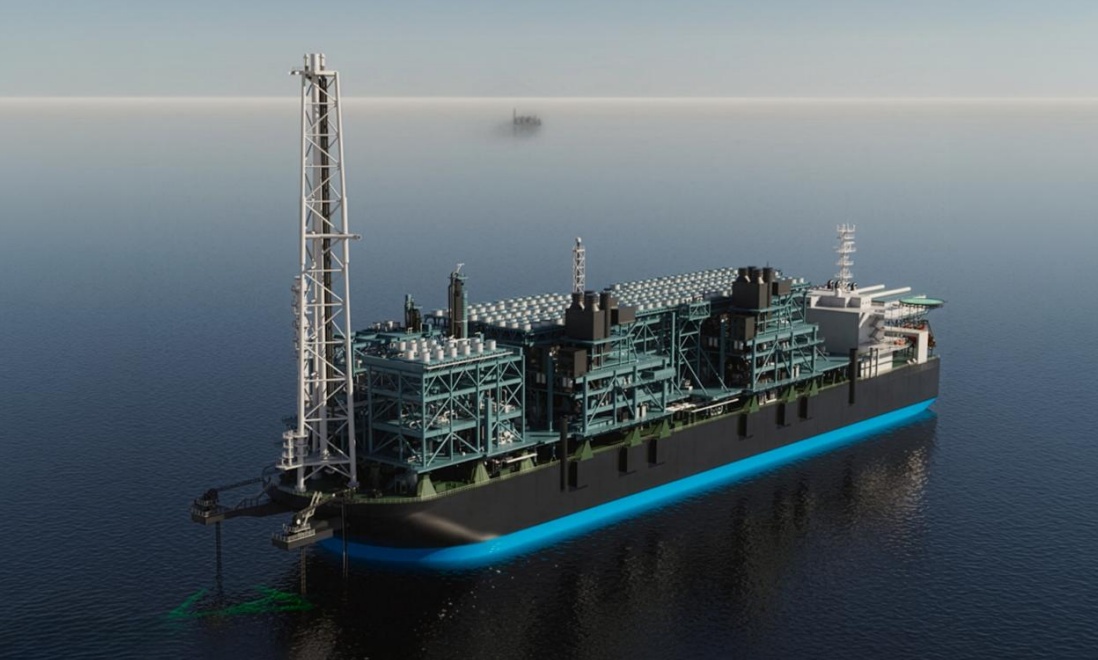
South Korea’s Samsung Heavy Industries (SHI) has signed a contract valued at approximately $2.9 billion for the construction of the Delfin FLNG Unit 1, marking a significant milestone in the development of floating liquefied natural gas (FLNG) technology in the United States. This project is set to be the first of its kind in the US and the largest globally.
Project Context
The contract follows a final investment decision reached by Mitsui O.S.K. Lines (MOL), Delfin Midstream, Vitol, and a group of investors. The Delfin FLNG Unit 1 will have an annual LNG nameplate production capacity of 4.4 million tonnes and is expected to commence production in 2030. The total cost of the project is estimated at $5 billion.
Operational Details
The feed gas for the unit will be sourced from the US mainland and transported via existing pipelines to the liquefaction facility, located approximately 65 km offshore along the southern coast of Louisiana. The gas will be liquefied into LNG onboard the FLNG vessel and subsequently loaded onto LNG carriers for delivery to buyers.
Implications for Shippers and Operators
The involvement of SHI in this project underscores its potential role in establishing a robust LNG value chain in North America. SHI is also in negotiations for additional units, Units 2 and 3, which Delfin plans to develop sequentially. This expansion could significantly impact the LNG shipping market, offering new opportunities for carriers and logistics operators involved in LNG transport.
Watch List
- Contract Negotiations: SHI's ongoing discussions for additional units could lead to further developments in the LNG sector.
- Production Timeline: Monitoring the progress towards the 2030 production start date will be crucial for stakeholders.
- Market Impact: The establishment of the first US FLNG unit could influence LNG shipping rates and capacity in the region.
"Given the strong likelihood of securing additional orders, the company is expected to play a leading role in establishing the LNG value chain in North America," SHI stated.
This project represents a pivotal development in the LNG shipping industry, with potential long-term impacts on global LNG supply chains.
Sources: