iGEN
Visit IGEN World Explore IGEN Expo
EXPLORE UPGRADE PLANS
BREAKING
Werner Enterprises Posts Highest Revenue Per Truck Growth in One-Way Segment in a Decade CMA CGM and Stonepeak Launch United Ports LLC in $2.4 Billion Terminal Joint Venture UPS shift away from Amazon shows bigger payoff Lanesurf: 62% of Loads Get Vetted Carrier Offers Before Brokers Arrive India-China Border Trade Via Lipulekh Resumes Aug 1; China Permits 20 Traders Geopolitics Drives CMA CGM Q2 Profit Surge of 42% as Volumes and Rates Climb Benchmark Diesel Price Rises Third Week as Futures Plunge; Spread Hits Record Indian Government Limits Sugar Dealers to 400 Tonnes Stock Until November to Curb Hoarding Tenants signing longer leases for larger warehouses as 3PLs lock in capacity US stock market flat as S&P 500 and Dow barely move, Nasdaq slides over 1% on chip rout Werner Enterprises Posts Highest Revenue Per Truck Growth in One-Way Segment in a Decade CMA CGM and Stonepeak Launch United Ports LLC in $2.4 Billion Terminal Joint Venture UPS shift away from Amazon shows bigger payoff Lanesurf: 62% of Loads Get Vetted Carrier Offers Before Brokers Arrive India-China Border Trade Via Lipulekh Resumes Aug 1; China Permits 20 Traders Geopolitics Drives CMA CGM Q2 Profit Surge of 42% as Volumes and Rates Climb Benchmark Diesel Price Rises Third Week as Futures Plunge; Spread Hits Record Indian Government Limits Sugar Dealers to 400 Tonnes Stock Until November to Curb Hoarding Tenants signing longer leases for larger warehouses as 3PLs lock in capacity US stock market flat as S&P 500 and Dow barely move, Nasdaq slides over 1% on chip rout
Home ›› Logistics ›› Shipping Freight ›› Container Shipping ›› CSSF Report: Containership Fires Rise for Third Straight Year as Battery Risks Grow

CSSF Report: Containership Fires Rise for Third Straight Year as Battery Risks Grow

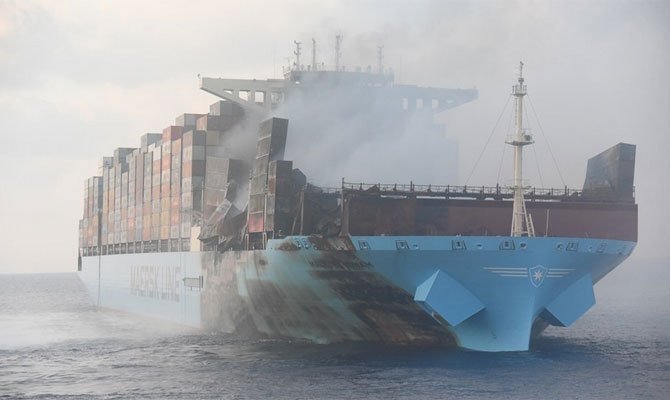
The Container Ship Safety Forum (CSSF) reports fire frequency rose for a third consecutive year among member fleets, even as other safety metrics improved. Engine room and machinery-space fires remain the largest category, but lithium-ion batteries hidden in cargo are an emerging risk. Navigational incidents, especially low-speed port contacts, also increased since 2022.

iG
iGEN Editorial
July 15, 2026
CSSF Report: Containership Fires Rise for Third Straight Year as Battery Risks Grow

Fire frequency on containerships increased for a third consecutive year in 2025, despite overall safety improvements among member fleets of the Container Ship Safety Forum (CSSF), according to data presented at the forum's recent Athens members meeting.

Swapnodeep Mondal, second chairman of the CSSF and group director of operations at Anglo-Eastern, warned the industry cannot become complacent. He stated that "the numbers do matter, but details matter more." While cargo fires attract the most attention, the CSSF data show that engine room and machinery-space fires still account for the largest share of reported incidents among CSSF members, well ahead of cargo fires. Mondal emphasized that the industry is not facing a new problem but is "still wrestling with the oldest ones."

Fire types and root causes

The CSSF data reveal a persistent challenge with basic machinery and equipment failures. Mondal stressed the need to focus on fundamentals: equipment integrity, preventive maintenance, leak management, fire detection systems, and crew preparedness. At the same time, cargo-related risks must not be neglected, especially as global supply chains become more complex.

Fire category Share of reported incidents Trend
Engine room / machinery-space fires Largest share Stable but dominant
Cargo fires (including batteries) Smaller share Growing, especially from hidden batteries

Lithium-ion batteries: a hidden danger

Mondal identified lithium-ion batteries as one of the most serious emerging risks in containership transport. He distinguished between battery risks on vehicle carriers (electric cars) and container ships. For container shipping, the challenge is different: batteries can be hidden in boxes, inside electronics, industrial kits, or energy storage units. As Mondal warned, "the danger may be invisible until it is too late."

He noted that as electrification accelerates, container operators are arguably more exposed than car carriers because "it often does not know the batteries are aboard." A newer dimension is vessels using batteries for propulsion, but those installed systems are designed, certified, and monitored, whereas undeclared boxes in the hold are not. Mondal called the invisible problem the harder one.

Navigational incidents on the rise

The CSSF data also show a continued increase in navigational incident frequency since 2022, both on a vessel-day basis and a port-call basis. Mondal does not attribute this to a single cause. He pointed to normalization: "traffic, port congestion and schedule pressure are all coming back to full intensity after a quieter spell." Notably, a significant share of incidents are low-speed contact events in port and confined water — with berths, buoys, moored objects — rather than dramatic open-sea collisions. That reframes the problem toward the port interface, including berthing, pilotage, tug use, and crew fatigue at the end of a passage.

The role of AI and next steps

Mondal sees artificial intelligence as having significant potential to support safety through predictive maintenance, anomaly detection, and cargo screening. However, he cautioned that AI should be viewed as a decision-support tool "rather than a replacement for competent crews, effective procedures and a strong safety culture." For containerships, AI can make screening scalable at the point where a fire can still be prevented — before the box is loaded. He called that "the single highest-return intervention for container ships." Yet there is no silver bullet; gains come from collaboration among cargo interests, carriers, regulators, class societies, and technology providers.

Implications for operators and shippers

For freight forwarders, logistics managers, and ocean carriers, the CSSF findings underscore the importance of robust cargo screening and accurate declarations. Shippers must ensure that batteries and other energy-dense items are properly declared and stowed. Carriers should invest in advanced detection systems and crew training. Port authorities and terminal operators need to be aware of the increased risk of low-speed contact incidents during berthing and pilotage. The rising frequency of both fire and navigational incidents means that safety cannot be taken for granted even as other metrics improve.


Sources: Splash247 Maritime
Keep Reading

Recommended Stories

India Restricts Seafarer Deployment to Conflict Zones After Fatal Attack Off Oman Coast Logistics

India Restricts Seafarer Deployment to Conflict Zones After Fatal Attack Off Oman Coast

The Indian Directorate General of Shipping has advised maritime recruitment agencies to restrict deployment of Indian seafarers to conflict zones until further orders, following a US military strike that killed three Indian crew members off the Oman coast. The advisory also mandates heightened security vigilance for vessels in the Gulf region, including the Strait of Hormuz.

June 14, 2026
Small Can Test Can Prevent Nickel Ore Liquefaction Tragedy at Sea Logistics

Small Can Test Can Prevent Nickel Ore Liquefaction Tragedy at Sea

Nickel ore that is too wet can liquefy during voyage, shifting cargo and causing vessel capsizing. The can test — a simple field test — helps crews identify dangerously wet cargo before loading. Captain Simon Hodgkinson of West P&I explains the procedure and its limitations.

July 28, 2026
Triple-Pronged War Threat Intensifies for Global Shipping in Hormuz, Red Sea, and Black Sea Logistics

Triple-Pronged War Threat Intensifies for Global Shipping in Hormuz, Red Sea, and Black Sea

Shipping faces simultaneous crises: Iranian attacks in the Strait of Hormuz, Houthi strikes on tankers in the Red Sea, and Russia-Ukraine attacks halting Ukraine's maritime corridor. New US tariffs and climate disruption on European rivers compound the risks.

July 24, 2026
The Wrong Truck at the Dock Can Create Shipper Liability After Montgomery Decision Logistics

The Wrong Truck at the Dock Can Create Shipper Liability After Montgomery Decision

The Supreme Court's Montgomery decision, while addressing broker liability, has opened the door to greater scrutiny of shippers when they release freight to the wrong truck at the dock. Shippers now face potential negligence claims if they fail to verify that the carrier, driver, and equipment match the transportation assignment before releasing goods.

July 23, 2026