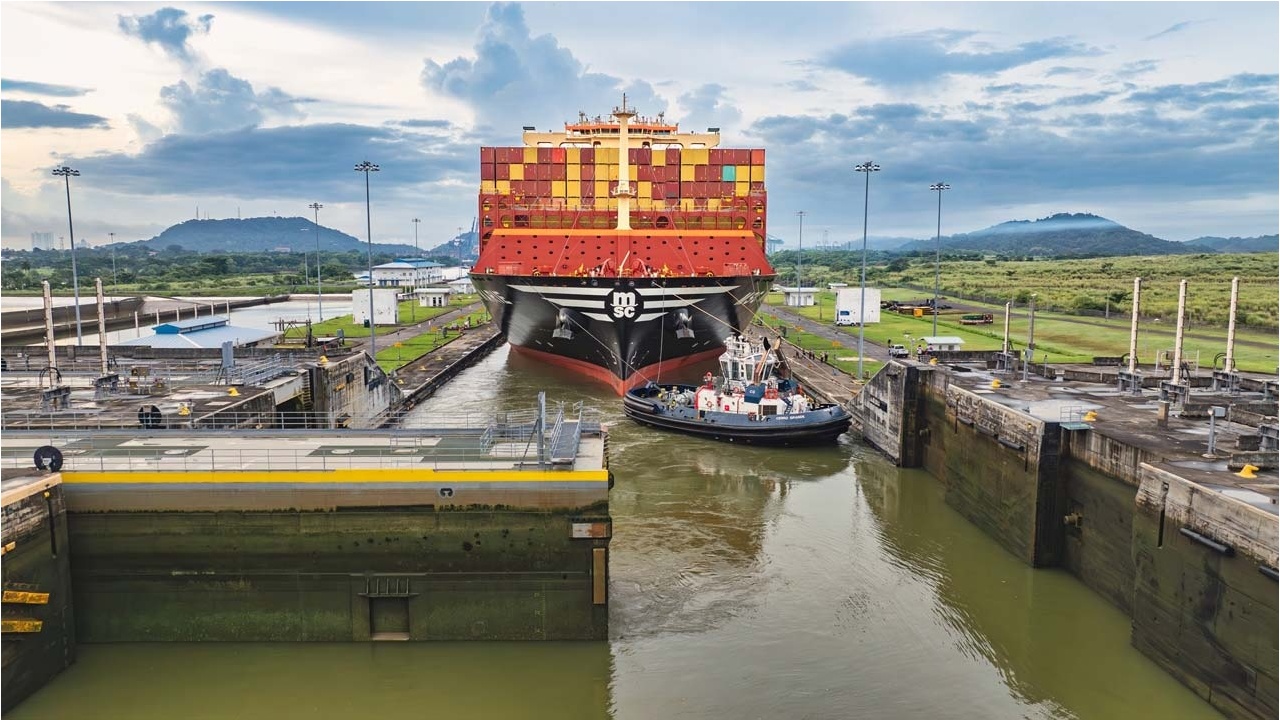
FreightWaves' Stuart Chirls reported that global trade is turning in a surprisingly strong performance this year — accompanied by a rising tide of empty containers that has long been problematic for shipping lines and ports.
Empties: The Revenue-Free Backhaul
Rico Luman, senior economist for Dutch investment bank ING (NYSE: ING), told FreightWaves: “Container volumes turn out more resilient than expected this year, despite all headwinds. But it comes with much more empties.” Luman said the trend has been driven in particular by exports from China.
“[T]he disbalance in East-West trade grows even larger, leading to much more empty containers on the backhaul [for which liners earn no revenue].” — Rico Luman, ING
Growth is strong across the board, Luman said, but especially in components involved in electrification such as data centers and electric vehicles.
Maersk: Terminal Burden Outpacing Loaded Growth
A.P. Moller-Maersk (OTC: AMKBY) Chief Executive Vincent Leclerc — referred to as Clerc in the article — signaled on the company's August 13 Q2 2026 earnings call that total traffic grew even faster than capacity in the first half of the year, according to FreightWaves. He blamed empty-linked congestion at ports and terminals for liner schedule issues. Leclerc said worsening east-west trade imbalances are forcing terminals to handle many more empty-container return moves.
Even as terminals earn revenue from lines storing empty boxes, the Maersk CEO said throughput demand is rising much faster than the reported container-market growth rate. While market growth is about 4% based on loaded cargo, the terminal burden is closer to 7–8% because weak or negative backhaul demand requires “an ever-increasing number of empty containers” to be repositioned.
| Metric | Value | Context | Source |
|---|---|---|---|
| Loaded-container market growth | ~4% | Maersk Q2 2026 call, per CEO Vincent Leclerc | FreightWaves |
| Terminal throughput burden | 7–8% | Driven by weak backhaul demand and empty repositioning | FreightWaves |
| Rotterdam empties, first six months vs 2020 | +60% | Europe's busiest sea hub | ING's Rico Luman via FreightWaves |
Rotterdam's 60% Empty Surge
The number of import containers has surged in Europe as well. Luman noted that the Port of Rotterdam — the busiest sea hub on the continent — saw the number of empties rocket by 60% in the first six months of this year compared with 2020, according to FreightWaves.
What the Empty Tide Means for Operators
For ocean carriers, the empty-container boom delivers no freight revenue on the backhaul leg. For terminals, it adds handling work. “All these empties are also handled by terminals, creating landside pressure and inefficiencies,” Luman told FreightWaves. Leclerc said the same dynamic is behind liner schedule issues, meaning shippers should anticipate schedule slippage linked to empty-container returns and storage. Terminal throughput demand, the Maersk CEO said, is rising much faster than the reported container-market growth rate, suggesting the operational burden is growing even when headline volume growth looks moderate.
Watch List
FreightWaves reporting ties the empty-container buildup to several continuing factors:
- China export volumes, which Luman identified as a key driver of the east-west imbalance.
- Electrification-related components such as data centers and electric vehicles, where growth is especially strong.
- Weak or negative backhaul demand, requiring an ever-increasing number of empty containers to be repositioned.
- Terminal handling of empty return moves, which Leclerc said is driving throughput demand above loaded-market growth.
These factors, already visible in Maersk's call and Rotterdam's empties surge, are the ones most likely to keep the empty-container tide high.
Sources: