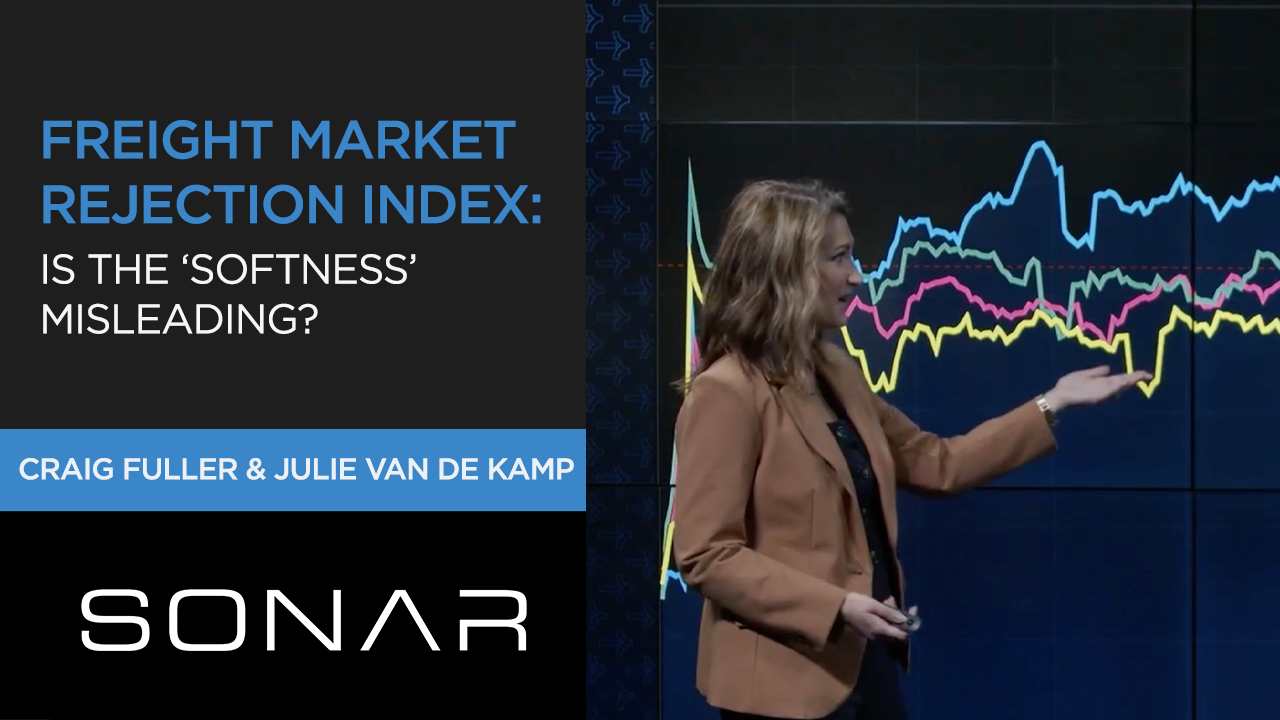
Freight volumes collapsed to their lowest Monday of the year this week, according to FreightWaves, with experts pointing to a rapid contract repricing cycle and rising capacity — not just the calendar — as the forces draining volume from the spot market.
The drop is drawing fresh scrutiny over whether the shortfall reflects a temporary seasonal quirk or a more durable structural shift in how shippers are moving freight, FreightWaves reported. Ken Adamo, Chief Strategy Officer of Eaze Logistics, said the volume gap is only partly explained by the calendar.
Why Monday's Volume Collapsed
Adamo told FreightWaves that Labor Day falls late this year, leaving roughly two more weeks of August before the traditional seasonal trough. But he pointed to a less-discussed dynamic accelerating the pullback: "The contract repricing effort happened so swiftly where shippers wanted to get things settled before peak." The rapid mini-bid cycle, he said, is routing freight away from the spot market and back onto stabilizing routing guides — a trend visible in tender rejection data.
Adamo framed the current market imbalance as roughly 70% a capacity problem and 30% a demand problem. Net motor carrier additions are rising again, new truck orders are up sharply, and those supply-side forces are amplifying the normal post-road-check-week seasonal softness, he said.
Tender Lead Times and Intermodal Shift
Shippers are planning further ahead and moving freight more systematically rather than relying on the spot market for last-minute coverage. Tender lead times have climbed from a historical average of 3.25 days to 3.75 days, a half-day gain, according to Adamo.
Intermodal is absorbing a significant share of that orderly freight flow. Railroad data show intermodal volumes at record levels, but the geography is notable: the surge is concentrated on the eastern side of the country — the Atlanta-to-Chicago and Harrisburg-to-Chicago corridors — rather than the traditional west-to-east lane. Contract intermodal rates show a 34% delta versus truckload, giving shippers a powerful financial incentive to shift modes. Adamo noted that railroads, particularly Norfolk Southern and Union Pacific as they pursue federal merger approval, appear to be holding contract rates steady to quietly accumulate market share without antagonizing shippers or regulators.
| Metric | Value | Source |
|---|---|---|
| Tender lead time (current) | 3.75 days | Ken Adamo, Eaze Logistics |
| Tender lead time (historical average) | 3.25 days | Ken Adamo, Eaze Logistics |
| Intermodal contract rate vs. truckload | 34% delta | FreightWaves |
| Market imbalance split | 70% capacity / 30% demand | Ken Adamo, Eaze Logistics |
Capacity Puzzle: More Carriers, Still No Drivers
Transportation employment has been flat since February, according to reporting by John Kingston cited in the FreightWaves story. Adamo cited conversations with the largest public carriers, who say they cannot attract drivers even at current pay structures. FMCSA registration data does show a surge in new carrier filings, but analyst Tom Albrecht of Reliance Partners argues those registrations are largely being "banked" by operators anticipating future crackdowns on new MC numbers — not reflecting genuine new capacity entering service, FreightWaves reported.
"I don't see a world where you've had basically 20 years absent prolonged trucking inflation, because it's a cyclical cycle and it always kind of resets back to where it started at minimal, minimal accretive jumping-off points. I just find it hard to believe that we don't find some way to get more drivers into the market," Adamo said.
Even if regulatory pressure keeps a lid on driver supply for two to three years, Adamo said the market is unlikely to absorb sustained double-digit contract rate increases without a political response — whether that means lowering the driving age to 18, adjusting hours-of-service rules, or other policy levers.
What Shippers and Operators Should Do Now
For freight forwarders and 3PLs, the immediate takeaway is that spot-market coverage will remain volatile while routing guides stabilize. The 34% intermodal rate delta versus truckload makes rail a compelling alternative on eastern corridors, and the record intermodal volumes confirm that shift is already underway. Shippers should evaluate contract intermodal options on the Atlanta-to-Chicago and Harrisburg-to-Chicago lanes before peak-season negotiations intensify.
Capacity remains the wildcard. With transportation employment flat since February and public carriers unable to attract drivers at current pay, the surge in FMCSA carrier filings may not translate into usable truck capacity. Operators should validate new carrier partners against actual equipment and driver availability rather than registration counts.
Watch List
- Federal merger review: Norfolk Southern and Union Pacific are pursuing federal merger approval, and their contract rate behavior suggests a strategy of quietly accumulating market share, according to Adamo. Any regulatory decision could shift intermodal pricing.
- Political response to driver shortage: Adamo said the market is unambiguously signaling a need for more trucks and drivers. Watch for policy levers — lowering the driving age to 18, hours-of-service changes, or other measures — that could add supply.
- Labor Day trough timing: With late Labor Day leaving two more weeks of August before the seasonal trough, expect continued softness through early September, then a potential inflection.
- Tender rejection data and mini-bids: Freight routing back onto stabilizing routing guides is visible in tender rejection data; further changes will signal whether the contract repricing cycle has run its course.
Sources: