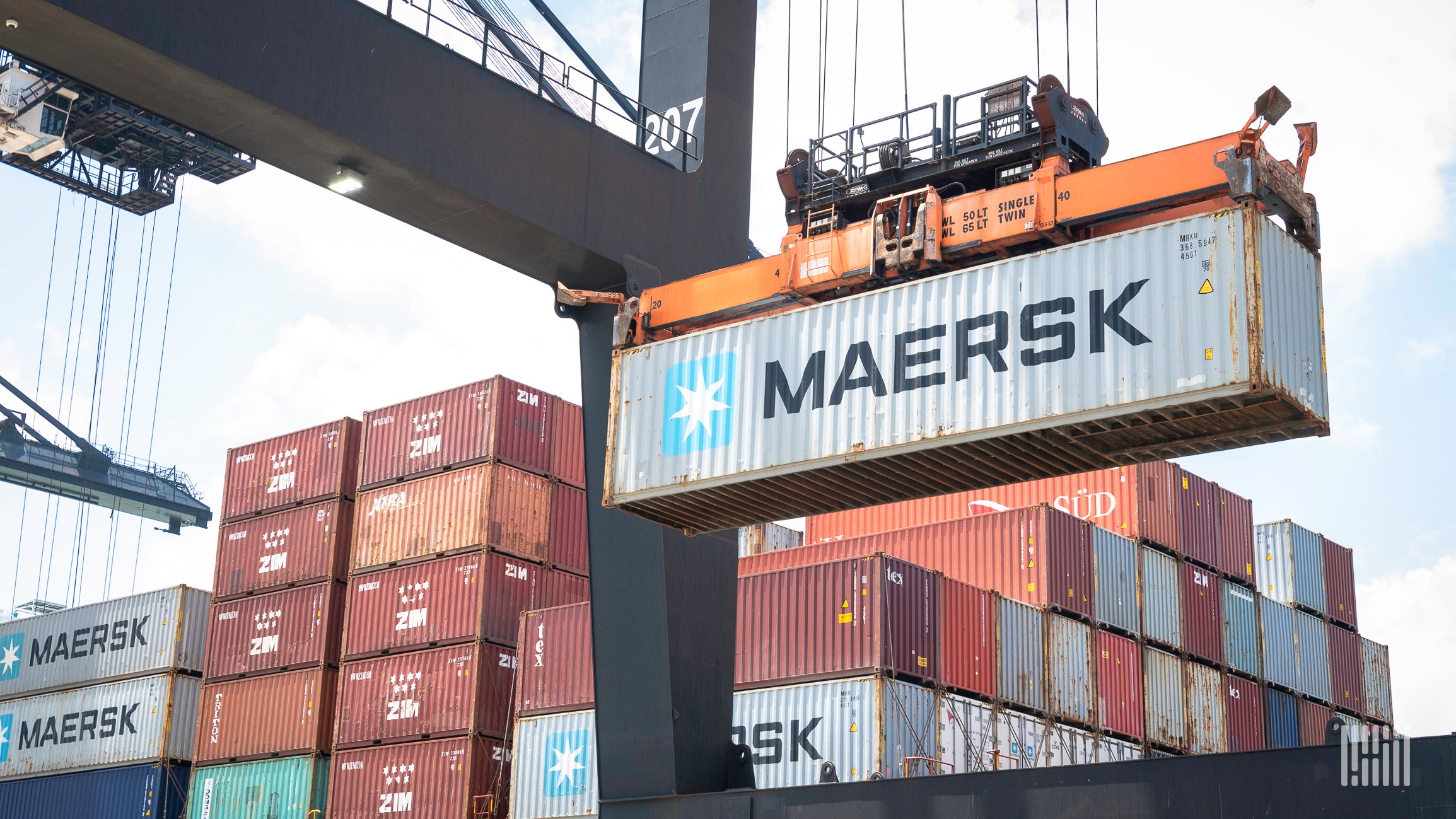
Maersk, the world's second-largest container line, has moved the majority of its eastbound intermodal container volume from Southern California's port complex away from BNSF Railway and onto Union Pacific Railroad, according to a report from data specialist RailState.
The shift in numbers
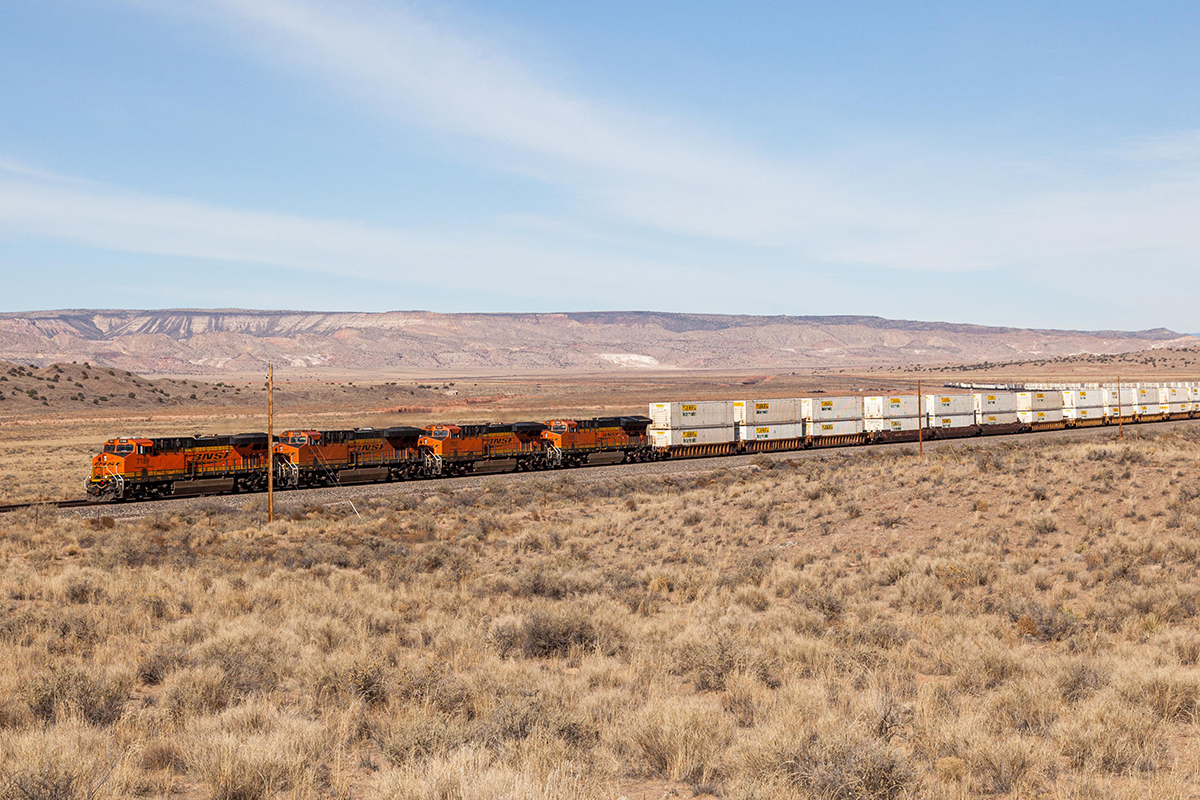
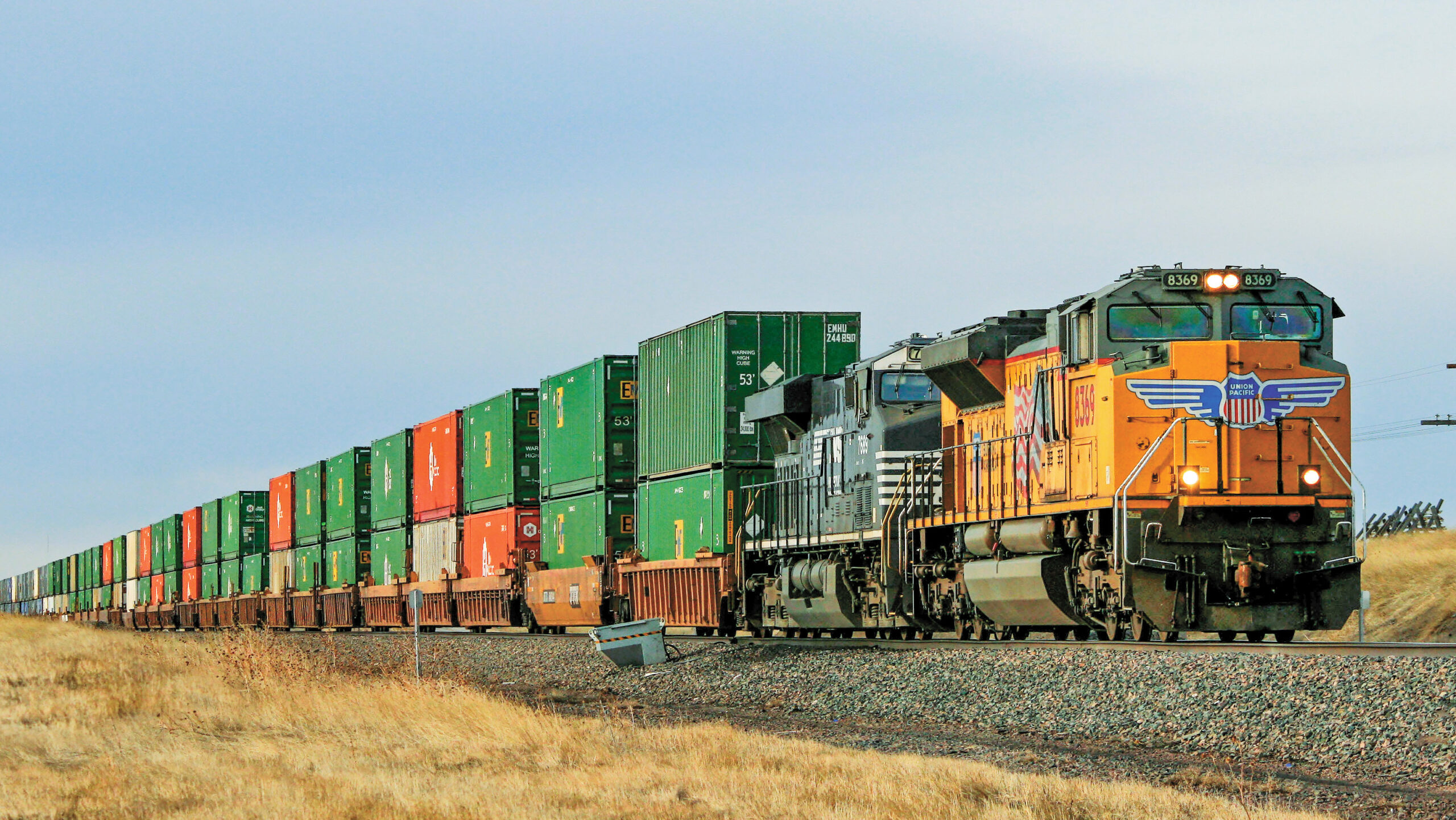
RailState reported that Omaha-based Union Pacific (NYSE: UNP) grew its share of Maersk's outbound container volume from the Port of Los Angeles-Long Beach from single digits to about 59%. The shift represents approximately 1,000 TEUs (twenty-foot equivalent units) per week that now move on UP's Sunset Route rather than BNSF's Southern Transcontinental route.
"Shifts like this are almost invisible from the outside," said Daniel Devoe, chief marketing officer at RailState, in a blog post. "Railroads and shippers keep them private, and the volumes don't surface in quarterly reports until months later, if ever. By reading the ID on every container that passes a sensor, RailState tracked this shift as it happened."
RailState's data tracks the entire corridor: Maersk transported 100,559 TEUs eastbound over the tracking period. Initially, 90% of that volume went via BNSF, while UP held only a single-digit share through mid-May. Then the shift began rapidly. By the week of June 1, UP's share had surpassed 50% for the first time, climbing to approximately 76% by the week of June 8. Since the transition started in late May, UP has accounted for roughly 59% of the total volume.
| Carrier | Pre-shift share (through mid-May) | Post-shift share (since late May) |
|---|---|---|
| BNSF | ~90% | ~41% |
| Union Pacific | ~10% (single digits) | ~59% |
Which lanes are affected
The shifted containers are primarily routed on two key UP corridors:
- Long Beach to Chicago — terminating at UP's Global 4 intermodal terminal near Joliet, Illinois.
- Long Beach to Dallas — serving the Texas market.
UP now handles 77% of Maersk's total Southern California outbound volume, according to RailState's recent report, which noted that Union Pacific volume from Southern California to Chicago has been rising in recent weeks.
Timing and context
The modal shift comes just as the peak shipping season moves into high gear, a period when intermodal rail demand typically surges. It also coincides with Union Pacific's ongoing effort to gain regulatory approval for a transcontinental merger with Norfolk Southern (NYSE: NSC). BNSF has been an outspoken critic of that proposed merger.
Maersk currently maintains contracts with both BNSF and UP, so the shift is a matter of volume allocation rather than a complete switch. BNSF is a subsidiary of Berkshire Hathaway (NYSE: BRK-B).
Implications for shippers and operators
For freight forwarders and logistics managers moving import containers from Southern California, the change means that UP's Sunset Route will now handle a significantly larger share of Maersk-bound cargo. Shippers who had optimized their drayage and rail routing for BNSF may need to adjust to UP's schedules, terminal processes, and chassis availability. The Joliet Global 4 terminal and Dallas intermodal ramps could see increased throughput, potentially affecting dwell times.
RailState's Devoe emphasized the difficulty of detecting such shifts without granular data: "A change like this is hard to see from the outside. The volumes may turn up later in a quarterly report, but that can take months, and many shifts are never announced at all."
Watch list
- Peak season volumes: how UP handles the surge in Maersk containers.
- UP-Norfolk Southern merger proceedings and BNSF's reaction.
- Potential reciprocal adjustments by BNSF to regain Maersk volume.
Sources: