U.S. freight rates are not falling and are expected to strengthen over the next 18 months, according to Kevin Nolan, founder of Sopa Creek, speaking in a FreightWaves video interview. Nolan, a serial freight brokerage entrepreneur who has started multiple billion-dollar-plus companies, said unprecedented mid-summer contract re-rating activity and double-digit tender rejection rates confirm the industry is in the earliest stages of a freight market recovery — not a false start.
Contract re-rating: an early signal
Nolan pointed to July contract re-rating as the trigger. "Contract rates lead everything," he said, noting that RFP (request for proposal) pricing has historically occurred in October and November. The fact that re-rating was allowed in July, he argued, is a signal that shippers recognize they quoted too low in prior cycles and are now willing to accept higher rates. "I feel pretty good about freight rates for the next eighteen months," he said.
RFP pricing normally occurs in October and November. July re-rating is therefore unusual and, for Nolan, evidence that capacity is tightening.
Tender rejections remain in double digits
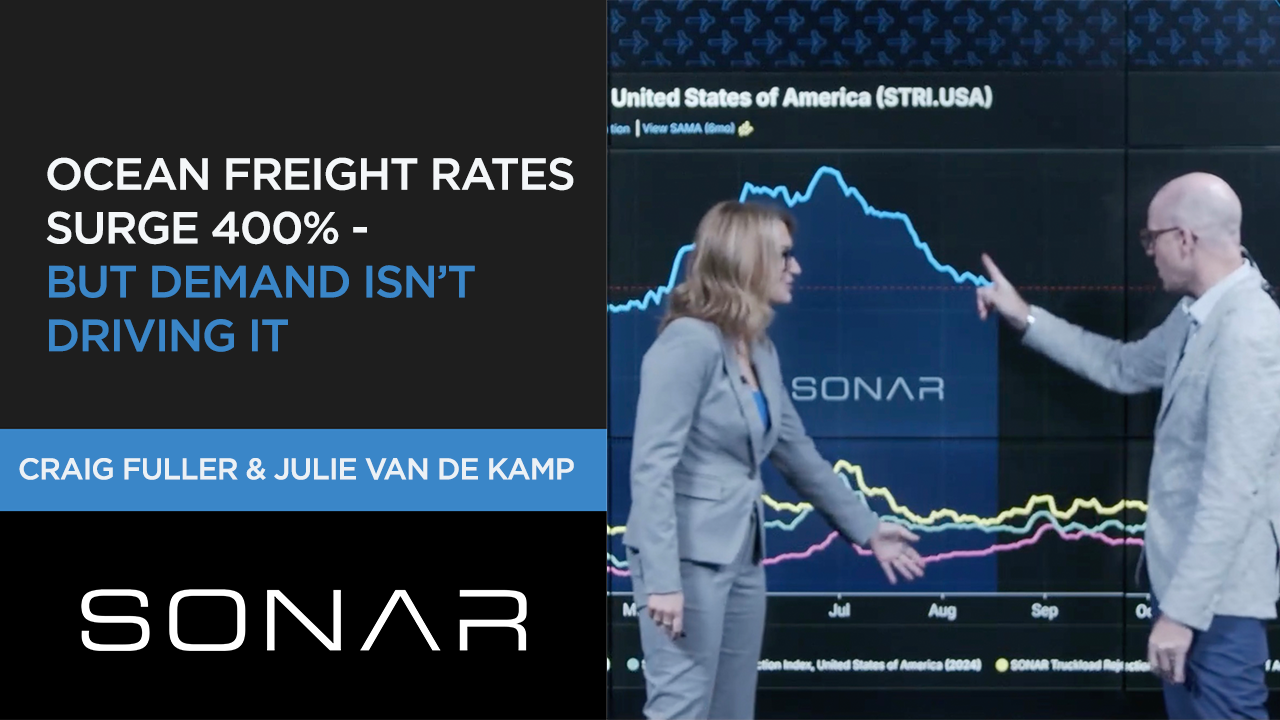
Nolan cited tender rejection data as further evidence. He noted that rejections dropped from 17% to 14% in August — a level he called elevated and unusual for that time of year. The decline, he said, reflects mini-bids being settled at mutually acceptable contract rates rather than a softening market. "In August, guys. I don't know if that's ever happened," he said of the 14% reading.
"Freight rates aren't going down. Okay. That's what I'll tell you. Freight rates are not going down."
The $604 million verdict and C.H. Robinson
On the legal front, Nolan weighed in on the $604 million "nuclear verdict" against C.H. Robinson in Texas, calling it a seismic event for the brokerage industry. He noted the verdict followed the Montgomery decision and came only three months later. Nolan said Robinson would have to fight the judgment rather than settle — because a settlement at that figure would effectively invite further litigation industry-wide. Despite the legal overhang, Nolan said he bought more C.H. Robinson stock the week of the verdict, citing the company's roughly 60% stock gain over the prior 18 months and its standing as the largest freight broker in the industry.
| Key figures from Nolan's interview | Value |
|---|---|
| Tender rejection rate, August | 14% |
| Prior rejection reading | 17% |
| Nuclear verdict against C.H. Robinson | $604 million |
| C.H. Robinson stock gain (18 months) | ~60% |
| Truckers using factoring companies | 90% |
| Freight/logistics share of U.S. GDP | >27% |
| Loss on one beer load (example) | $800 |
Carrier vetting, insurance, and red flags
Nolan warned that insurance costs represent a growing and unpredictable line item for brokers — one contributing to investor uncertainty across the sector. He offered a practical vetting framework for carriers:
- Look at which insurance company covers a fleet, since major insurers conduct on-site safety and hiring reviews before binding coverage.
- Check factoring relationships: 90% of truckers use factoring companies, making those relationships a useful proxy for carrier quality.
- Review length of time in business.
- Treat red flags seriously, such as a two-week-old MC (motor carrier) number or a generic Gmail address on a load confirmation.
Market shakeout and GDP footprint
Nolan was critical of the influx of capital and new entrants into freight brokerage from 2019 through approximately 2024, arguing that operators willing to lose money — he cited an example of losing $800 moving a load of beer — drove a race to the bottom on rates without improving the industry's fundamentals. He said that era contributed to the prolonged freight downturn and that its unwinding is part of what is now setting the stage for a sustained rate recovery. Nolan also noted that freight and logistics, including international shipping and warehousing, still represents more than 27% of GDP, making it one of the largest and most fragmented sectors in the U.S. economy.
Watch list
- C.H. Robinson appeal: Nolan expects the company to fight the $604 million Texas verdict rather than settle; the outcome could set industry precedent.
- Insurance costs: A growing and unpredictable expense that adds to investor uncertainty for brokers.
- New-entrant unwinding: The exit of 2019–2024 capital entrants is, in Nolan's view, part of the foundation for a sustained rate recovery.
- Seasonal rejection pattern: August's 14% tender rejection rate is unusually high; watch whether fall RFP season follows Nolan's expected path.
Sources: