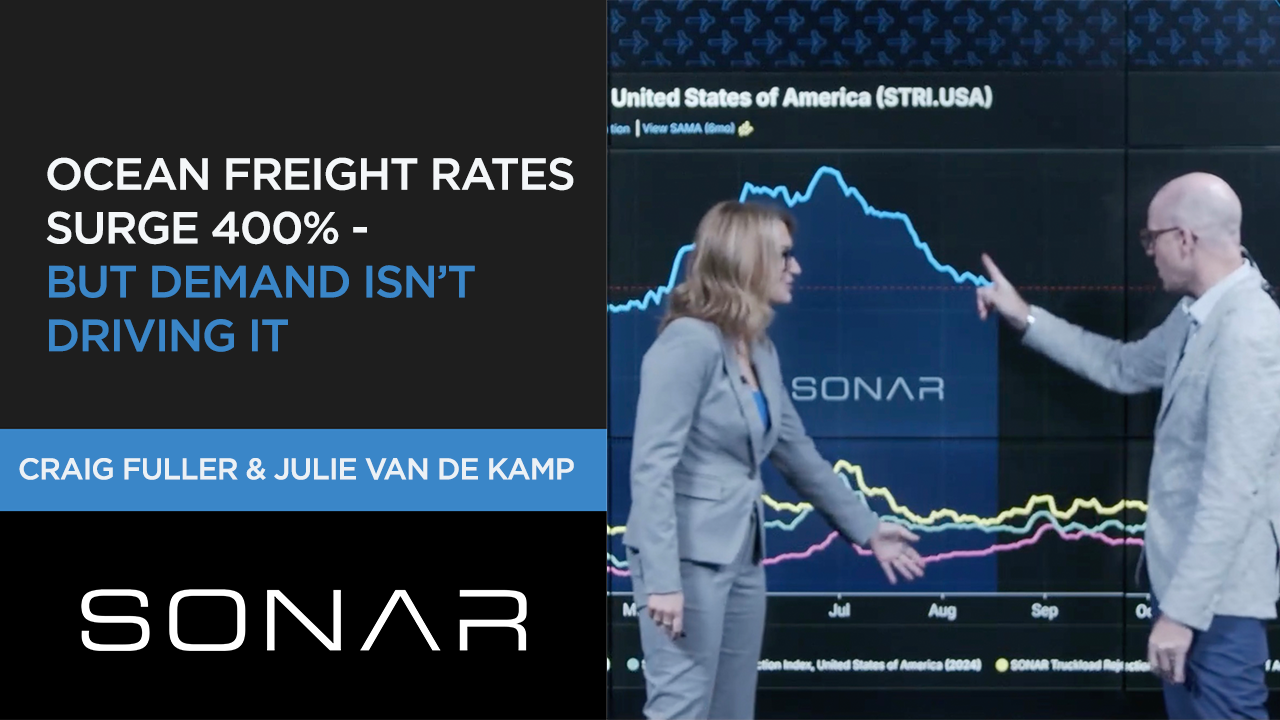
The latest Q2 earnings reports from major trucking and rail carriers confirm that the freight market is tightening on a capacity-driven cycle, not a demand surge, according to a FreightWaves analysis. Spot rates sit at $3.53 per mile against an annual average of $2.79, contract rates have risen 18% year over year, and tender rejections hold at 15.44%. The analyst expects these conditions to hold through at least 2027.
Capacity Tightening from Regulatory Pressure
Knight-Swift (KNX) beat earnings consensus by more than 20%, with its operating ratio improving from 93.8 to 91.4. Management attributed the gains to regulatory and compliance pressures forcing non-compliant capacity out of the market, as well as double-digit contract rate gains, higher spot rates, and rising tender rejections. KNX specifically noted it began seeing contract rate increases in June and that momentum has continued into July. “Before adding any new tractors, management noted that there is significant opportunity to enhance utilization, particularly since some trucks remain unseated,” according to a FreightWaves earnings summary. Barriers to entry have increased through additional regulation around CDL, DOT, and MC number requirements. Large fleets appear content to maximize utilization of existing equipment rather than expand, and driver recruiting and retention remain difficult.
Intermodal and Rail Gains
JB Hunt reported a 19% year-over-year revenue increase and beat earnings estimates by nearly 10%, with intermodal serving as the primary engine. Intermodal volumes rose 10% and operating income climbed sharply. Three Class 1 railroads also posted positive results: Union Pacific posted 12% revenue growth year over year with 4% volume growth; CSX delivered 10% revenue growth and 6.1% volume growth; and Norfolk Southern reported 11% revenue growth. The analyst attributed the rail strength in part to mode conversion, with shippers shifting loads to intermodal as truckload rates have risen. Conference call commentary from the railroads highlighted strong volumes in both consumer goods and industrial products, the latter consistent with what FreightWaves has described as an industrial renaissance.
Key SONAR Benchmarks
The following table summarizes key freight metrics from SONAR:
| Metric | Current Value | Comparison |
|---|---|---|
| Spot rate (per mile) | $3.53 | Annual average $2.79 |
| Contract rate index (linehaul) | 269 | Annual average 241; 18% increase from August 2025 |
| Tender rejections | 15.44% | Elevated historically; plateaued with July seasonality |
| Brent crude oil | $100/barrel | Following Red Sea attacks |
SONAR fuel indices show retail rates rising faster than wholesale rates, a gap the analyst said presents a short-term arbitrage opportunity for fleets purchasing wholesale fuel.
Implications for Shippers and Operators
With capacity unlikely to return quickly despite rising rates, shippers face continued upward pressure on contract rates and high tender rejections. The tight market favors carriers with compliant equipment and strong utilization. Shippers should expect elevated spot rates and plan for longer lead times when securing truckload capacity. For intermodal users, the mode shift may provide some relief as railroads expand capacity, but truckload-to-rail conversion itself tightens truck capacity further.
The analyst summarized: “All signs pointing towards a continued really strong freight market where we expect contract rates to continue to rise, spot rates to remain elevated, tender rejections to remain elevated.”
Watch List
- Brent crude oil prices: If $100/barrel persists, fuel surcharges will add to total freight costs.
- Regulatory developments: Further CDL, DOT, or MC requirement changes could accelerate capacity exits.
- Driver market: Unseated trucks at major carriers suggest driver shortages may cap any capacity expansion.
- Red Sea situation: Continued attacks could keep oil prices elevated and disrupt global supply chains beyond freight costs.
Sources: