Livestock carriers pose chronic operational risks for livestock shippers, freight forwarders, and vessel operators, consistently ranking as the worst-performing ship category in port state control inspections for at least six consecutive years, according to a sweeping new 410-page report published by Robin des Bois, the Animal Welfare Foundation and Tierschutzbund Zürich and covered by Splash247.
The Global Livestock Fleet report, the third in a series that has progressively widened its scope from EU-flagged vessels to the entire global fleet, documents 159 livestock carriers operating worldwide and presents a portrait of a sector that, in the authors’ assessment, should alarm maritime regulators far more than it currently does.
Fleet Composition and Age
Of the 159 livestock carriers identified, 134 – or 84% – were merchant ships converted from other commercial purposes, with the average converted vessel now 45 years old, originally built as a general cargo ship and converted for livestock transport at the age of 28. The average converted carrier has accumulated 242 recorded deficiencies and been detained four times throughout its operational life.
| Metric | Converted Vessels | Purpose-built Vessels |
|---|---|---|
| Share of fleet | 84% | 16% |
| Average age | 45 years | Not specified |
| Average deficiencies | 242 | Not specified |
| Average detentions | 4 | Not specified |
| Black-listed flag (Paris MoU) | 54.6% | 8% |
| IACS class society supervision | 22.3% | 72% |
Port State Control Performance
The Paris Memorandum of Understanding on Port State Control ranked livestock carriers as the worst-performing category of ships in its latest annual report covering 2024, with 88% of inspections resulting in deficiencies and a detention rate of 15% – almost four times the 4% average across all inspected ship types.
Regulatory and Safety Concerns
More than half of the 159 carriers fly flags on the Paris MoU black list, with 54.6% of converted vessels black-listed compared with just 8% of purpose-built carriers. Only 22.3% of converted livestock carriers are supervised by an International Association of Classification Societies member, against 72% of purpose-built vessels.
The conversion pipeline, far from slowing, is accelerating. Between January 2024 and March 2026, ten older vessels were converted into livestock carriers, compared with only three in 2022 and 2023 combined.
Accident History
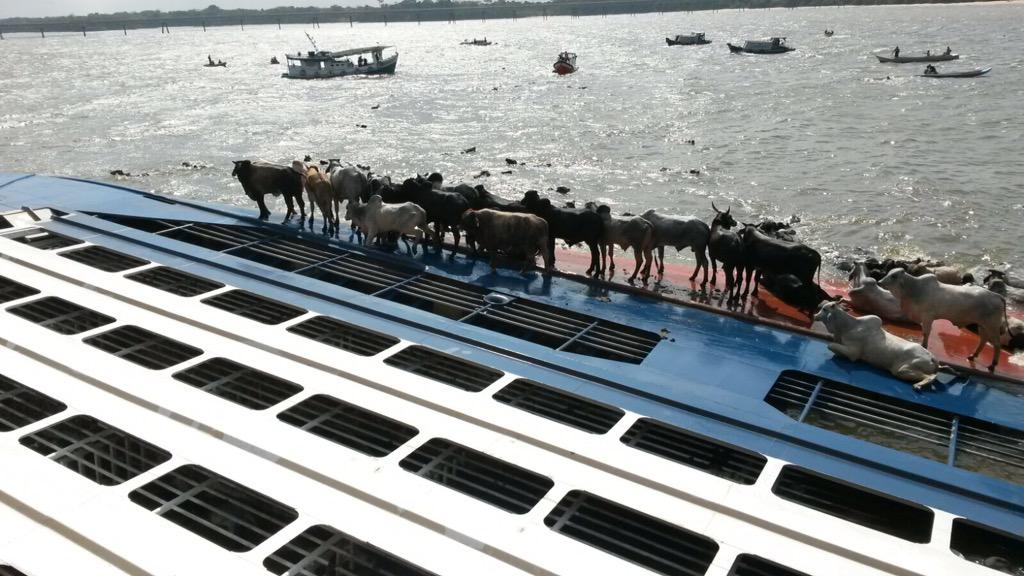
Since 1975, at least ten shipwrecks have been recorded in the history of sea-based livestock transport, resulting in the deaths of 88 crew members and at least 193,000 animals. The Gulf Livestock 1, which sank off Japan in 2020 killing 41 crew and 5,867 head of livestock, remains the sector’s most devastating recent incident.
For logistics professionals involved in livestock transport, these findings underline the need for rigorous due diligence on vessel age, flag, class society, and detention history when chartering livestock carriers. The high detention rate and chronic deficiencies increase the likelihood of operational delays, cargo loss, or catastrophic incidents. The accelerating conversion of old merchant ships into livestock carriers further compounds these risks.
Sources: