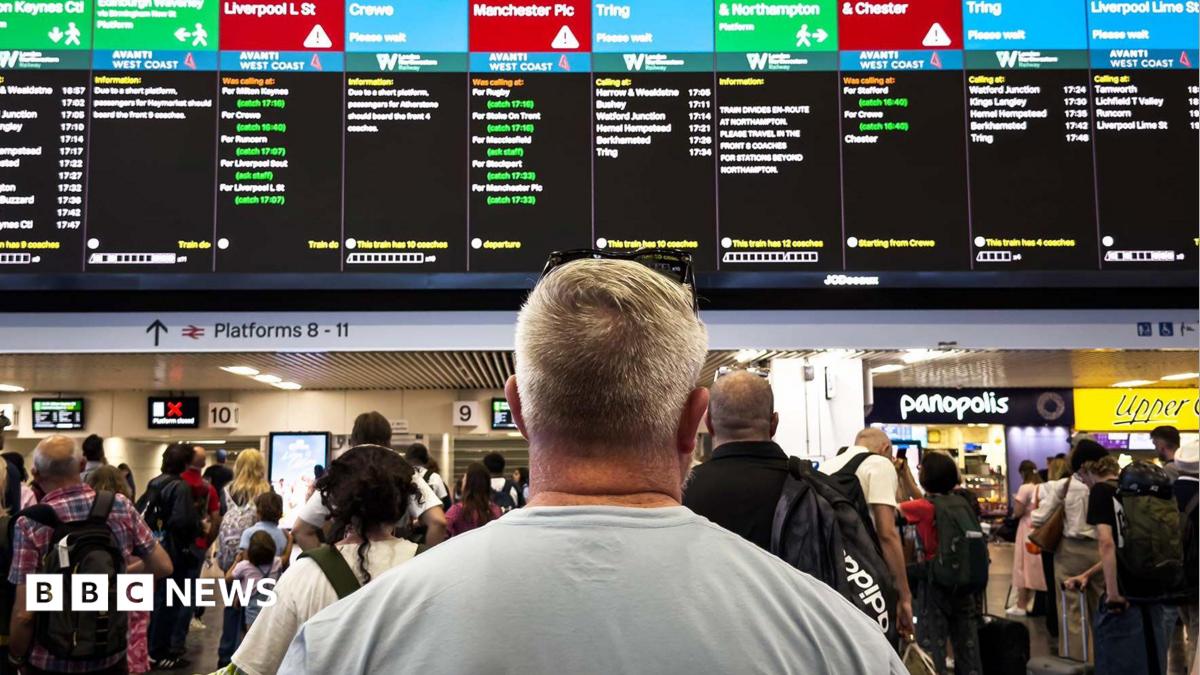
A 90-second power outage at Network Rail's Manchester operating centre triggered chaotic disruption for rail commuters across the North West of England and beyond, according to BBC News. The incident knocked out signalling control systems, forced trains to stop, and left trains and crews out of position across the network.
What happened at Manchester
Network Rail is the publicly-owned body responsible for operating and maintaining Britain's railway infrastructure — the tracks, signals, embankments and major stations, BBC News reported. The problem started at Network Rail's operating centre in Manchester, where crucial controls that keep trains running safely are housed. That centre is responsible for large parts of the North West.
The area was hit by a power cut, which BBC News said was resolved within 90 seconds. Despite having a backup supply — considered important given the centre's role — that supply failed to kick in as quickly as expected. Because signalling was affected (the equivalent of traffic lights for the railway), trains had to stop. Systems then had to be rebooted, and there was damage to the systems controlling signalling that took time to fix because certain parts needed to be replaced.
The immediate knock-on effects included:
- Backup power that did not kick in quickly enough.
- Signalling failures that forced trains to a standstill.
- A system reboot that delayed the restart of services.
- Damage to signalling control parts that extended the repair time.
Why the disruption spread so widely
Network Rail has moved towards 12 Rail Operating Centres (ROCs) across Great Britain, replacing a previous structure of hundreds of older signal boxes, according to BBC News. Manchester's Rail Operating Centre opened in 2014. The centres are intended to be high-tech hubs that centralise control of the network. Experts have warned that if one centre is badly affected, the impact is much broader.
Rail writer Christian Wolmar told BBC News the problem created by this model is that "if one thing goes wrong, it can wipe out, as we saw, quite a lot of the network".
"So really they've got to start thinking about both resilience, but also whether the centralisation of all the signalling and communications into a very small number of places is the right thing to do."
— Christian Wolmar, rail writer, speaking to BBC News
Funding pressure and wider rail problems
Rail engineer and writer Gareth Dennis drew a link between the outage and the funding pressures and job cuts Network Rail has faced, BBC News reported. He said it raised questions including: "Are their staff suitably resourced? Are there enough staff to be ensuring that things like those checks of that supply are happening?"
Network Rail receives five-year funding settlements signed off by the government. The latest settlement started in 2024. The government committed £44.1bn for the 2024-29 strategic business plan period, a £3bn increase from the previous five years. BBC News reported that rising costs from inflation and an increase in extreme weather events have left Network Rail's funding under severe pressure.
| Network Rail funding settlement | Figure |
|---|---|
| Government commitment for 2024-29 strategic business plan | £44.1bn |
| Increase compared with previous five-year settlement | £3bn |
BBC News said there is nothing to specifically link this incident to other recent problems rail users have faced, including the impact of speed restrictions and infrastructure failures during recent extreme heat. But the report added it is unlikely to inspire confidence among passengers who have suffered from issues such as poor performance among operators, strikes and rising ticket prices. Regulated fares have been frozen in England this year.
Investigation and resilience work
Network Rail has apologised to customers and opened an investigation into the incident, BBC News reported. Bosses said engineers have been working hard to "build additional resilience into our signalling systems to ensure that this doesn't happen again." Network Rail will face scrutiny for how its systems coped and responded to the outage, the BBC noted.
The incident was described by BBC News as rare, but it has raised questions about how a short outage at one operating centre could have such a widespread impact. Those questions — about centralisation, resilience, staff resourcing and funding — are the ones Wolmar and Dennis said need to be answered.
Watch list
- The outcome of Network Rail's investigation into how its systems coped and responded.
- Progress on the resilience work engineers say is being added to signalling systems.
- More extreme weather events, which BBC News cited as a factor pressuring Network Rail's funding.
- Any future incident at one of the 12 Rail Operating Centres — experts warned the impact would be much broader than under the old structure of hundreds of signal boxes.
Sources: