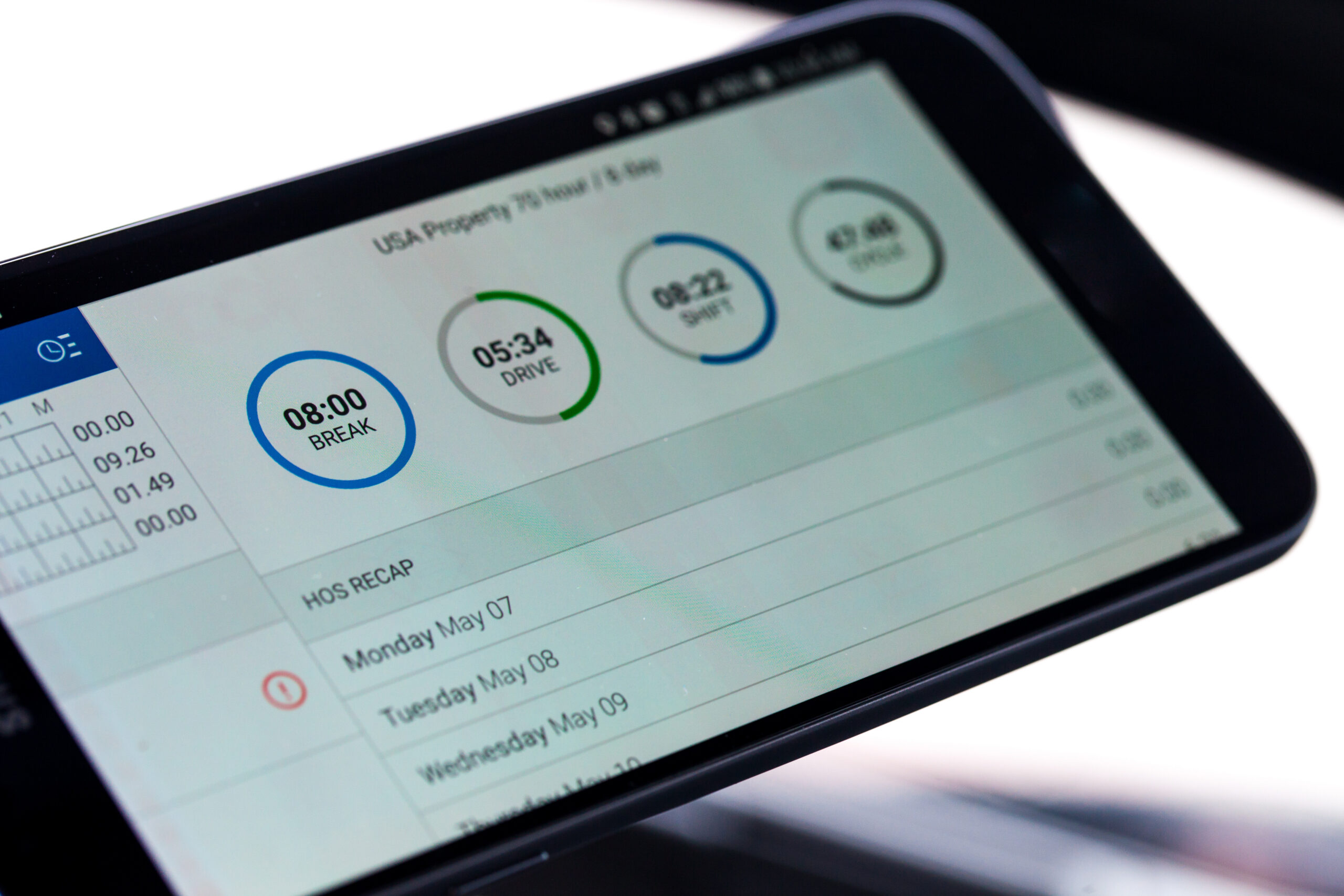
The U.S. trucking industry is absorbing a capacity shock from enforcement of manipulated electronic logging devices: FMCSA and DOT have taken more than 20,000 non-domiciled drivers out of service and revoked 28,000 illegal CDLs, and Mark Hazelwood, chairman of Conversion Interactive, Echo Flaps, and Assured Telematics, says that each removal effectively eliminates the equivalent of 1.5 legal drivers of capacity.
Why the ELD gap is a safety issue
The United States has 1,020 electronic logging device (ELD) providers operating under a self-certification model, compared with just 42 providers in Canada, which has required third-party certification since 2019, according to Hazelwood. That self-certification, he said, lets bad actors flood the market with manipulable ELDs that let drivers far exceed legal hours-of-service limits.
There are about 1,020 ELD providers, and it’s all because we have self-certification on the ELD. In self-certification, it’s like grading your own papers. Guess what? You’re self-certified. You’re now an ELD provider.
— Mark Hazelwood
Hazelwood attributed the surge in non-domiciled commercial driver's license (CDL) holders to CDL mills that fast-tracked licenses within two to three days without adequate training. The non-domiciled CDL holder population rose from approximately 170,000 in January 2020 to 780,000 in January 2025, he said.
The numbers behind the market distortion
Non-domiciled drivers exploiting manipulated ELDs are logging an estimated 145,000 to 150,000 miles per year, versus the roughly 92,000 to 96,000 miles a compliant driver can legally run, Hazelwood said. That excess mileage inflates capacity in a market already short on qualified drivers.
| Driver type | Annual miles logged |
|---|---|
| Non-domiciled driver with manipulated ELD | 145,000–150,000 |
| Compliant driver legal limit | 92,000–96,000 |
| Metric | United States | Canada |
|---|---|---|
| ELD providers | 1,020 (self-certified) | 42 (third-party certified since 2019) |
Rate and capacity implications for freight
On the driver recruiting side, Hazelwood said Conversion Interactive — which he describes as the largest driver recruiting agency in the country — is seeing rising demand. Rates have been climbing for roughly five to six months, but unlike prior upcycles, carriers are not rushing to add capacity due to the limited pool of qualified drivers, which he believes will help prevent the market from overcorrecting.
Hazelwood also expects the regulatory environment to tighten. The current administration, he said, is moving toward mandating third-party ELD certification, though the timeline remains unclear. He cautioned that full implementation would be difficult to accomplish within 12 months. Assured Telematics spent millions of dollars obtaining certification in Canada — where it was the first provider certified — and expects comparable costs domestically, he said. He predicted many of the 1,020 current providers would exit the market rather than pursue certification once an announcement is made.
Diesel and crude outlook
Separately, Hazelwood offered a bearish outlook on diesel crack spreads — the difference between crude oil prices and refined diesel prices. Refiner margins on diesel currently sit at $87 per barrel against a historical norm of $15 to $20, he said. He attributed elevated diesel prices largely to U.S. exports of roughly 2 million barrels per day flowing to Northern Europe to offset refinery disruptions tied to the Russia-Ukraine conflict. He projected crack spreads could fall below $40 within six months and said crude oil prices could return to the low-$60 range once the conflict concludes, potentially with a roughly 20% immediate drop in crude prices when a resolution appears imminent.
Watch list
- Timing of third-party certification announcement: The administration is moving toward mandating third-party ELD certification, but no timeline has been set, Hazelwood said.
- Provider attrition: If certification is mandated, many of the 1,020 self-certified ELD providers are expected to exit, forcing fleets to switch devices and absorb hardware costs.
- Capacity discipline: With carriers refusing to add capacity despite rising rates, spot and contract rate pressure could persist for shippers.
- Diesel price trajectory: If crack spreads fall below $40 as Hazelwood projects, fleet operating costs could ease, though the timeline depends on the Russia-Ukraine conflict.
Hazelwood's core argument is that unchecked ELD self-certification and the surge of non-domiciled drivers are not only distorting freight markets but also contributing to highway fatalities. For freight forwarders and logistics managers, the enforcement actions already taken are removing capacity from the network, and the looming shift to third-party certification could reshape the ELD vendor landscape and the cost structure of U.S. road freight.
Sources: