iGEN
Visit IGEN World Explore IGEN Expo
EXPLORE UPGRADE PLANS
BREAKING
Inside the rogue ChatGPT hack of Hugging Face: AI agents operate at superhuman speed but make clumsy mistakes Landstar Expects to Emerge a Winner After Supreme Court’s Montgomery Ruling Widens Broker Liability New Senate bill targets 'chameleon carriers' that reopen to escape penalties Werner Enterprises Posts Highest Revenue Per Truck Growth in One-Way Segment in a Decade CMA CGM and Stonepeak Launch United Ports LLC in $2.4 Billion Terminal Joint Venture UPS shift away from Amazon shows bigger payoff Lanesurf: 62% of Loads Get Vetted Carrier Offers Before Brokers Arrive India-China Border Trade Via Lipulekh Resumes Aug 1; China Permits 20 Traders Geopolitics Drives CMA CGM Q2 Profit Surge of 42% as Volumes and Rates Climb Benchmark Diesel Price Rises Third Week as Futures Plunge; Spread Hits Record Inside the rogue ChatGPT hack of Hugging Face: AI agents operate at superhuman speed but make clumsy mistakes Landstar Expects to Emerge a Winner After Supreme Court’s Montgomery Ruling Widens Broker Liability New Senate bill targets 'chameleon carriers' that reopen to escape penalties Werner Enterprises Posts Highest Revenue Per Truck Growth in One-Way Segment in a Decade CMA CGM and Stonepeak Launch United Ports LLC in $2.4 Billion Terminal Joint Venture UPS shift away from Amazon shows bigger payoff Lanesurf: 62% of Loads Get Vetted Carrier Offers Before Brokers Arrive India-China Border Trade Via Lipulekh Resumes Aug 1; China Permits 20 Traders Geopolitics Drives CMA CGM Q2 Profit Surge of 42% as Volumes and Rates Climb Benchmark Diesel Price Rises Third Week as Futures Plunge; Spread Hits Record
Home ›› Logistics ›› Shipping Freight ›› Shipping Lines ›› FedEx Freight Forecasts 4-6% Revenue Growth as Standalone Company After Spinoff

FedEx Freight Forecasts 4-6% Revenue Growth as Standalone Company After Spinoff

FedEx Freight, now an independent company after spinning off from FedEx Corp. on June 1, reported a 4.8% revenue increase to $2.4 billion in its fiscal fourth quarter. The less-than-truckload carrier expects 4% to 6% revenue growth for the remaining seven months of the year, with an operating margin of 9% to 9.5%. Despite a 5.9% decline in average daily shipments, revenue per shipment rose 11.5% to $415.22.

iG
iGEN Editorial
June 25, 2026
FedEx Freight Forecasts 4-6% Revenue Growth as Standalone Company After Spinoff

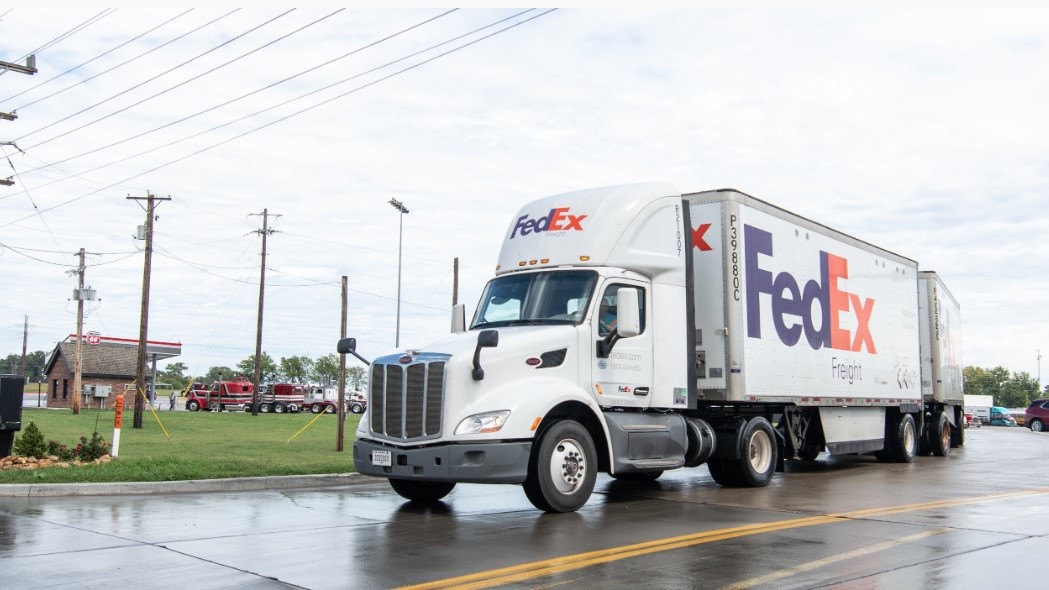
FedEx Freight (NYSE: FDXF) started trading as a standalone company on June 1, and its first earnings report shows a mixed but forward-looking picture for the largest U.S. less-than-truckload (LTL) carrier. According to FreightWaves, the company reported fiscal fourth-quarter revenue of $2.4 billion, up 4.8% year over year, driven by higher fuel surcharges and increased weight per shipment. However, adjusted operating income fell 24% to $363 million, with an operating margin of 15%, impacted by separation costs, lower shipments, a prior-year terminal sale gain, and higher wage rates.

Financial Performance and Guidance

For the full fiscal year ended May 31, FedEx Freight generated $8.8 billion in revenue, a 1.1% decline from the prior year. The company provided guidance for the remaining seven months of its fiscal year, forecasting adjusted earnings per share of $2.40 to $2.60, excluding spin-off costs. Revenue is expected to grow 4% to 6% compared to the same period last year, and the operating margin is projected at 9% to 9.5%, up from 7.8% in 2025.

Key Q4 metrics include:

Metric Q4 FY2026 Change vs. Prior Year
Revenue $2.4 billion +4.8%
Adjusted operating income $363 million -24%
Operating margin 15% -
Average daily shipments 86,700 -5.9%
Weight per shipment 948 pounds +3%
Revenue per shipment $415.22 +11.5%

Market Position and Capacity

FedEx Freight holds a 17% market share in the U.S. LTL market, operating 355 service centers and a fleet of about 30,000 vehicles. The company's dedicated sales force exceeds 500 representatives. Notably, about two-thirds of its revenue comes from the manufacturing sector, which has seen accelerated growth over the past five months.

Jefferies analyst Stephanie Moore wrote in a client note that FedEx Freight stands to significantly benefit from an industrial recovery because it has 30% spare capacity to absorb extra demand. This spare capacity positions the carrier to handle volume increases without substantial capital expenditure, a critical advantage as the U.S. industrial sector shows signs of recovery.

Operational Implications for Shippers and Logistics Operators

For freight forwarders and logistics managers, FedEx Freight's performance signals a tightening LTL market with rising prices per shipment (up 11.5%) despite lower shipment counts. The increase in weight per shipment (up 3% to 948 pounds) suggests a shift toward heavier industrial freight, aligning with the manufacturing recovery noted by the company. Shippers should anticipate continued upward pressure on LTL rates as FedEx Freight and other carriers leverage fuel surcharges and yield management.

The company's 30% spare capacity also means it can quickly absorb new business, potentially providing more flexible service options for shippers seeking reliable capacity during an industrial upturn. However, the 5.9% drop in daily shipments indicates demand is still recovering from previous weakness.

Watch List

  • Industrial recovery momentum: Manufacturing growth over the past five months will be key to FedEx Freight's ability to fill its spare capacity and meet its 4-6% revenue growth forecast.
  • Separation costs impact: The $363 million adjusted operating income reflects spin-off costs; further guidance excludes these, but actual earnings may be affected.
  • Competitor responses: Other LTL carriers may adjust pricing or capacity as FedEx Freight goes independent with a strong balance sheet (aided by reducing FedEx Corp.'s debt by $4.1 billion through the separation).
  • Fuel price trajectory: Higher fuel surcharges were a major driver of Q4 revenue growth; sustained high fuel costs could continue boosting revenue but also pressure shippers.

Sources: FreightWaves
Keep Reading

Recommended Stories

FedEx Freight's New Path as Standalone LTL Carrier Logistics

FedEx Freight's New Path as Standalone LTL Carrier

FedEx Freight has officially become a standalone less-than-truckload (LTL) carrier, trading under the ticker FDXF. This strategic move allows FedEx Freight to focus on LTL services, aiming for growth in revenue and operating income.

June 1, 2026
TFI International Q2: LTL Steady but Truckload Soars on Supply Constraints, CEO Says Logistics

TFI International Q2: LTL Steady but Truckload Soars on Supply Constraints, CEO Says

TFI International reported strong Q2 earnings with EPS up 41% to $1.65. However, the performance diverged sharply between LTL (18% EBITDA margin) and Truckload (24.1%). CEO Alain Bedard attributed truckload gains to supply constraints, not demand, and said this market dynamic is unprecedented in 30 years. LTL volume surged 7.5% but revenue per shipment fell 2%, leading to cost and service challenges.

July 28, 2026
Knight-Swift Opens 4 LTL Terminals, Expanding Network in Phoenix, Olympia, Detroit, and Toledo Logistics

Knight-Swift Opens 4 LTL Terminals, Expanding Network in Phoenix, Olympia, Detroit, and Toledo

Knight-Swift Transportation's LTL business, AAA Cooper, announced the opening of four new terminals in Phoenix, Olympia, Detroit, and Toledo, all opened in May. The expansion adds capacity in existing markets and enters new service areas, furthering the company's national network buildout. The combined platform now has approximately 180 terminals covering about 70% of the U.S.

July 13, 2026
Analysts Raise TL, LTL Estimates Ahead of Q2 Earnings Season as Trucking Upcycle Gains Steam Logistics

Analysts Raise TL, LTL Estimates Ahead of Q2 Earnings Season as Trucking Upcycle Gains Steam

Ahead of Q2 earnings season, analysts at Deutsche Bank and Morgan Stanley have raised expectations for truckload and less-than-truckload carriers. Deutsche Bank's Richa Harnain forecasts median EPS growth of 15% in Q2 and 21% in Q3, with LTL operators leading the way. Morgan Stanley's Ravi Shanker raised estimates by 5% but downgraded his industry view to in-line, citing stretched valuations.

July 10, 2026